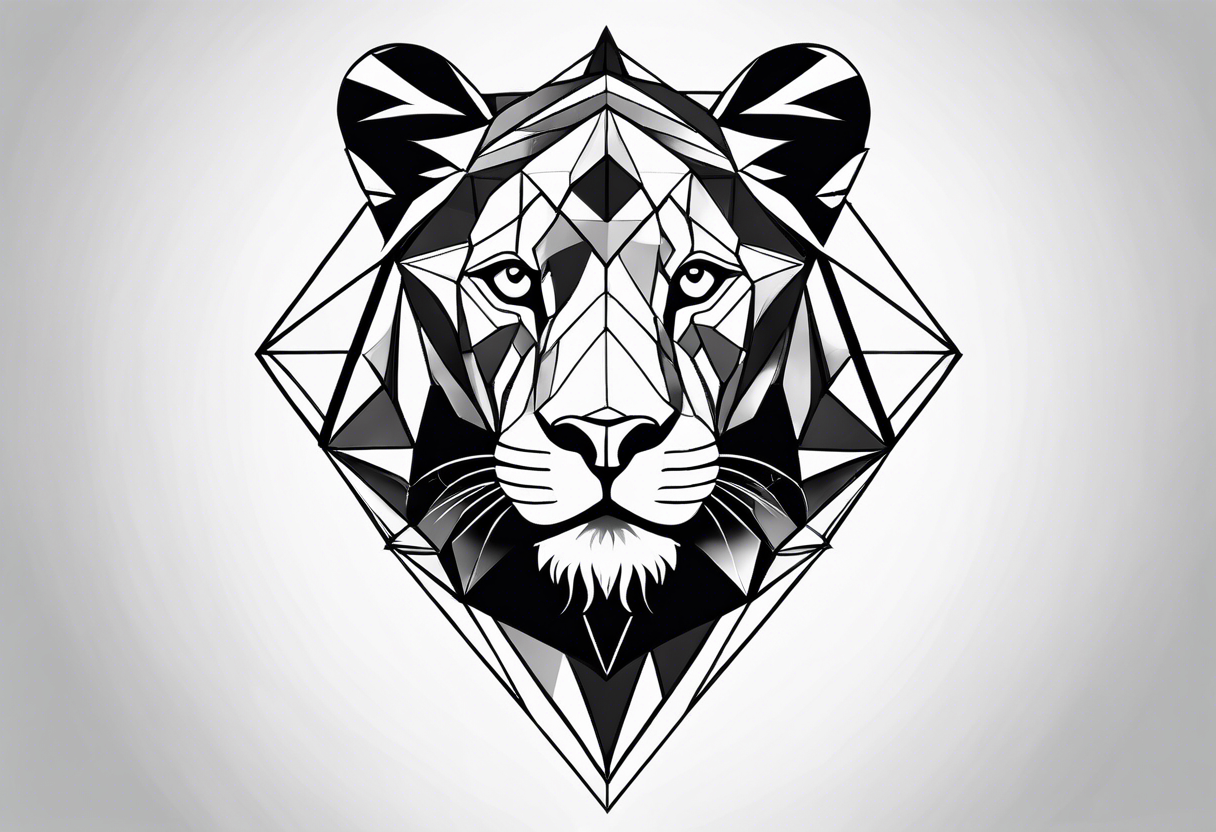
You’ve seen them. Walk into any reputable tattoo studio from Los Angeles to London, and you’ll likely spot a stencil of a female feline waiting to be inked. It’s not just a trend. The lioness tattoo on shoulder placement has become a powerhouse choice for people wanting to signal a specific kind of quiet, fierce resilience. It’s different from the male lion. No massive mane. No loud, aggressive roar—usually. It’s about the hunt, the family, and that "don't mess with my kids" energy that hits a little harder than a standard jungle king design.
Honestly, the shoulder is the perfect real estate for this. Think about the anatomy. The way the deltoid curves allows a talented artist to wrap the lioness’s face around the muscle, giving it a 3D effect that looks like she’s actually prowling. It’s a classic move. But before you book that four-hour session, there’s a lot of nuance to consider regarding the style, the symbolism, and how to avoid getting a piece that looks like a generic cat.
Why the Lioness Tattoo on Shoulder Works So Well
The shoulder isn't just a flat canvas. It’s a moving part of your body. When you walk, your shoulders rotate; when you lift your arm, the skin stretches. A lioness tattoo on shoulder takes advantage of this kinetic energy. If the artist aligns the eyes of the lioness with the peak of your shoulder, she seems to stare down anyone walking toward you. It's intimidating. It’s also incredibly easy to hide for work or show off in a tank top.
The Symbolism of the Pride’s Real Boss
In the wild, the lionesses do the heavy lifting. They hunt. They protect the cubs. They run the social structure of the pride while the males mostly hang out and guard the perimeter. People gravitate toward this because it mirrors the "provider" or "protector" role in human life. It’s maternal but dangerous. It’s feminine but muscular. You’re not just getting a cat; you’re getting a symbol of tactical intelligence and raw endurance.
Most people don't realize that a lioness spends up to 20 hours a day resting, but when it’s time to move, she’s one of the most efficient predators on earth. That "coiled spring" energy translates beautifully into ink.
Choosing Your Style: Realism vs. Fine Line
You have choices. Plenty of them. But the style you pick dictates how that lioness tattoo on shoulder will age over the next decade.
- Photo-Realism: This is the gold standard for many. We’re talking every whisker, the wetness in the eyes, the texture of the fur. High-contrast black and grey realism pops on the shoulder because the natural shadows of your body add depth. However, be warned: realism requires a massive amount of detail. If the artist isn't a specialist, it can end up looking muddy in five years.
- Fine Line and Micro-Realism: Very popular lately. These are delicate, using single needles to create a soft, ethereal look. They look stunning on a smaller scale, perhaps sitting right on the shoulder blade or the collarbone transition. The downside? Fine line fades faster. You'll likely need a touch-up sooner than you would with a bolder piece.
- Neo-Traditional: Think bold outlines and saturated colors. Maybe the lioness is wearing a crown of peonies or has a geometric halo behind her head. This style holds up incredibly well against the sun, which is a big plus for a shoulder piece that might see some UV rays in the summer.
Placement Specifics: Front, Top, or Blade?
Where you put it matters as much as what it is. If you go for the front shoulder, near the collarbone, it’s a very "forward-facing" statement. It’s visible in most shirts and frames your face. Putting the lioness on the outer deltoid—the "cap" of the shoulder—is the most common. It provides the largest flat surface for a detailed portrait.
Then there’s the shoulder blade (scapula). This is a bit more private. It’s a great spot for a larger composition, maybe a lioness with her cubs. The pain level here is a bit higher because of the bone, but the payoff is a massive, sprawling piece of art that stays hidden until you decide otherwise.
The "Cubs" Factor
A huge subset of people getting a lioness tattoo on shoulder do so to represent their children. It’s a beautiful sentiment. Usually, the artist will tuck one or two small cubs near the lioness’s chin or have them peeking out from behind her. It turns a symbol of ferocity into one of tenderness. It’s a duality that’s hard to pull off with other animals. A wolf is too "loner," a bear is too "bulky." The lioness hits that sweet spot of grace and grit.
Technical Challenges and Skin Care
Let’s talk shop for a second. The shoulder is a high-motion area. This means the skin is constantly being pulled and twisted. If you’re a gym rat, your deltoids might grow or shrink, which can slightly distort the tattoo over time. A pro artist knows how to "flow" the design with your muscle fibers to minimize this.
You also have to consider the sun. Shoulders are one of the first places to get burned. UV rays are the absolute enemy of tattoo ink—they break down the pigment particles and make your $600 masterpiece look like a grey smudge. If you get a lioness tattoo on shoulder, you are committing to a lifetime of SPF 50. No excuses.
Dealing with the Pain
Is it going to hurt? Yeah, sort of. But the outer shoulder is generally considered one of the least painful spots on the body. It’s mostly muscle and thicker skin. If the needle wanders toward the armpit, the collarbone, or the spine, you’re going to feel a sharp "sting" that might make you question your life choices. But for the most part, a shoulder session is a breeze compared to the ribs or the tops of the feet.
Avoiding the "Pinterest Trap"
One of the biggest mistakes people make with a lioness tattoo on shoulder is bringing in a photo they found on Pinterest and asking for an exact copy. Please don't do that. First, it’s disrespectful to the original artist. Second, that tattoo was designed for someone else’s body.
Instead, use those images as "vibe checks." Tell your artist, "I like the way the eyes look here," or "I love the shading on this one." Let them draw something custom. A custom lioness will be designed to fit your specific shoulder curve, which makes the final result look much more organic and high-end.
Common Misconceptions
- "It’s only for women." Not true. While it’s a popular choice for women, many men choose the lioness to honor a mother, a wife, or simply because they prefer the sleek aesthetics over the bulky mane of a male lion.
- "It has to be big." You can actually get a very impactful small lioness. A minimalist silhouette or a "one-line" drawing can look incredibly sophisticated on the back of the shoulder.
- "Color is better." Actually, black and grey is the industry standard for feline tattoos. It allows for better fur texture and a more "timeless" feel. Color can sometimes make animal portraits look a bit "cartoonish" if not handled by a world-class color realist.
Practical Steps Before Your Appointment
If you're ready to pull the trigger on a lioness tattoo on shoulder, start by vetting your artist’s portfolio for animal portraits specifically. Fur is hard to do. It’s easy to make it look like straw or wire. You want an artist who understands "flow"—the way hair grows in different directions around the eyes and snout.
Check for healed photos. Every tattoo looks great fresh and bloody on Instagram. You want to see what that lioness looks like after two years. If the fine details have blurred into a dark mess, find a different artist.
Once you find your person, book a consultation. Talk about the "gaze." Do you want her looking at the viewer? Looking off into the distance? Looking down? The direction of the eyes changes the entire mood of the piece. A lioness looking forward is a challenge; a lioness looking away is a watcher.
Finally, prep your skin. Hydrate. Use lotion on your shoulders for a week leading up to the session. Healthy, hydrated skin takes ink much better than dry, flaky skin. And on the day of, wear a tank top or a loose button-down shirt. You need to give the artist easy access without making them work around bunchy fabric.
The lioness tattoo on shoulder is more than a trend. It’s a piece of wearable armor. When done right, it’s a stunning blend of biology and artistry that stays with you forever. Treat the process with respect, pick the right artist, and you’ll have a guardian on your shoulder for the rest of your life.