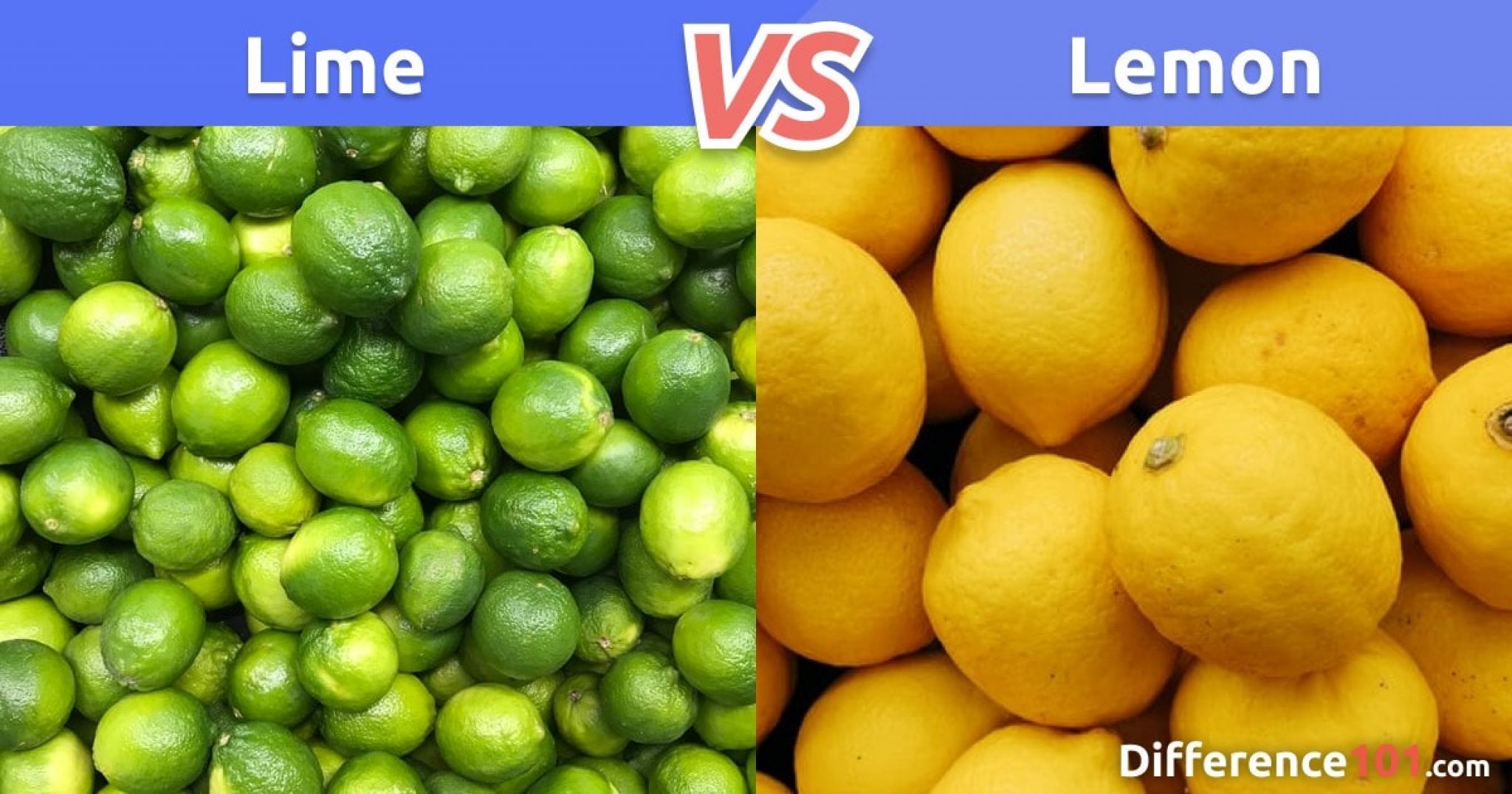
You’re standing in the produce aisle, staring at a pile of green and yellow spheres, wondering if it actually matters which one you grab for that fish taco recipe. It does. Honestly, most people think the lemon and lime difference starts and ends with the color of the skin, but that is barely scratching the surface of these citrus powerhouses. If you’ve ever accidentally swapped a lime for a lemon in a delicate lemon curd, you know exactly how fast things can go south.
One is bright, floral, and aggressive. The other is zesty, bitter, and deep.
They aren’t just interchangeable substitutes. They are distinct botanical species with completely different chemical profiles, sugar contents, and culinary histories. While they both belong to the Rutaceae family, the Citrus limon (lemon) and Citrus aurantifolia (Mexican lime) or Citrus latifolia (Persian lime) have spent thousands of years evolving into the specific roles they play in our kitchens today.
The Genetic Reality of the Lemon and Lime Difference
Let’s get the science out of the way first because it explains why they taste so different. Lemons are actually a hybrid. Most botanists, including those at the University of California Riverside Citrus Variety Collection, agree that lemons are a cross between a citron and a bitter orange. Limes are a bit more chaotic. The common lime you see in US grocery stores—the thick-skinned, seedless Persian lime—is a triploid hybrid.
Size matters here. Lemons are usually larger and ellipsoidal, sporting that iconic "nipple" at the end called a terminal nipple. Limes are smaller, rounder, and heavier for their size because they are packed with dense juice vesicles.
Have you ever noticed that a lemon feels "springy" while a lime feels like a golf ball? That’s the rind. The lemon’s pith (the white part) is thicker, which is why we use lemon zest so much more often in baking. If you try to zest a lime with the same enthusiasm, you’ll hit the bitter white pith in seconds. It’s a mess.
pH Levels and the Sourness Scale
People always ask: which one is more acidic?
Technically, lemons take the win, but only by a hair. Lemons typically have a citric acid concentration of about 5% to 6%, while limes sit closer to 4% or 5%. But here is the kicker—limes often taste more sour. This is because lemons have a higher sugar content.
The lemon and lime difference in flavor is really about the balance of sugar vs. acid. A lemon is like a bright high note in a song; it’s sharp but clean. A lime is more like a bass note; it’s heavy, slightly bitter, and earthy. This is why you put lime in a mojito but lemon in a cheesecake. The lime’s bitterness cuts through the sugar and rum, while the lemon’s sweetness complements the dairy.
Nutrition: Is One Better for You?
If you’re chugging warm citrus water in the morning for the health perks, you’re getting a nearly identical boost regardless of which fruit you choose.
- Vitamin C: Lemons have slightly more. You’re looking at about 53mg per 100g in a lemon versus 29mg in a lime. It’s a gap, sure, but not enough to change your life.
- Vitamin A: Limes actually win here, though both are relatively low sources compared to something like a carrot.
- Antioxidants: Both are loaded with flavonoids like hesperidin and eriocitrin, which have been studied for their anti-inflammatory properties.
Basically, if you’re fighting a cold, the lemon is your best bet for a Vitamin C punch. If you’re looking for a broader spectrum of minerals like calcium and folate, they are essentially tied.
Why Limes Turn Yellow (And Why You Don't See Them)
Here is a secret that most grocery stores don’t want you to worry about: a perfectly ripe lime is actually yellow.
We buy green limes because that’s when they have the highest acid content and that "zingy" flavor we associate with Mexican or Thai food. As a lime ripens on the tree, it turns a pale yellow and becomes sweeter and juicier. However, the commercial industry harvests them green because they have a better shelf life and consumers get confused by yellow limes, often mistaking them for small, weird lemons.
Lemons, on the other hand, are the opposite. A green lemon is an underripe lemon. It will be incredibly tart, low on juice, and lack that floral aroma. The lemon and lime difference in ripening is a huge part of why the supply chain treats them so differently.
Culinary Rules: When to Swap and When to Stop
You can swap them in a pinch, but you have to be smart about it.
If you’re making a marinade for grilled chicken, go ahead and swap. The acid will break down the proteins just the same. But if you’re making a Key Lime Pie with lemons? You’ve just made a very strange, very tart lemon tart. It won't have that signature "punch" that Key Limes (which are even more acidic and aromatic than Persian limes) provide.
Ceviche is another battleground. Classic Peruvian ceviche almost exclusively uses small, highly acidic limes. The high acidity "cooks" the fish by denaturing the proteins. If you use a mild, sweet Meyer lemon, your fish might stay mushy. It just doesn't have the chemical "heat" to get the job done quickly.
Think about the cuisine:
- Limes: Think Southeast Asian, Mexican, Caribbean. Cilantro, chili, and cumin are lime’s best friends.
- Lemons: Think Mediterranean, French, Italian. Garlic, butter, rosemary, and thyme are lemon’s soulmates.
The Shelf Life Struggle
Limes are the divas of the fruit bowl. They dry out way faster than lemons. Because their skin is thinner, the moisture escapes easily. If you leave a lime on the counter for a week, it turns into a green rock. A lemon can sit there for two weeks and still give you plenty of juice.
Pro tip: if you have limes that are starting to feel hard, microwave them for 10 seconds before squeezing. It loosens the internal membranes. Or, better yet, store them in a sealed jar of water in the fridge. They’ll stay fresh for a month. Seriously.
Cleaning and Household Use
Beyond the plate, the lemon and lime difference extends to your kitchen sink. Lemons are the superior cleaner. The higher concentration of citric acid and the specific oils in the lemon peel (limonene) make it a powerhouse for cutting through grease and bleaching stains.
You’ll rarely see "lime-scented" bleach or furniture polish. That’s because the scent of lime is heavier and more "edible," whereas lemon smells "clean." If you have a copper pot that needs polishing, use a lemon half dipped in salt. The reaction is almost instant. Limes will do it too, but they are smaller, more expensive per ounce, and just less efficient.
Actionable Takeaways for Your Kitchen
To truly master the lemon and lime difference, stop treating them as generic "acid sources" and start treating them as flavoring agents.
- Check the Weight: When buying either, ignore the color. Pick up three and choose the heaviest one. Weight equals juice.
- The Zest Rule: If a recipe calls for lemon zest, do not substitute lime zest 1:1. Use about 2/3 the amount of lime zest, or you’ll overpower the dish with a bitter, floral perfume.
- Storage: Store lemons in a plastic bag in the crisper drawer. Store limes in water or a very tightly sealed container to prevent them from becoming "marbles."
- Pairing: If your dish has "warm" spices like cinnamon or cloves (think Moroccan tagine), go for lemon. If it has "sharp" heat like habanero or ginger, go for lime.
- The Meyer Exception: Remember that Meyer lemons are a cross between a lemon and a mandarin orange. They are much sweeter and cannot be substituted for limes in any scenario requiring high acidity.
Understanding these nuances transforms your cooking from "guessing" to "knowing." The next time you're at the store, grab a few of each and do a side-by-side taste test. Lick a slice of each. You’ll notice the lemon hits the sides of your tongue with a sharp tang, while the lime hits the back of your throat with a complex, slightly bitter finish. That is the fundamental difference that changes everything in the kitchen.