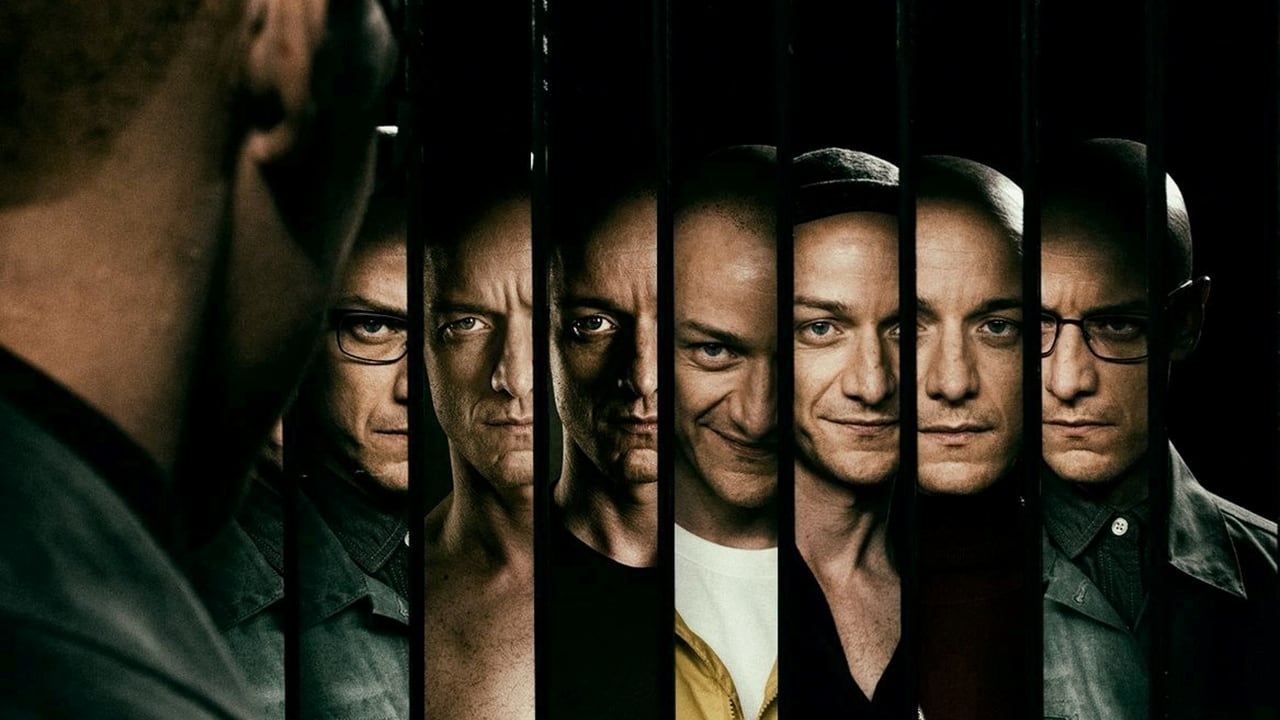
M. Night Shyamalan was basically in director jail before 2016. After a string of big-budget misses that had critics sharpening their pens, he bet his own money on a claustrophobic thriller about a man with 23—well, technically 24—distinct personalities. It worked. The cast of the movie split didn't just deliver a hit; they revived a career and launched a secret cinematic universe that nobody saw coming until the final frames rolled.
Most people remember the veins popping out of James McAvoy’s neck. Honestly, it’s hard to forget. But looking back, the movie’s success relied on a very specific chemistry between a veteran stage actor playing a dozen roles at once and a then-rising star in Anya Taylor-Joy who had to carry the emotional weight of the "final girl" trope without it feeling cheesy.
The Chameleon: James McAvoy as Kevin Wendell Crumb
Let's talk about McAvoy. He wasn’t actually the first choice. Joaquin Phoenix was originally in talks for the role, but when that fell through, McAvoy stepped in with only a few weeks to prepare. It’s wild to think about now because it’s almost impossible to imagine anyone else pivoting from the lisping, nine-year-old Hedwig to the terrifyingly poised Patricia in a single camera take.
McAvoy plays Kevin Wendell Crumb, a man suffering from Dissociative Identity Disorder (DID). However, the "cast" within Kevin is what makes the movie move. You’ve got Barry, the flamboyant fashion obsessive who is actually a front for the more dangerous personalities. Then there’s Dennis, the obsessive-compulsive kidnapper who kickstarts the plot.
The physical transformation McAvoy undergoes is more than just costume changes. He changes his posture. He changes his eye flutter. When he becomes Hedwig, his entire face seems to round out, losing the sharpness of the more mature personalities. It’s a masterclass in physical acting that often gets overlooked because people focus so much on "The Beast," the superhuman 24th personality that shows up in the third act.
The Horde: Breaking Down the Main Personas
While the movie mentions 23 personalities, we only see a handful. Dennis and Patricia are the "leaders" of the group known as The Horde. They believe in the arrival of The Beast, a religious-like figure who will cleanse the "unclean"—those who haven't suffered.
- Dennis: The muscle. He has a foot fetish and a need for absolute cleanliness.
- Patricia: The matriarch. She is polite, terrifyingly calm, and deeply manipulative.
- Hedwig: The child. He’s nine years old, loves Kanye West, and provides the only (very dark) comic relief in the film.
- Barry: Usually the one in "the light" (the term the personalities use for who is in control), but he is suppressed by Dennis and Patricia for most of the movie.
McAvoy has since mentioned in interviews that playing these roles was exhausting. He had to keep track of which personality "knew" what the others were doing. It wasn't just about acting; it was about internal logistics.
Anya Taylor-Joy: The Quiet Power of Casey Cooke
Before she was the Queen’s Gambit or Furiosa, Anya Taylor-Joy was Casey Cooke. If McAvoy is the explosion, Taylor-Joy is the slow-burning fuse. Her performance is incredibly internalized. Casey isn't your typical horror movie victim who screams and runs into a closet. She’s observant. She’s a survivor of trauma herself, which the movie reveals through a series of disturbing flashbacks involving her uncle.
This shared trauma is the thematic core of the cast of the movie split. The movie argues—controversially to some—that suffering creates a different kind of human. Casey recognizes the danger in Kevin because she has seen "beasts" in her own life.
Betty Buckley plays Dr. Karen Fletcher, the only person who truly sees Kevin as a human being rather than a monster. Buckley is a Broadway legend, and she brings a necessary warmth to a film that is otherwise very cold and clinical. Her scenes with McAvoy function almost like a play. They are long, dialogue-heavy sequences where she tries to outmaneuver a mind that is constantly shifting. Her death in the film is the point of no return; it’s when the "science" of the movie gives way to the "supernatural."
Supporting Players and the Shock Ending
The two other girls kidnapped alongside Casey—Claire (Haley Lu Richardson) and Marcia (Jessica Sula)—serve a specific purpose. They represent the "normal" world. Their reactions are what you’d expect: panic, poorly planned escape attempts, and terror. Their presence highlights why Casey is different. While they try to fight Dennis, Casey tries to manipulate Hedwig.
And then, there’s the cameo.
If you saw this in theaters in 2016, the collective gasp during the final scene was audible. Bruce Willis appears as David Dunn, sitting in a diner, linking Split to Shyamalan's 2000 film Unbreakable. This changed everything. It turned a standalone psychological thriller into a superhero origin story for a villain.
The Controversy Surrounding DID
It’s worth noting that the depiction of Dissociative Identity Disorder in Split has been heavily criticized by mental health professionals. Organizations like ISSTD (International Society for the Study of Trauma and Dissociation) have pointed out that people with DID are far more likely to be victims of violence than perpetrators.
Shyamalan leans into the "comic book" logic, suggesting that Kevin’s personalities can actually change his body chemistry—like one personality having diabetes while others don’t. While this makes for great cinema, it’s far removed from the medical reality of the condition. As a viewer, it’s best to view the cast of the movie split through the lens of a dark fairy tale or a graphic novel rather than a medical documentary.
Why the Movie Still Holds Up
Split succeeded because it felt small. It didn't rely on CGI cities falling down. It relied on James McAvoy’s face. The tension comes from not knowing which person is going to walk through the door.
The movie also benefited from a tight script. Every bit of information Casey learns about "The Horde" is used later. When Hedwig tells her about his walk-in closet or the window that isn't really a window, it’s not just flavor text. It’s a blueprint for the finale.
What You Should Do Next
If you’ve recently rewatched Split or are seeing it for the first time, there are a few things you should do to get the full experience:
- Watch Unbreakable First: If you haven't seen the 2000 film with Bruce Willis and Samuel L. Jackson, the ending of Split loses 90% of its impact.
- Follow up with Glass: The trilogy concludes with Glass (2019), which brings McAvoy, Willis, and Jackson together. It’s a polarizing movie, but it completes Kevin Wendell Crumb’s arc.
- Pay Attention to the Colors: Shyamalan uses color theory specifically in this trilogy. Kevin is associated with yellow (the color of mustard/ochre), which represents his role as a "broken" but enlightened figure in the director's mythology.
- Look for the Deleted Scenes: There are several deleted personalities that McAvoy filmed. They didn't make the final cut to keep the pacing tight, but they show even more of his range.
The cast of the movie split managed to turn a $9 million budget into a $278 million global phenomenon. It remains a high-water mark for 2010s horror-thrillers, proving that a compelling central performance can be more terrifying than any jump scare. James McAvoy didn't get an Oscar nomination for this, which many still consider one of the biggest snubs of that decade. He gave us 24 characters for the price of one, and each one felt like a real threat.