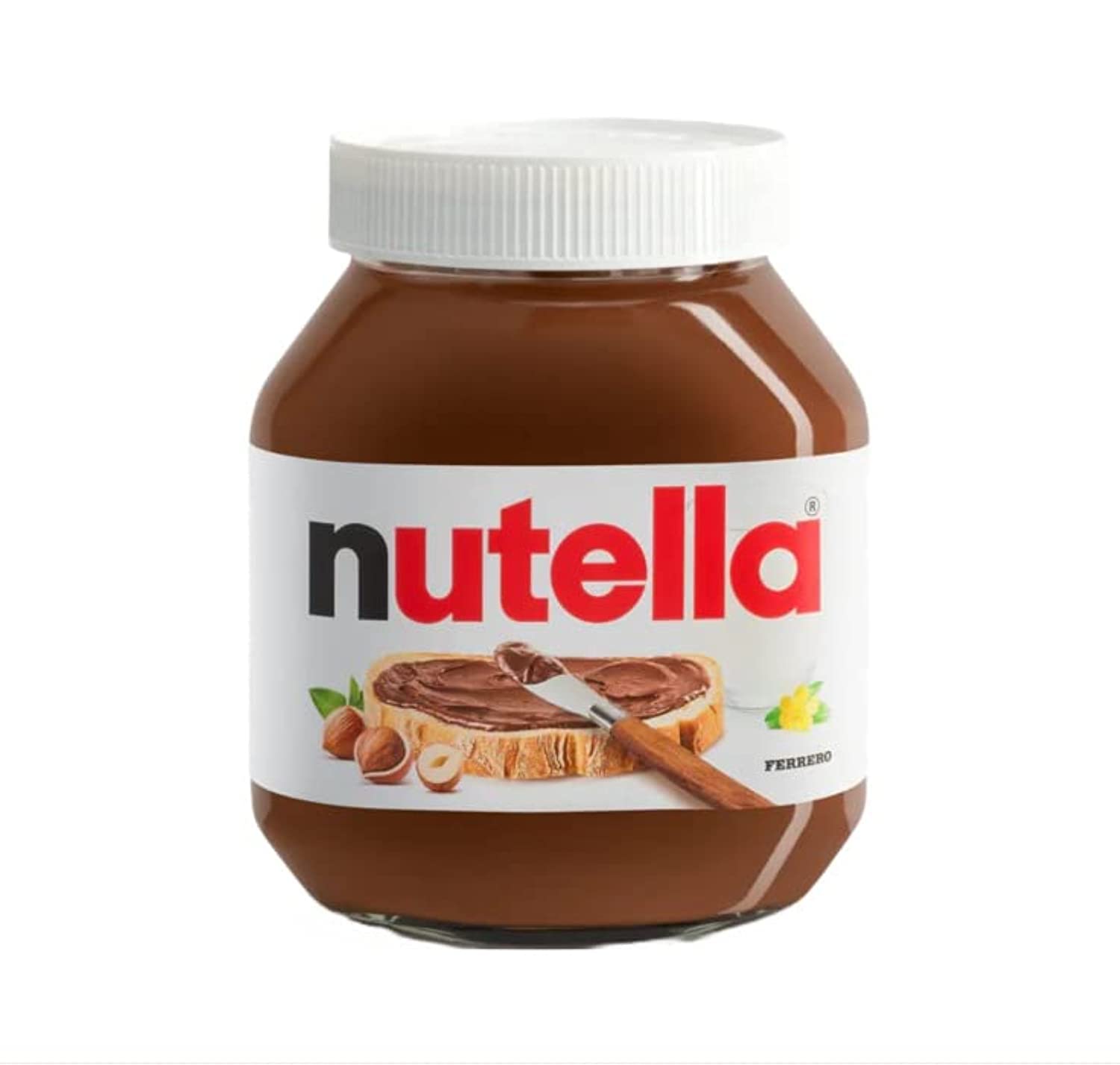
You’re at the breakfast table. You reach for that iconic jar of hazelnut cocoa goodness, and you ask someone to pass the "Nuh-tell-ah." It sounds right. It feels right. Everyone in the room knows exactly what you mean. But here’s the kicker: according to Ferrero, the Italian giant that actually makes the stuff, you’re likely butchering the name.
The debate over how to pronounce Nutella has been raging across social media for years, sparking heated arguments from London to New York. It’s one of those weird linguistic quirks where a brand name becomes so ingrained in our daily lives that we never stop to think if we’re actually saying it the way the creators intended.
Honestly, the truth is a little bit jarring if you’ve spent your whole life saying "Nut" like the thing that grows on a tree.
The Official Word from Ferrero
So, let's get into the nitty-gritty. If you head over to the official Nutella website—specifically the FAQ section that settled this once and for all back in 2015—they lay it out pretty clearly. It isn't "Nuh-tell-ah."
It’s "New-tell-ah."
Yeah. Take a second. Most people find that incredibly annoying.
The logic behind it is actually pretty straightforward when you look at the brand’s origins. Nutella is an Italian product. In Italian phonetics, the "u" sound is typically a "oo" sound (like in "flute" or "moon"). Ferrero wanted a global brand, so they combined the English word "nut" with the Italian suffix "-ella," which acts as a softening, endearing diminutive. But instead of keeping the English "uh" sound, they stuck with the Continental "oo."
It’s a linguistic hybrid. A mashup. A "Portmanteau" that doesn't quite follow the rules of the language it borrowed its prefix from.
Why "New-tell-ah" Feels So Wrong to English Speakers
Language is a funny thing. We see the word "nut." We know what a hazelnut is. Naturally, our brains take the shortest path between point A and point B. If the product is made of nuts, why on earth would we say "New"?
It feels counterintuitive.
If you live in the United States or the UK, saying "New-tell-ah" might even get you some side-eye at a dinner party. It sounds "fancy" or even "pretentious," like someone who goes to Italy for a weekend and comes back pronouncing "bruschetta" with a hard 'k' sound and a fake accent.
Interestingly, Ferrero isn't actually police-ing your speech. They’ve gone on record multiple times saying they don’t mind how fans say it. In a statement released to various news outlets during the peak of the "pronunciation wars," the company basically said that as long as you're enjoying the spread, they're happy. They recognize that regional accents and local dialects are going to warp the brand name, and they aren’t about to start a war with their customers over a vowel sound.
A Global Perspective on the Spread
If you travel to Italy, you’ll hear the "New-tell-ah" version much more frequently, though even there, the emphasis can shift depending on whether you’re in the north or the south.
In France—where people eat Nutella like it’s a basic human right—the pronunciation softens even further. They tend to lean into the "-ella" part with that distinct French flair. They don't worry about the "nut" vs "new" debate as much because the word is essentially a foreign loanword to them anyway.
The Marketing Mistake?
Some branding experts argue that Ferrero made a slight tactical error in the English-speaking market. By using the English word "nut" but expecting a non-English vowel sound, they created a permanent friction point.
Compare this to a brand like IKEA.
In Sweden, it’s pronounced "Ee-kay-uh."
In America, everyone says "Eye-kee-ah."
IKEA eventually just leaned into the American version for their US commercials because fighting the natural tide of a language is like trying to stop the ocean with a plastic spoon.
Ferrero has done something similar. If you watch their US television commercials, you’ll notice something sneaky. Often, the voiceover avoids saying the name right at the start, or they say it so quickly that the "u" sound is neutralized. They want to stay "correct" to their heritage without sounding like they're correcting their customers.
How the Internet Broke Over This
Back in 2015, the "New-tell-ah" revelation went viral. It was all over Twitter (now X) and Facebook. People felt betrayed. It was like finding out that the "s" in "Illinois" wasn't silent, or that "GIF" was supposed to be pronounced with a soft 'j' (which, by the way, the creator of the GIF says is true, but almost no one listens to him either).
There’s a specific kind of "Internet Outrage" that happens when a brand tries to change the way we speak. We feel a sense of ownership over these products. They are in our pantries. We grew up with them. Telling someone they’ve been saying the name of their favorite childhood snack wrong is a weirdly personal affront.
The "Nut" Logic
The strongest argument for "Nuh-tell-ah" is simply the ingredient list.
- The product is 13% hazelnuts.
- The word starts with N-U-T.
- English phonics dictate that N-U-T is "Nut."
If the company wanted us to say "New," they should have spelled it "Newtella." But then, of course, everyone would think it was made of small amphibians, which is a marketing nightmare. So, they stuck with the spelling that made sense for the ingredients and just hoped the pronunciation would follow the Italian roots.
It didn't.
The Cultural Divide
What’s fascinating is how this reflects our broader approach to global brands. We live in a world where you can buy the same jar of spread in a bodega in Brooklyn and a kiosk in Rome. But the way we vocalize that brand is a marker of our local culture.
In the UK, the "Nuh" sound is even shorter and more clipped. In Australia, it’s often stretched out. None of these are "wrong" in a functional sense—the goal of language is to communicate an idea, and everyone knows what you're talking about.
Let's Talk About the Ingredients for a Second
Whatever you call it, the stuff inside the jar is what matters. It's a combination of sugar, palm oil, hazelnuts, cocoa, and skim milk. The high hazelnut content is actually what saved the company during World War II. Cocoa was expensive and rationed in Italy, so Pietro Ferrero (the founder) used hazelnuts—which were plentiful in the Piedmont region—to stretch the chocolate.
It was originally a solid loaf called Pasta Gianduja. Later, it became a spreadable version called Supercrema. It wasn't until 1964 that the first jar of what we now call Nutella left the factory in Alba.
Imagine if they had kept the name Supercrema. We wouldn’t be having this debate. Everyone knows how to say "super" and "crema." But they wanted something that sounded more international, more modern. They wanted that "-ella" suffix because it sounded friendly and catchy.
How to Handle This in the Real World
If you’re wondering how to pronounce Nutella the next time you’re at a grocery store, you have two choices.
First, you can be "Correct." You can use the "New-tell-ah" pronunciation. This is the official Ferrero-sanctioned way. It respects the Italian heritage of the brand. It’s technically accurate. However, be prepared for people to think you’re being a bit of a pedant.
Second, you can be "Normal." You can keep saying "Nuh-tell-ah" like 90% of the English-speaking world. You won’t be "wrong" in the eyes of your peers, and even the company itself says this is totally fine.
Does it actually matter?
In the grand scheme of things, no. But in the world of SEO and brand identity, it’s a goldmine. The fact that people are still searching for the "right" way to say it decades after the product launched in the US shows how much we care about these small cultural touchstones.
Actionable Steps for the Curious
If you want to dive deeper into the world of Italian phonetics or just want to win your next trivia night, here is what you should do:
Watch the original Italian commercials. Go on YouTube and search for Nutella ads from the 1970s or 80s produced in Italy. You will hear the "New-tell-ah" sound very clearly. It’s the best way to train your ear to how the Ferrero family actually says it.
Check the back of the jar. Depending on where your jar was manufactured, the branding and descriptions might give you clues into the local marketing strategy. Notice how they never use a phonetic spelling on the label? That's intentional. They want to remain ambiguous to avoid alienating anyone.
Try the "Crema di Nocciola" test. If you go to a high-end Italian market, look for "Crema di Nocciola" (hazelnut cream). Pronouncing that correctly—"No-cho-la"—is actually much more impressive than getting Nutella right.
Experiment with the vowel. Next time you’re with friends, casually drop the "New-tell-ah" pronunciation and see if anyone notices. It’s a great social experiment to see who corrected you and who just rolled with it.
Ultimately, the way you say it doesn't change the taste. Whether it’s "New" or "Nuh," it’s still going to be the best part of a crepe or a piece of toast. The brand has achieved "proprietary eponym" status in many parts of the world—like Kleenex or Xerox—where the name is bigger than the pronunciation.
Just don't call it "chocolate butter." That's the only truly wrong way to say it. Regardless of the vowel, the hazelnut is the star of the show, and that's exactly what the Ferrero family intended when they mixed those first batches in a small bakery in Alba.
Next time you open a jar, remember that you're participating in a sixty-year-old linguistic experiment. Enjoy the spread, forget the stress of the "correct" vowel, and maybe just focus on not eating the whole jar in one sitting. That’s the real challenge.