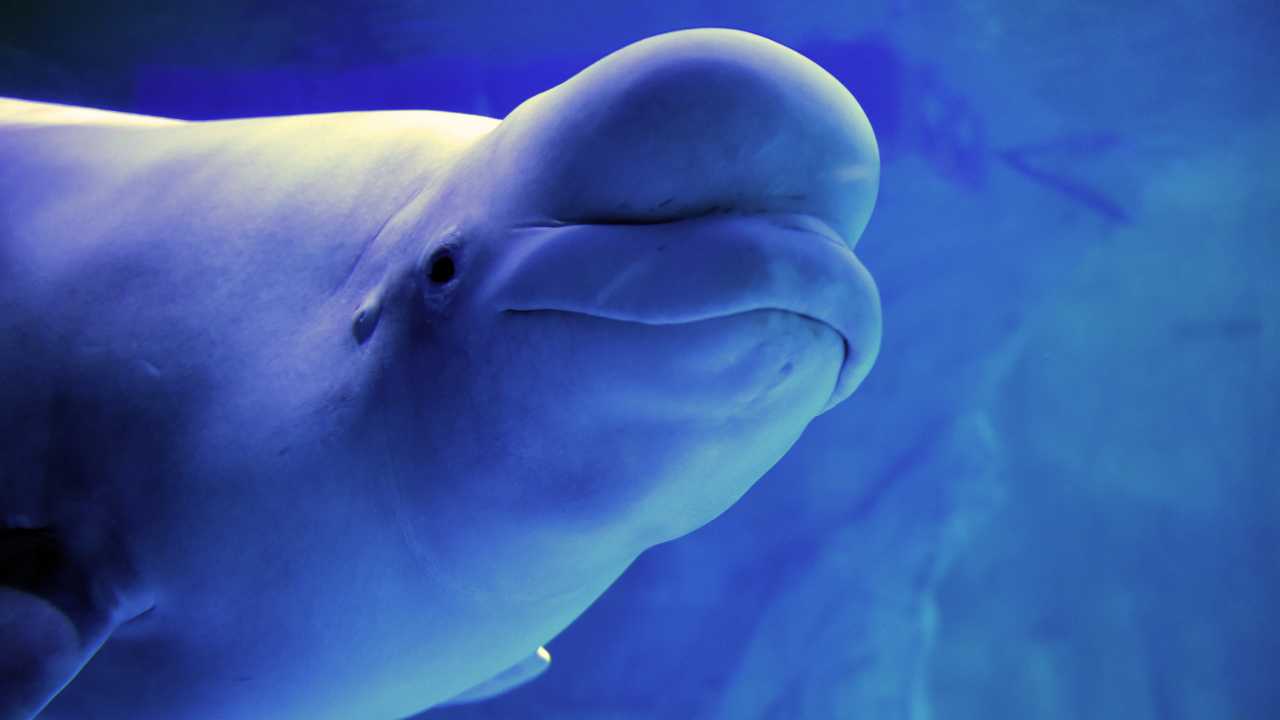
Ever looked at a beluga whale and wondered how much that white, "marshmallowy" creature actually weighs? You've probably seen them at an aquarium or in a nature documentary, bobbing their heads and looking surprisingly nimble for something so... well, chunky.
Honestly, it’s a bit of a shocker. Most people guess they’re about the size of a dolphin. They aren't. Not even close.
When we talk about how much do beluga whales weigh, we’re looking at a range that varies wildly based on gender, age, and even the time of year. A full-grown male beluga can tip the scales at a staggering 3,307 pounds (1,500 kg). To put that in perspective, that’s roughly the weight of a mid-sized SUV, like a Toyota RAV4, floating through the icy Arctic waters.
The Gender Gap: Why Males Out-Bulk Females
In the world of Delphinapterus leucas (that's the fancy scientific name), males are the heavy hitters. Nature gave them a significant size advantage.
Adult males usually grow to be about 11 to 15 feet long. Because they have more bone density and muscle to push through the water, their weight generally stays between 2,500 and 3,307 pounds. Some reports from researchers like those at the Georgia Aquarium even suggest a maximum reported weight of 3,600 pounds (1,633 kg). That's a massive animal.
Females are a bit smaller, but still no lightweights.
They usually top out around 10 to 13 feet and weigh between 1,000 and 2,998 pounds. You've probably noticed that's a huge range. A smaller female might weigh half as much as a dominant male. It really depends on the specific population they belong to. For example, belugas in the St. Lawrence Estuary might have different average masses compared to those in the Bering Sea.
From Birth to Blubber: The Growth Journey
It starts small. Kinda.
A newborn beluga calf enters the world weighing between 119 and 176 pounds (54 to 80 kg). That’s basically the size of a fully grown human man. Imagine giving birth to that! They’re about five feet long at birth, usually a dark grey or brownish color that fades to that iconic snowy white as they hit maturity.
The Blubber Factor
Why are they so heavy? It's not just "big bones." It's the fat.
Up to 40% of a beluga's body weight is blubber.
In the freezing Arctic, you need a serious winter coat. This layer of fat can be up to five inches thick. It’s not just for warmth, though. Blubber acts as:
- Energy Storage: When food is scarce in the winter, they live off their own body fat.
- Buoyancy: It helps them float without constant effort.
- Streamlining: It gives them that smooth, torpedo shape that lets them glide through the water despite their bulk.
Seasonal Weight Loss and Gains
Belugas are opportunistic eaters. They aren't picky. They'll eat over 100 different species, from octopus and squid to cod and herring.
Their weight isn't static. It's actually pretty common for a beluga to lose a significant chunk of its mass during the winter when the ice closes in and hunting gets harder. By the time they arrive in shallow estuaries during the summer to molt their skin, they are often at their leanest.
Once they hit those nutrient-rich summer feeding grounds, they gorge. Some studies on the Eastern Beaufort Sea belugas show that hunters and researchers observe a "fattening up" period where their girth increases visibly over just a few months.
Where You Can Actually See These Giants
If you're looking to see how much a beluga whale weighs with your own eyes, you have a few options.
Traveling to places like Churchill, Manitoba in Canada is the gold standard. In the summer, thousands of belugas migrate to the Churchill River to feed and give birth. You can take kayak tours where they’ll swim right up to you. Seeing a 3,000-pound animal surface just inches from your kayak is a humbling experience. It makes those "3,307 pounds" feel very real, very fast.
Other spots include:
- Tadoussac, Quebec: Great for seeing the St. Lawrence population.
- Svalbard, Norway: For a truly rugged Arctic experience.
- Cook Inlet, Alaska: Though this population is endangered and sightings are more regulated.
Actionable Tips for Responsible Beluga Watching
If you're planning a trip to witness these heavyweights in person, keep these things in mind:
- Choose Eco-Certified Operators: Look for tours that follow strict distance guidelines. You don't want to stress out an animal that's trying to nurse a calf or conserve energy.
- Watch the "Melon": That bulge on their forehead is called a melon. It’s full of oil and wax and helps them with echolocation. It’s also very sensitive, so never try to touch a whale if it approaches your boat.
- Check the Season: For most Arctic locations, July and August are the peak times. This is when they are most active in the shallow coastal waters.
- Understand the Risks: Climate change is a big deal for belugas. Less sea ice means more shipping traffic and noise pollution, which can interfere with their ability to hunt and maintain that crucial body weight. Support organizations like NOAA Fisheries or WWF that monitor these populations.
Knowing the sheer mass of these animals changes how you look at them. They aren't just cute, "smiling" sea creatures. They are massive, highly adapted survival machines that carry hundreds of pounds of fat just to stay alive in the coldest places on Earth.
Next time you see a photo of one, just remember: you're looking at nearly two tons of Arctic engineering.