You probably think you know the deal. Carbon goes up, the ice melts, and the world gets a little bit warmer every year. It’s the standard narrative we’ve been hearing since middle school science class. But honestly? The reality of how burning fossil fuels affects the environment is much weirder, more immediate, and frankly, more complicated than just a thermometer ticking upward.
We’re talking about a fundamental chemistry experiment being performed on the only planet we’ve got. When we dig up ancient carbon—stuff that hasn't seen the light of day for 300 million years—and set it on fire, we aren't just "polluting." We are re-engineering the atmosphere in real-time. It’s not just about polar bears. It’s about the very air you’re breathing right now and the price of your groceries next month.
The Invisible Blanket and the Greenhouse Effect
Let's get the basics out of the way first. Fossil fuels—coal, oil, and natural gas—are essentially stored sunlight. Millions of years ago, plants and plankton soaked up solar energy. They died, got buried, and turned into high-energy sludge. When we burn them, we release that energy, but we also release the byproduct: Carbon Dioxide ($CO_2$).
Most people think of $CO_2$ as a cloud of smoke. It isn't. It’s a transparent, odorless gas that acts like a one-way mirror. It lets sunlight in to warm the Earth but stops the heat from escaping back into space. This is the Greenhouse Effect. According to data from the National Oceanic and Atmospheric Administration (NOAA), atmospheric $CO_2$ levels have jumped from about 280 parts per million (ppm) before the Industrial Revolution to over 420 ppm today. That’s a 50% increase in a blink of an eye on a geological timescale.
It’s fast. Too fast.
The planet’s average temperature has risen by about $1.1°C$ ($2.0°F$) since the late 19th century. That sounds small, right? Like the difference between wearing a sweater or a t-shirt. But for a planet, that’s a fever. It’s enough to shift the entire jet stream.
Why Your Local Weather Feels "Broken"
You’ve probably noticed that storms feel "angrier" lately. That isn't just your imagination.
Because we’ve warmed the atmosphere, it can hold more water. Physics 101: for every degree Celsius of warming, the air can hold about 7% more water vapor. When it rains, it doesn't just drizzle; it dumps. We saw this with Hurricane Harvey in 2017, where researchers at the Lawrence Berkeley National Laboratory found that the rainfall was significantly more intense due to the extra heat stored in the Gulf of Mexico.
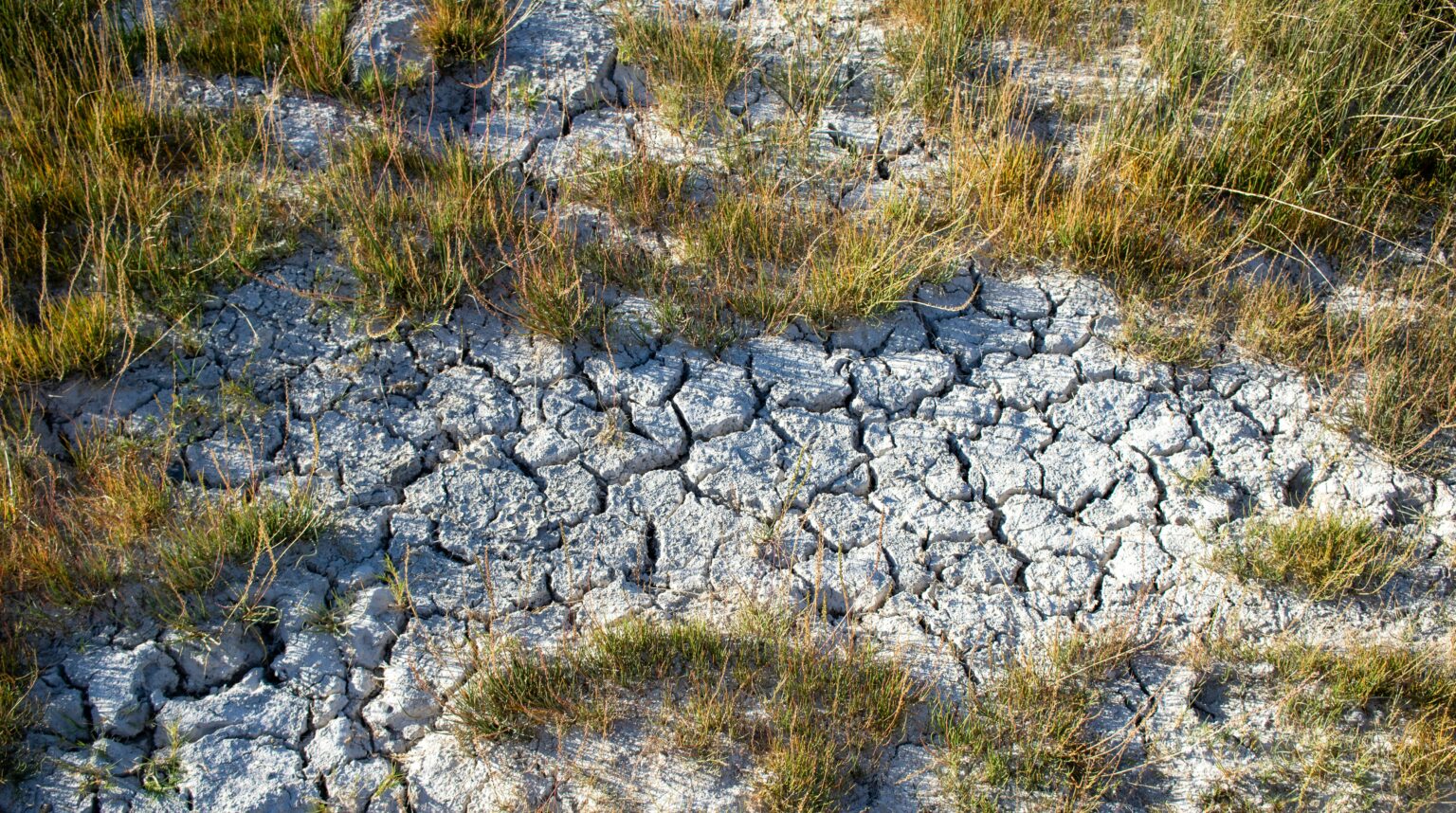
On the flip side, that same heat sucks moisture out of the soil faster than ever. This is why the American West is currently locked in a "megadrought" that experts say is the worst in 1,200 years. Fossil fuels aren't just making it hot; they're making the weather swing wildly between extremes.
The Ocean Is Getting Sour
This is the part that usually gets left out of the conversation. Everyone talks about the air, but the ocean is actually doing most of the heavy lifting. The seas have absorbed roughly 90% of the excess heat trapped by greenhouse gases and about 30% of the $CO_2$.
But there’s a catch.
When $CO_2$ dissolves in seawater, it forms carbonic acid. This process, called Ocean Acidification, is literally dissolving the shells of sea creatures. Think of oysters, clams, and the tiny pteropods that make up the base of the marine food chain. If they can’t build their shells, the fish that eat them die. If the fish die, the entire global fishing industry—which billions of people rely on for protein—collapses.
The Intergovernmental Panel on Climate Change (IPCC) warns that if we don’t curb emissions, the pH of the ocean will continue to drop, creating a "dead zone" for coral reefs. By the way, coral reefs aren't just pretty to look at. They protect coastlines from storm surges and provide a nursery for 25% of all marine life.
The Air You Breathe: Beyond the Carbon
Let’s get personal for a second. How burning fossil fuels affects the environment isn't just a "future" problem or an "ocean" problem. It’s a "your lungs" problem.
Coal plants and internal combustion engines don’t just emit $CO_2$. They spit out a cocktail of nastiness:
- Particulate Matter (PM2.5): These are tiny particles, 30 times smaller than a human hair. They are small enough to enter your bloodstream and settle in your lungs.
- Nitrogen Oxides ($NO_x$): These react with sunlight to create ground-level ozone (smog).
- Sulfur Dioxide ($SO_2$): The primary cause of acid rain.
The World Health Organization (WHO) estimates that air pollution—mostly from fossil fuel combustion—kills about 7 million people prematurely every year. That’s more than the population of many small countries. It causes asthma, heart disease, and even cognitive decline. We’re basically paying to poison ourselves.
The Permafrost Time Bomb
There’s a scary feedback loop happening in the Arctic that keeps climate scientists awake at night. It’s called the Permafrost Melt.
In places like Siberia and Alaska, the ground has been frozen for tens of thousands of years. Trapped inside that frozen soil are massive amounts of organic matter—dead plants and animals. As we burn fossil fuels and warm the planet, that permafrost is thawing.
When it thaws, microbes start eating that ancient organic matter and releasing methane.
Methane is like $CO_2$ on steroids. Over a 20-year period, it’s about 80 times more potent at trapping heat than carbon dioxide. Once this "feedback loop" starts in earnest, it doesn't matter if we stop driving cars tomorrow; the permafrost will keep leaking gas. It’s a self-sustaining cycle that could potentially spiral out of control.
The Economic Reality (It’s Not Just About Trees)
Some people argue that moving away from fossil fuels is too expensive. Honestly? Staying on them is what’s going to bankrupt us.
We’re already seeing the "climate tax" in real-time. Home insurance rates in Florida and California are skyrocketing because of flood and wildfire risks. Some companies are pulling out of these states entirely.
Then there’s agriculture. When the "breadbaskets" of the world—like the U.S. Midwest or the Ukraine—hit record temperatures, crop yields drop. High heat causes "pollen sterility" in corn. If the corn doesn't grow, beef prices go up. Everything is connected. The Swiss Re Institute estimated that the global economy could lose 10% of its total economic value by 2050 if we don't meet Paris Agreement targets.
What Actually Matters Right Now
It feels overwhelming. I get it. But the "all or nothing" mindset is a trap.
We don't need to return to the Stone Age. We just need to stop digging up 300-million-year-old carbon. The transition to renewables like wind and solar isn't just about being "green"—it's about energy security and cheaper power. In many parts of the world, it is now officially cheaper to build a new solar farm than to keep an old coal plant running.
The impact of fossil fuels is everywhere, from the chemistry of the deep ocean to the frequency of the heatwaves in your backyard.
Actionable Steps to Reduce Your Footprint
If you’re wondering what to actually do, stop worrying about plastic straws for a second and look at the "big three":
- Electrify your heat: If your furnace dies, look into a heat pump. They are 3-4 times more efficient than gas furnaces because they move heat rather than creating it.
- Check your bank: Many major banks use your savings to fund massive new oil and gas pipelines. Switching to a "green" bank or a local credit union can actually have a bigger impact than giving up meat.
- Vote on local policy: The biggest changes happen at the city and state levels regarding building codes and public transit.
The environment isn't a static thing that’s "over there." It’s the life support system we’re currently redlining. Understanding the damage is the first step toward fixing the leak. It's a massive challenge, sure, but the technology to swap out the old fuels for something better already exists. We just have to use it.