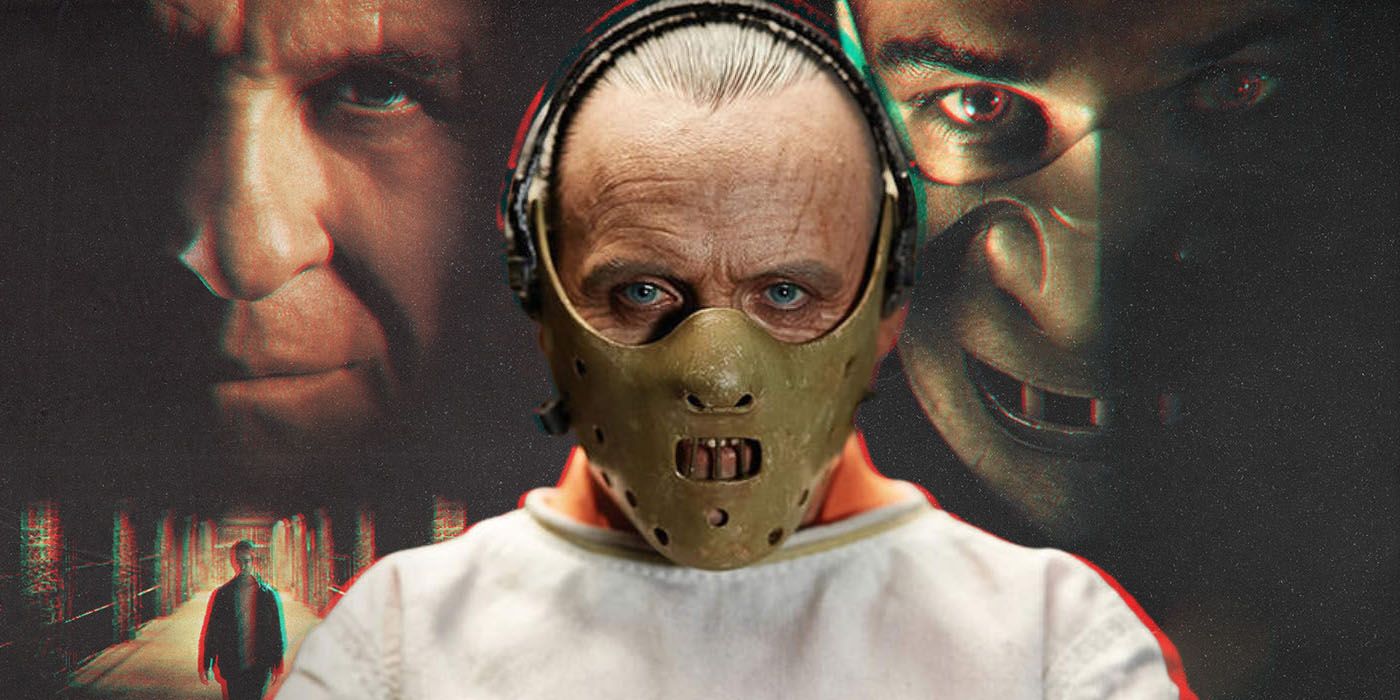
Let’s be real for a second. Trying to figure out the Hannibal Lecter series order is a total headache if you just look at the release dates. You’ve got a movie from the eighties that everyone forgets, a massive Oscar-winner from the nineties, and then a prequel that came out years later but takes place decades earlier. It’s a mess. Honestly, if you just jump in blindly, you’re going to be spoiled on major plot twists before you even see the "first" story. Thomas Harris, the guy who wrote the books, didn't exactly make it easy for us by writing the backstory last.
Most people think The Silence of the Lambs is the beginning. It isn't. It's actually the second book and the second "main" movie. If you want to see the rise and fall (and weirdly, the romantic side?) of Dr. Lecter, you need a roadmap.
The Chronological Nightmare: Reading and Watching in Story Order
If you’re a purist who wants to see the timeline unfold exactly as it happened in the "real world" of the characters, the Hannibal Lecter series order starts somewhere most people don't expect: World War II.
The story technically begins with Hannibal Rising. Harris wrote this book—and the screenplay for the film—mostly because he was pressured by producers who were going to make a prequel with or without him. It shows a young Hannibal in Lithuania and France, explaining why he has a taste for, well, people. It’s a revenge flick, basically. Gaspard Ulliel plays the young doctor here, and while it’s not the Anthony Hopkins version we all love, it sets the stage for the trauma.
Then we hit the Red Dragon era. This is where things get tricky. You have the 1986 movie Manhunter, directed by Michael Mann, and the 2002 movie Red Dragon. Both cover the same book. In this part of the timeline, Hannibal is already caught. He’s in the asylum. Will Graham, the FBI profiler who actually caught him, has to come out of retirement to find a new killer called "The Tooth Fairy."
Next is the big one: The Silence of the Lambs. This is the Clarice Starling era. Hannibal is used as a consultant to catch Buffalo Bill. It’s the peak of the series. Finally, you have Hannibal (the book and the 2001 movie), where the doctor is on the loose in Florence, eating brains and dodging an old victim named Mason Verger.
The Problem with Release Dates
Following the Hannibal Lecter series order by the year the movies came out is a wild ride. You’d start with Manhunter (1986), which feels like a neon-soaked synth-pop dream. Then you jump to the gritty, grounded realism of Silence of the Lambs (1991). Then you go to the operatic, almost gory-slapstick vibe of Ridley Scott’s Hannibal (2001).
It’s jarring.
The tone shifts so much it feels like different universes. Brian Cox plays Hannibal in Manhunter, and he’s great—more of a bureaucratic sociopath than a refined monster. But then Anthony Hopkins took the role and made it iconic. If you watch by release date, you see the character evolve from a side-note to a superstar, but the story jumps back and forth in time like a broken VCR.
Where Does the TV Show Fit In?
Okay, let's talk about the Bryan Fuller Hannibal series. This is the "secret sauce" that most fans argue is the best version of the character. Mads Mikkelsen plays the role here.
The show is a "remix." It doesn't strictly follow the Hannibal Lecter series order found in the books. Instead, it takes place during the gap between Hannibal Rising and Red Dragon. It shows Hannibal working as a psychiatrist helping the FBI, before anyone knows he’s a killer. It eventually works its way into the Red Dragon plot in Season 3.
It’s a different beast entirely. It’s more of a dark, psychosexual fever dream than a standard police procedural. If you’re a newcomer, I’d actually suggest watching the movies first, then diving into the show. The show is so stylish that it makes the older movies look a bit "dusty" by comparison.
The Definitive "Best Way" to Experience the Story
If you want the most emotional impact, don't go chronologically. Go by the quality of the narrative.
Start with The Silence of the Lambs. It’s the perfect introduction. You don’t need to know anything about Hannibal's past to be terrified of him. Then, go back to Red Dragon (the 2002 version) to see how he was caught. Only then should you watch Hannibal to see how his story "ends." Save Hannibal Rising for last, or honestly, skip it if you want to keep the character mysterious.
There is a certain power in not knowing why he is the way he is. Explaining a monster usually makes him less scary.
The Literary Perspective
Thomas Harris wrote the books in a specific sequence that differs from the film releases.
- Red Dragon (1981)
- The Silence of the Lambs (1988)
- Hannibal (1999)
- Hannibal Rising (2005)
The books are way more detailed—shocker, right? But specifically, the ending of the book Hannibal is radically different from the movie. The movie changed it because the actors and the director thought the book's ending was too "weird" and dark. In the book, Hannibal and Clarice Starling actually end up together, running away to South America after some serious brainwashing and therapy. It’s bizarre. It’s disturbing. And it’s the "true" Hannibal Lecter series order according to the creator.
Actionable Next Steps for Fans
If you’re ready to dive into the world of the Chesapeake Ripper, here is how you should actually execute your marathon:
- Watch the "Hopkins Trilogy" first: Start with The Silence of the Lambs, then Red Dragon, then Hannibal. This gives you a consistent actor and a solid narrative arc.
- Don't ignore Manhunter: Even though it doesn't "fit" the Hopkins timeline, Michael Mann’s direction is incredible. It’s a 1980s masterpiece that offers a very different, colder take on the source material.
- Read the book 'Hannibal' last: Even if you’ve seen the movie, the book will shock you. The ending changes everything you think you know about Clarice Starling.
- Binge the TV series for the "Alt-Universe" experience: Treat the Mads Mikkelsen series as a separate, beautiful nightmare. It’s best enjoyed when you already know the lore, so you can see how they cleverly subvert your expectations.
- Skip Clarice (2021): There was a CBS show about Clarice Starling. Because of weird rights issues, they couldn't even mention Hannibal Lecter by name. It’s generally considered skippable for those following the core Hannibal Lecter series order.
The most important thing is to embrace the inconsistency. This isn't the Marvel Cinematic Universe. It’s a collection of stories by different creators at different times, all obsessed with the same monster. Whether you prefer the refined Hopkins, the visceral Mikkelsen, or the low-key Cox, the order you choose defines how much of the mystery you get to keep. Stay hungry.