It’s the question that’s been haunting Marvel fans since the credits rolled on Avengers: Endgame in 2019. Honestly, the MCU has a habit of being incredibly vague when it comes to its heavy hitters. We saw Tony Stark’s funeral. We watched Natasha Romanoff plummet to her death on Vormir. But when it comes to the man who started it all, the answer to did Steve Rogers die in the MCU is surprisingly layered, slightly frustrating, and largely dependent on how you define "gone."
If you’re looking for a simple "yes" or "no," you won't find it in the scripts. Marvel is playing a long game here. At the end of Endgame, we see an elderly Steve Rogers sitting on a bench, having lived a full life in an alternate timeline with Peggy Carter. He hands the shield to Sam Wilson. He looks happy. He looks peaceful. But he doesn't look like a guy who is about to keel over in the next five minutes. Yet, by the time The Falcon and the Winter Soldier kicks off on Disney+, the world is acting like he’s effectively deceased.
The Moon Theory and the "Gone" Status
Sam Wilson and Bucky Barnes spend a significant amount of time dodging questions about Steve's whereabouts. In the first episode of The Falcon and the Winter Soldier, Joaquin Torres mentions a popular fan theory within the MCU world: Steve Rogers is actually living on a secret base on the moon. It’s a funny nod to the audience, but it also highlights a key point. The public doesn't know where he is.
Even the Smithsonian exhibit dedicated to Captain America lists him as "retired" or implies his service has ended, but it doesn't explicitly state a date of death. Usually, when a public figure like Steve Rogers passes away, there’s a state funeral. We haven't seen one. The lack of a public mourning ceremony—something Marvel loves to use for emotional weight—is the biggest piece of evidence that Steve might still be breathing somewhere, just very, very old.
Is he dead? Technically, we haven't seen a body. In the world of comic books and superhero cinema, if there’s no body, there’s no death.
The Timeline Problem: Where is Old Man Steve?
Let's talk about the logistics of that final scene. Steve went back in time to return the Infinity Stones. Instead of coming back through the "quantum tunnel" immediately, he stayed in the 1940s. He married Peggy. He lived through the 50s, 60s, 70s, and 80s as a husband and, presumably, a guy who knew everything that was going to happen but stayed out of the way.
By the time he appears on that bench in 2023, he’s well over 100 years old. If we assume he was roughly 25-30 (physically) when he went back, and he lived another 80 years, he’s pushing 110. The Super Soldier Serum is the wild card here. Does it stop aging? No. We saw that with Isaiah Bradley. It slows it down, sure, but it doesn't make you immortal.
Did Steve Rogers die in the MCU during the events of Phase 4 or Phase 5? It’s highly probable that his physical body has finally given out by now. In Spider-Man: Far From Home, which takes place about eight months after Endgame, Steve is included in the "In Memoriam" video at Peter Parker’s school. This suggests that, to the general public, Captain America is dead. But kids in high school making a video isn't exactly a primary source for SHIELD-level secrets.
What the Creators Actually Say
Directors Joe and Anthony Russo have been asked this roughly a billion times. Their stance has always been that Steve’s story is "complete." They view the bench scene as his retirement. However, Christopher Markus and Stephen McFeely, the writers, have sometimes offered slightly different interpretations of the timeline mechanics.
The most "official" word we have comes from The Falcon and the Winter Soldier showrunner Malcolm Spellman. He intentionally kept Steve’s status vague. He’s gone. Whether that means he’s "gone" to a nursing home in a secret location or "gone" to the great beyond is left to the viewer's imagination.
There’s a nuance here that most people miss. Marvel wants to have their cake and eat it too. They want Sam Wilson to be the one and only Captain America without Steve looming over his shoulder, but they also want the option to bring Chris Evans back for a massive "Secret Wars" cameo in 2027. If they officially kill him off on screen, that return loses its punch.
Why the Moon Theory Might Be Real (Sorta)
Okay, he's probably not on the moon. But the idea that Steve is in a "secure location" makes a lot of sense. Think about it. A 110-year-old man who possesses the secrets of the Avengers and the blood of a Super Soldier is a massive security risk. He wouldn't be living in a standard assisted living facility in Brooklyn. He’d be under the protection of what’s left of the Avengers or a government agency that actually respects him.
The Isaiah Bradley Parallel
To understand Steve’s potential fate, you have to look at Isaiah Bradley. Isaiah is the "Black Captain America" who was experimented on and imprisoned. He’s old, he’s scarred, but he’s alive. He proves that the serum allows for a very long, albeit naturally aging, life.
If Isaiah can survive into his 80s or 90s after decades of abuse and prison, Steve—who had a life of relative peace and top-tier medical care—could easily still be alive. When Bucky visits Isaiah, it provides a mirror to what Steve might look like. It reinforces the idea that the serum isn't a fountain of youth; it’s just a very sturdy biological foundation.
The Evidence for Steve Being Deceased
- The "In Memoriam" Video: As mentioned, Far From Home treats him as dead.
- The Language Used by Sam and Bucky: They never say "I'm going to visit Steve." They say "He's gone." In grief-speak, that’s usually code for passed away.
- The Shield Handover: Steve wouldn't just give up the shield if he planned on hanging around as an advisor. He wanted to be done.
- Narrative Weight: Keeping him alive cheapens the sacrifice of his youth. The whole point of his arc was that he finally "got the girl" and lived his life. Death is the natural conclusion to that life.
Honestly, the ambiguity is the point. If you want to believe Steve is out there somewhere watching baseball and drinking tea, you can. If you want to believe he passed away peacefully in his sleep shortly after giving Sam the shield, that fits too.
Examining the Super Soldier Serum's Role
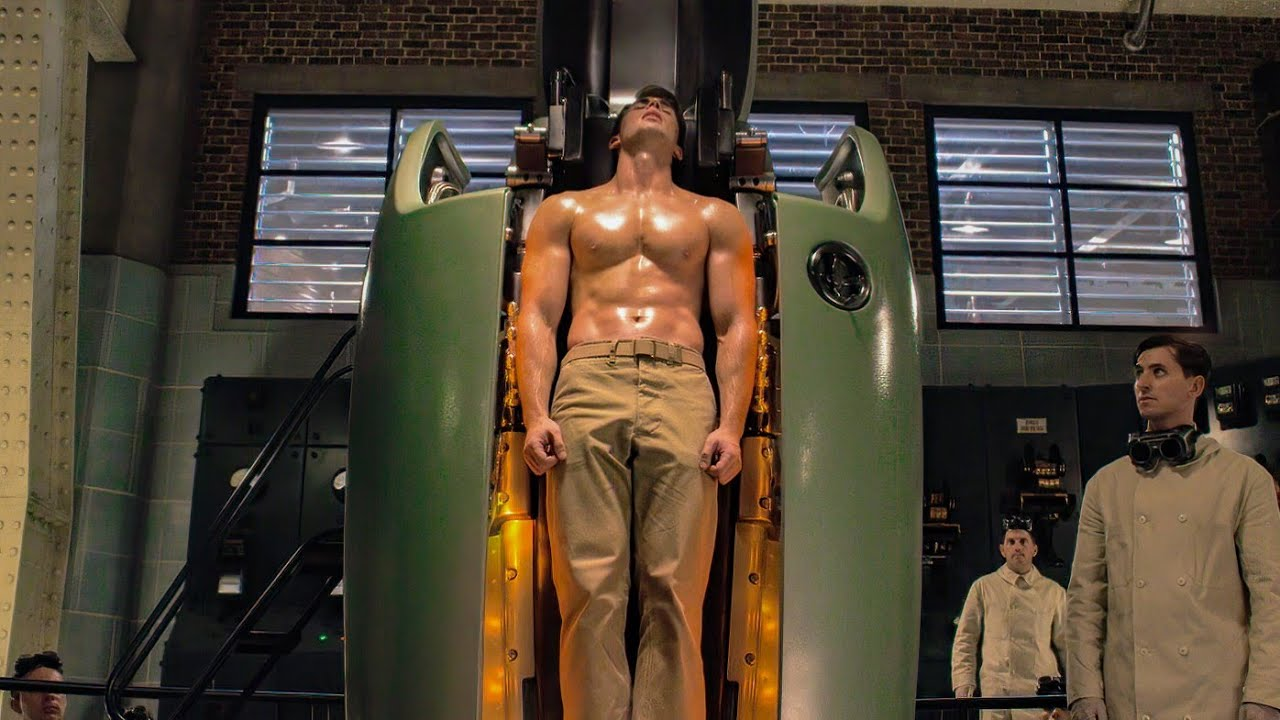
We need to get clinical for a second. The serum created by Abraham Erskine was designed to enhance "everything that is inside." It made Steve stronger, faster, and more resilient. It also gave him an incredibly efficient metabolism.
In Captain America: The First Avenger, Steve mentions he can't get drunk because his metabolism burns the alcohol too fast. This implies his cells regenerate at a rate significantly higher than a normal human. This is why he survived being frozen in ice for 70 years. His body was in a state of suspended animation, but the serum kept his cellular structure intact.
When he ages naturally in the alternate timeline, that cell regeneration is still happening. He’s not going to die of "old age" at 80 like a normal person. His heart is stronger. His lungs are better. He could realistically live to be 130 or 140. If he went back to 1948 and we are now in 2024-2026 in the MCU timeline, he’s been back for about 78 years. Add his physical age of roughly 30 when he left, and he’s 108. That is well within the realm of "still alive" for a Super Soldier.
What Most People Get Wrong About the Ending
A common misconception is that Steve "erased" his old life. He didn't. He lived a "stealth" life. This brings up the question of whether he died in the main MCU timeline or the alternate one.
The Russo brothers confirmed that Steve lived his life in a branched reality. This means he had to use Pym Particles to jump back to the main timeline (Earth-616/199999) to sit on that bench. He traveled between universes. If he’s that old and he’s making inter-dimensional jumps, he’s clearly still got his wits about him.
The Chris Evans Factor
We can't talk about Steve Rogers without talking about Chris Evans. Evans has been vocal about his love for the character but also his desire to let the ending stand. However, rumors of his return have circulated since 2021. Even Kevin Feige has been uncharacteristically "no comment" about it.
If Evans returns, it will likely be as a "Multiverse" version of Cap, or perhaps in a flashback. But if he returns as "Old Man Steve" or a rejuvenated Steve, then we have our answer. Until that happens, the MCU is keeping him in a state of narrative limbo. It's a "Schrödinger’s Cap" situation. He is both dead and alive until a movie specifically needs him to be one or the other.
Key Takeaways for Fans
If you're trying to win an argument with a friend about whether Steve is dead, here's the breakdown of what we actually know for sure:
- The MCU hasn't shown a funeral. Unlike Tony Stark, Steve hasn't had an on-screen send-off.
- Sam Wilson and Bucky Barnes treat him as "gone." This is the strongest evidence for his death, as they would be the ones to know.
- The "Moon Theory" is an in-universe joke. It’s Marvel’s way of saying "the public doesn't know, and we aren't telling you yet."
- The Super Soldier Serum makes him hard to kill. "Old age" for Steve Rogers isn't the same as old age for you or me.
- Narratively, he is retired. For the purposes of the current story, Steve Rogers is no longer a factor in the MCU’s geopolitical landscape.
What should you do with this information? First, stop looking for a definitive answer in the Disney+ subtitles—you won't find it. Instead, focus on Sam Wilson’s journey in Captain America: Brave New World. The fact that Sam is struggling with the legacy of the shield suggests that Steve isn't around to give him advice anymore. Whether that's because Steve is dead or because Steve is strictly honoring his retirement is up to your interpretation.
Keep an eye on the upcoming Avengers: Secret Wars. That is the most likely place where Steve’s status will finally be clarified. In the meantime, treat Steve Rogers as "narratively deceased." He has exited the stage, and his return, while biologically possible, would undermine the emotional weight of Endgame.
The best way to stay updated is to watch for how characters refer to him in the past tense. In Brave New World, pay close attention to the dialogue between Sam and Thaddeus "Thunderbolt" Ross. Ross is not the type of man to be vague; if Steve is dead, Ross will likely be the one to say it bluntly. until then, Captain America’s status remains one of the MCU’s greatest, and most intentional, mysteries.