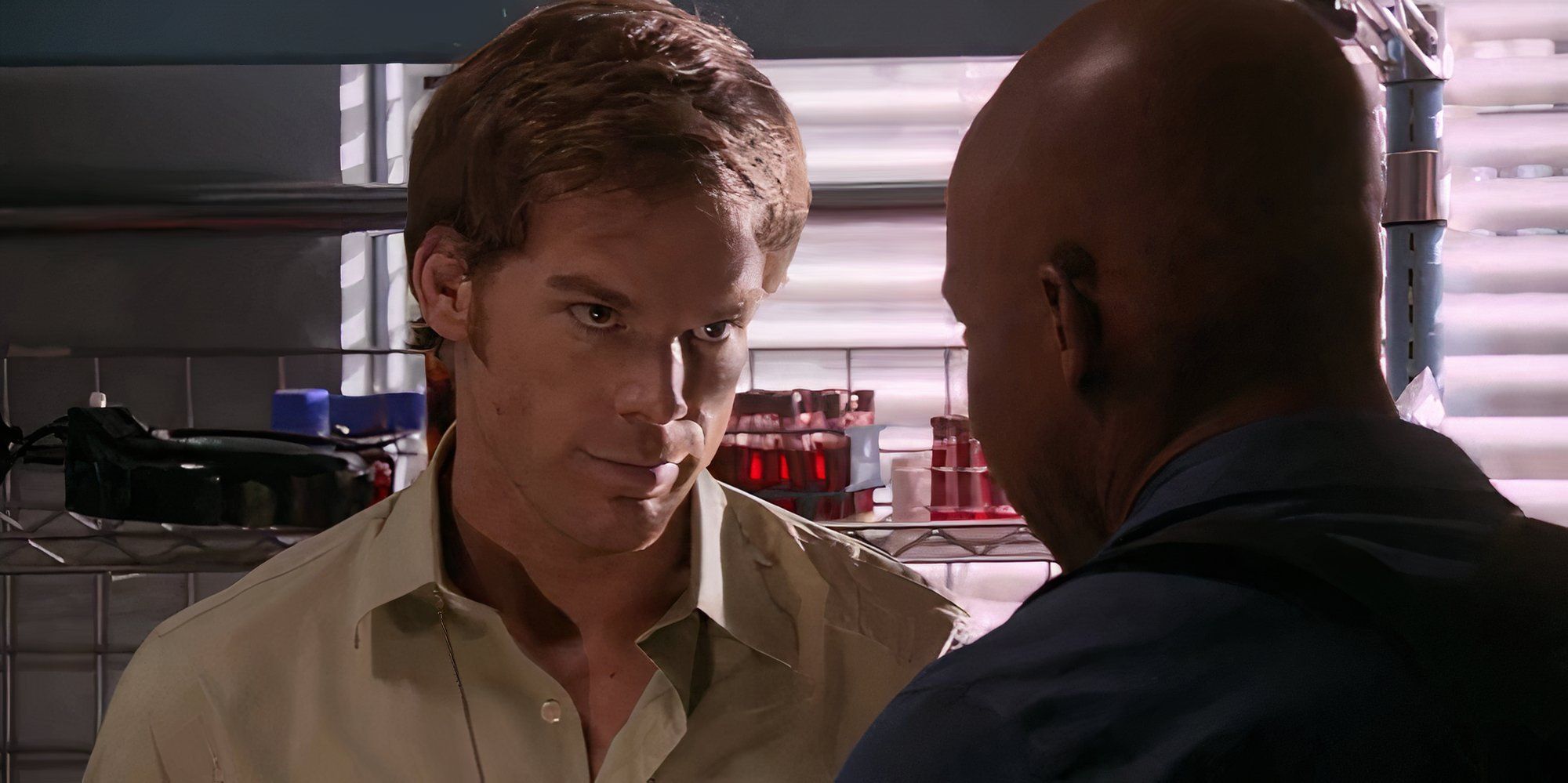
He finally did it. After two seasons of narrowed eyes, aggressive "Surprise, motherf***er" greetings, and a relentless gut feeling that something was off, Sergeant James Doakes actually pinned down the most prolific serial killer in Miami. It wasn't a fluke. When dexter gets caught by doakes, it changes the entire trajectory of the series, shifting it from a "monster-of-the-week" procedural into a high-stakes psychological cage match that the show, frankly, never quite topped.
Most fans remember the explosion at the cabin, but the actual "catch" is much more intimate and terrifying. It happened in the Everglades. Dexter Morgan, usually the smartest person in any room, let his guard down while trying to dispose of the remains of Santos Jimenez. He thought he was alone in the dark, humid silence of the swamp. He wasn't. Doakes had been tracking his car, following the GPS, and basically playing the long game that the rest of the Miami Metro Police Department was too blinded by Dexter’s "nice guy" act to even consider.
It’s a brutal scene. No flashy music. Just the sound of the marsh and the realization that the mask has slipped.
Why Doakes Was the Only One Who Could See Through the Mask
The dynamic between these two was never about evidence; it was about instinct. Doakes was a former Black Ops Ranger. He knew what a killer looked like because he had been one, albeit a state-sanctioned version. From the very first episode of the series, Doakes is the only character who refuses to buy into Dexter’s "awkward lab geek" persona. He calls him a "creep." He stares. He lingers.
Why did it take so long? Well, honestly, Dexter is a master of camouflage. He uses Debra, Rita, and his job as a blood spatter analyst to create a shield of normalcy. But Doakes didn't care about social norms. While everyone else was distracted by the Ice Truck Killer or office politics, Doakes was watching Dexter’s eyes. He noticed the lack of empathy. He noticed that Dexter didn't flinch at crime scenes.
When dexter gets caught by doakes, it’s the culmination of what showrunner Clyde Phillips often described as two predators recognizing each other in the wild. Doakes didn't need a DNA match to know Dexter was a monster; he just needed to see him in his natural habitat.
The Cabin in the Everglades
The confrontation at the cabin is where the power dynamic gets really weird. Doakes discovers the blood slides—the "trophies" Dexter kept in a climate-controlled box. This was the smoking gun. In the world of Dexter, the slides are the ultimate proof of the Bay Harbor Butcher’s identity.
Once Doakes has the slides, the chase is technically over, but the psychological war is just beginning. Dexter manages to overpower Doakes and locks him in a cage inside a remote cabin owned by Jimenez. This is where the writing gets incredibly sharp. For several episodes, we see these two men—one a caged lion, the other a free monster—debating morality, fatherhood, and the "Code of Harry."
It’s claustrophobic. It’s tense. You almost start to feel for Doakes, who is stuck in a cage while the real killer goes back to work, pretending to be a hero.
The Evidence That Sealed the Deal
It wasn't just the blood slides. Doakes was smart enough to take the evidence to a contact to get it analyzed privately. He knew he couldn't trust the department because Dexter was too deep in the system.
Here is what Doakes actually had on him:
- The Blood Slide Box: A collection of trophies from dozens of victims.
- GPS Data: Doakes tracked Dexter's boat, the Slice of Life, to the middle of the ocean where Dexter dumped bodies.
- The Jimenez Connection: Doakes found Dexter at the cabin of the man who murdered Dexter’s mother.
When you look at it objectively, Doakes had won. He had the man, he had the trophies, and he had the location. The only reason Dexter didn't end up in a lethal injection chair right then was because of the sheer chaos of the second season's finale.
The "Surprise" That Changed Everything
We have to talk about the ending of this arc because it’s one of the most controversial moments in TV history. As much as we love Dexter as a protagonist, he’s a villain. And when dexter gets caught by doakes, the show faced a massive problem: How do you keep the show going if the main character is in jail?
The writers took a dark turn. Lila West, Dexter’s "sponsors" and obsessed lover, finds the cabin. She figures out Dexter’s secret and decides to "help" him by blowing the cabin to pieces with Doakes inside.
It was a total "deus ex machina" moment. It felt like a bit of a cop-out to some viewers, but it served a specific purpose. It showed that Dexter’s presence in the lives of others acts like a poison. He didn't kill Doakes directly, but his existence caused Doakes' death. The aftermath was even grimmer; the FBI and Miami Metro concluded that Doakes was the Bay Harbor Butcher. They smeared the reputation of a brave, albeit aggressive, officer to close the case.
Does the Scene Still Hold Up?
Absolutely. If you go back and watch season 2 today, the tension is still thick enough to cut with a knife. Erik King (Doakes) and Michael C. Hall (Dexter) had incredible chemistry. King brought a physical intensity that made you believe he could actually take Dexter down.
Most modern shows drag out a "cat and mouse" game for six seasons. Dexter did it in two. That’s why it worked. By the time the cabin explodes, the audience is exhausted. We’ve seen Dexter almost get caught a dozen times by Maria LaGuerta’s suspicions or Lundy’s task force, but Doakes was the only one who actually put him in a position where he had no move left to make.
Practical Takeaways for Fans Re-watching the Series
If you're diving back into the early seasons or introducing a friend to the show, pay attention to the subtle cues leading up to the moment dexter gets caught by doakes. It’s not just about the big reveal; it’s about the slow erosion of Dexter’s confidence.
- Watch the background. In Season 2, Doakes is almost always in the background of scenes where Dexter thinks he’s being clever. It’s eerie.
- Analyze the "Code." This arc is the first time Dexter really questions if Harry’s Code is a gift or a curse. Doakes represents the reality that the Code doesn't make Dexter a "good" person; it just makes him a disciplined animal.
- The LaGuerta Factor. Remember that Maria LaGuerta never believed Doakes was the killer. Her pursuit of the truth in later seasons (specifically Season 7) is a direct consequence of Doakes catching Dexter in the Everglades.
The legacy of this confrontation is huge. It set the standard for the "high-stakes reveal" in prestige TV. Without Doakes, we don't get the tension of Hank Schrader on the toilet in Breaking Bad. It proved that the most dangerous enemy isn't the one with the most evidence, but the one who simply refuses to look away.
If you want to understand the true darkness of Dexter Morgan, don't look at the people he kills. Look at the one man who actually caught him and paid the ultimate price for being right.
Next Steps for Fans:
- Re-watch Season 2, Episode 9 ("Resistance Is Futile") to see the exact moment the tide turns.
- Compare Doakes' discovery of the slides to how Angela finds the screw in the Dexter: New Blood revival; the parallels in how he leaves evidence behind are fascinating.
- Check out the original Jeff Lindsay novels—the Doakes storyline goes in a completely different, much more gruesome direction there.