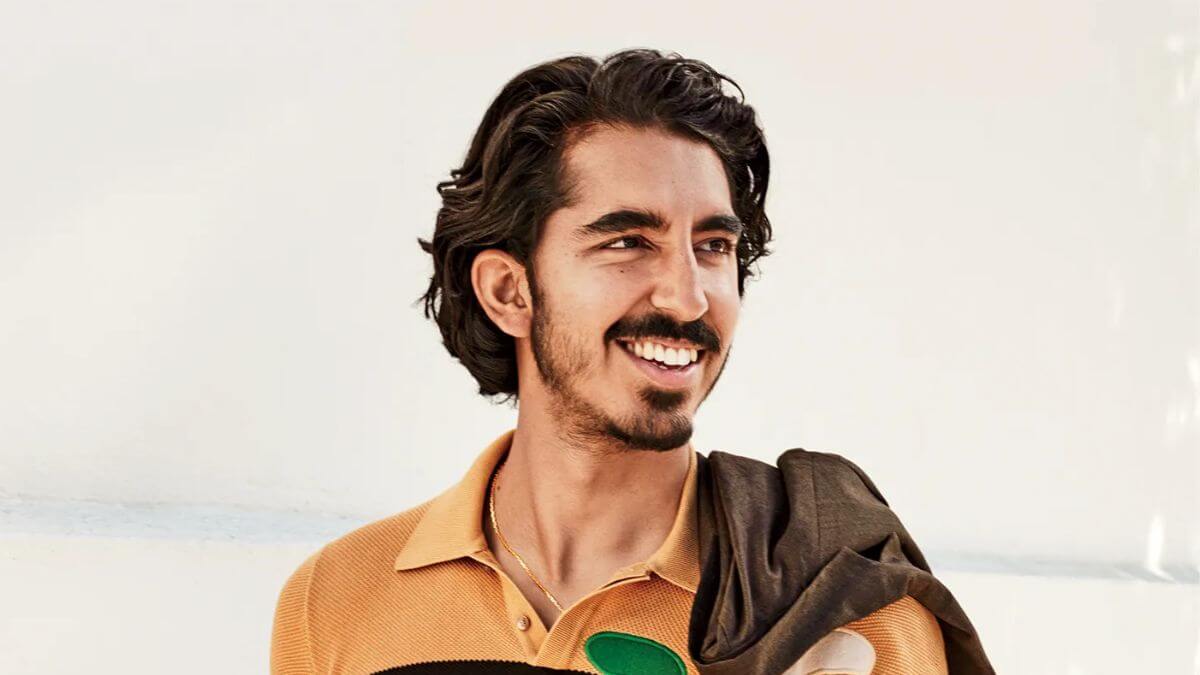
Honestly, we need to talk about the "Lion" era. It was 2016, and the world collectively realized that the scrawny kid from Slumdog Millionaire had basically undergone one of the most aggressive glow-ups in Hollywood history. The catalyst? Dev Patel long hair.
It wasn't just a haircut. It was a cultural shift.
Before that, South Asian men in Western media were usually relegated to the "nerdy best friend" or the "taxi driver" archetype. Think short, sensible, "safe" hair. Then Dev shows up with this wild, shoulder-length mane and a rugged beard, and suddenly the internet is calling him a "pre-Raphaelite painting" and a "heartthrob." It sounds superficial, but that hair did some heavy lifting for representation. It broke the mold. It showed a version of South Asian masculinity that was soulful, messy, and—most importantly—desired.
But here’s the thing: everyone thinks he just stopped visiting his barber. That’s a total myth.
The Evolution of the Mane
If you look back at his early career, Dev's hair was fine. It was just... there. It was that classic "I’m 18 and living in London" crop. But when director Garth Davis cast him in Lion, he didn't just want Dev to act; he wanted him to transform. Davis actually told him to grow his hair and beard for eight months. He wanted a "Dev Patel that no one had ever seen before."
That transition from "twig" to "alpha" (Dev’s words, not mine) changed his career trajectory.
- The Slumdog Days: Short, spiky, very mid-2000s.
- The Lion Breakthrough: This is the "Holy Grail" of Dev Patel long hair. Wavy, thick, and seemingly unmanaged (though we know better).
- The Green Knight: Darker, heavier, more "medieval chic."
- Monkey Man: The 2024 look. This was a grittier, sweatier version of the long hair, styled for high-octane action.
The hair became a tool. In Monkey Man, his directorial debut, the hair isn't just a style choice; it’s part of the "Kid’s" transformation into a vengeful warrior. It’s practical. It’s intimidating. It’s a far cry from the polite kid we met in 2008.
How to Actually Get the Dev Patel Look
Most guys see a photo of Dev Patel and think they can just stop cutting their hair for six months.
Don't do that.
If you have thick, wavy, or "Desi" hair, you know the struggle. Without a plan, you don't get the Dev Patel look; you get a mushroom cloud. His look is what stylists call "controlled chaos." It requires specific geometry.
The Barber Talk
When you go to the barber, do not ask for a "Dev Patel." That's too vague. Ask for a long-layered scissor cut. You want to keep the bulk but remove the weight. If your hair is all one length, it’ll look flat on top and triangular at the bottom. You need those layers to create the "tousled" movement that looks like you just ran through a field, even if you’ve just been sitting in an office all day.
The Product Reality
Dev has naturally thick, wavy hair. If yours is pin-straight, you’re going to have a hard time mimicking this exactly. But for the wavy-haired crowd, the secret isn't more shampoo—it’s less.
Stop washing your hair every day. Seriously.
Natural oils are the only thing keeping that frizz at bay. Use a sulfate-free conditioner and, for the love of everything, get some sea salt spray. Spray it on damp hair, scrunch it with your hands, and let it air dry. If you use a hair dryer, use the "cold" setting. Heat is the enemy of the wave.
Why This Specific Look Still Matters in 2026
It’s easy to dismiss this as "just hair." But for a lot of South Asian guys, Dev Patel's long hair was a permission slip.
For decades, there was this unspoken pressure to look "neat" to be accepted in professional or Western spaces. Short hair was the standard. Dev leaned into the texture, the "unruliness," and the sheer volume of Indian hair and made it the most stylish thing in the room.
He didn't try to make it look "European." He let it be what it was.
In Monkey Man, he took it a step further. He used that aesthetic to reclaim a type of action-hero status that had been denied to South Asian actors for a century. The long hair, the scars, the intensity—it all fed into a new narrative.
Common Misconceptions
People think he wears extensions. There's zero evidence for that. The man just has incredible genetics and a likely very expensive conditioning routine.
Another weird one: "He only grew it because he was lazy."
Actually, in multiple interviews, Dev has talked about how much he hated the "prep" for Lion. He felt like a "goofy celery stick" during the awkward middle growth phase. Anyone who has tried to grow their hair out knows the "awkward stage" where you look like a 1970s roadie. Dev had to endure that too. He just did it while being famous.
The Technical Breakdown for Men
If you’re serious about the growth journey, here is the blueprint.
- Patience: It takes about 12 to 14 months to get true shoulder length from a standard buzz cut.
- The "Nape" Rule: While growing it out, keep the hair on the back of your neck (the nape) trimmed. If the back gets too long too fast, you’ll have a mullet before you have a mane.
- Moisture is King: Use a leave-in cream. Indian hair tends to be porous and dry. A tiny bit of argan oil or a dedicated curl cream goes a long way.
Honestly, the look is about confidence. Dev pulls it off because he isn't constantly fussing with it. It looks lived-in. It looks like it has a history.
Actionable Next Steps for Your Hair
If you're looking to replicate this, start by skipping your next two scheduled haircuts. Instead, book a "maintenance trim" at a high-end salon—not a budget barber shop. You need someone who understands how hair falls, not just how to use clippers.
Invest in a quality wide-tooth wood comb. Plastic combs create static, which leads to frizz. Wood helps distribute the natural oils from your scalp down the hair shaft.
Finally, accept the awkward phase. There will be a month—usually around month five—where you look like you’re wearing a helmet. Wear a hat. Power through. The "Lion" look is waiting on the other side.