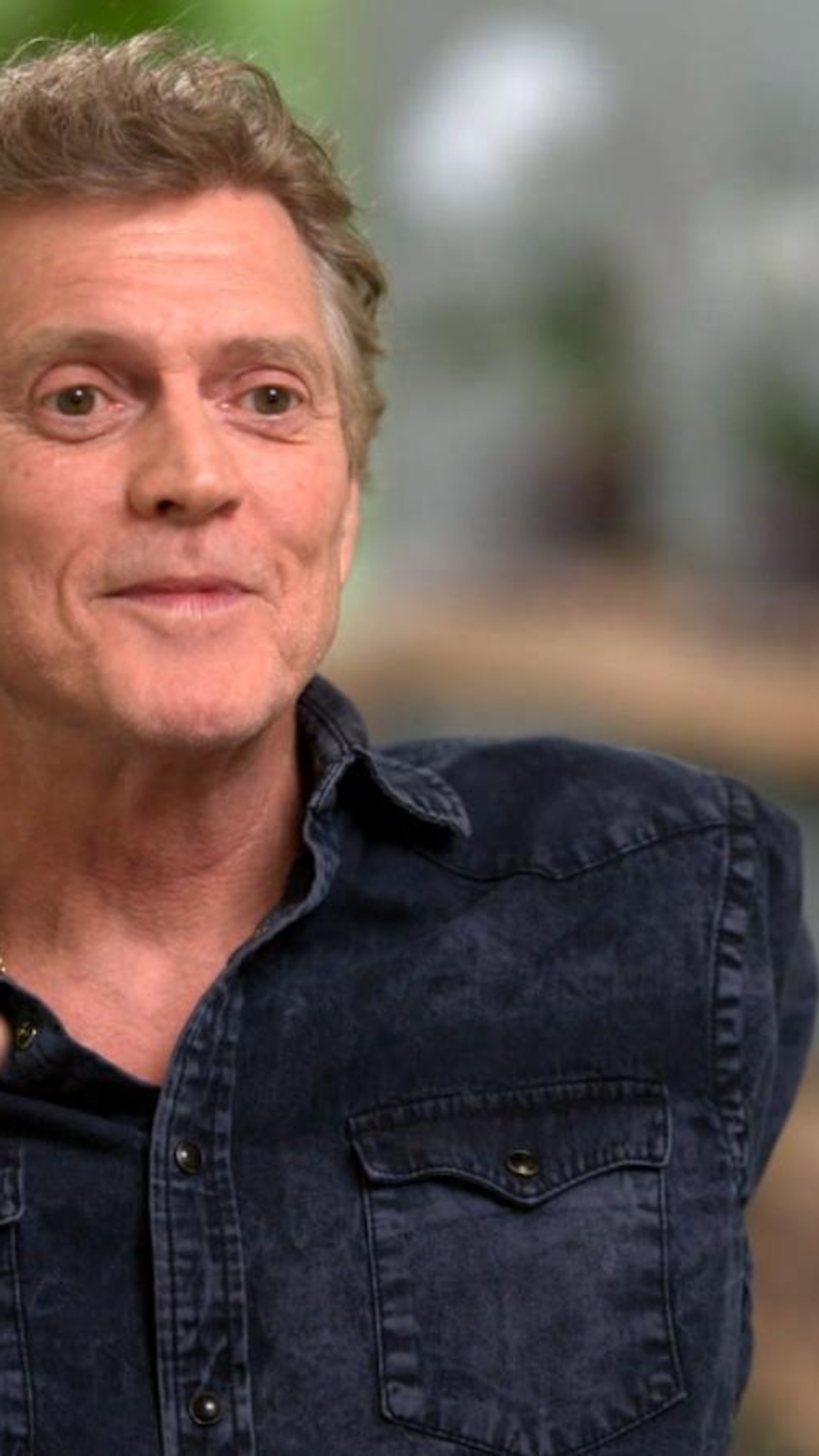
New Year’s Eve, 1984. Most people were busy clinking champagne glasses or making resolutions they’d forget by Tuesday. Rick Allen, the 21-year-old powerhouse drummer for Def Leppard, was driving his Corvette Stingray on a winding road near Sheffield, England. He was young, famous, and basically on top of the world.
Then everything changed in a literal heartbeat.
He tried to pass another driver who was reportedly taunting him. He lost control. The car punched through a dry-stone wall and flipped. Because his seatbelt wasn't fastened correctly, the impact didn't just break bones; it anchored him while the car's movement tore his left arm clean off at the shoulder.
Imagine being a world-class drummer and waking up to realize your career—your whole identity—is physically gone. People usually assume the story ends there. Or they think he just bought a drum machine and called it a day.
Neither is true.
The Brutal Reality of the Recovery
Initially, surgeons actually reattached the arm. A midwife who lived nearby had the presence of mind to pack the limb in ice from her New Year’s party. It was a miracle. But the miracle didn't last. Infection—specifically gangrene—set in, and the doctors had to take the arm off for good.
Rick was devastated. Who wouldn't be? He thought he was done. Honestly, the "Def Leppard drummer one handed" tag wasn't a badge of honor yet; it was a death sentence for his dreams.
But his bandmates? They didn't even look for a replacement. Joe Elliott and the rest of the guys basically told him they’d wait. That kind of loyalty is unheard of in the shark-tank world of 80s rock. While he was in the hospital, Rick started realizing he could do more with his feet than he’d ever tried before.
He began tapping on the footboard of his bed. He realized that the human brain is remarkably good at rerouting signals if you force it to.
How the One-Handed Setup Actually Works
Everyone asks: "How does he play the complex beats on Hysteria with one hand?" The short answer is he doesn't. He plays them with one hand and two very busy feet.
He teamed up with the electronic drum company Simmons. Together, they built a Frankenstein’s monster of a kit. This wasn't some off-the-shelf electronic set. It was a custom-designed rig that moved the snare drum and other crucial triggers from his missing left hand down to his left foot.
If you watch him live today in 2026—still crushing it, by the way—you'll see a bank of four or five pedals on the left.
- The Snare Trigger: Usually, the "backbeat" of a rock song (the 2 and 4) is hit with the left hand. Rick does this with a foot pedal.
- The Hi-Hat: He has to toggle between keeping time and triggering specific samples.
- The Tom-Toms: Some of those iconic 80s fills are triggered via pedals or by his right hand flying across the kit at speeds that would make most two-armed drummers sweat.
The transition wasn't instant. It took years. When the band played the Monsters of Rock festival at Castle Donington in 1986, it was his big "test." The crowd gave him an ovation that supposedly lasted forever. He wasn't just a "disabled" musician anymore. He was the "Thunder God."
Why Hysteria Changed Everything
When Def Leppard finally released Hysteria in 1987, the drum sound was unlike anything else. Because Rick was using electronics and triggers, the producer, Mutt Lange, leaned into that "perfect," almost machine-like precision.
Some purists at the time complained. They said it sounded too "produced." But that's missing the point. The technology didn't replace Rick; it gave him a new language. The album went on to sell over 20 million copies. It turns out the world didn't care if the snare was hit by a hand or a foot, as long as the groove was there.
The Mental Toll and the 2023 Attack
Life hasn't been a straight line of triumphs since the 80s. Rick has been very open about his struggles with PTSD. It’s not just about the arm; it’s about the trauma of the accident itself.
More recently, he faced a massive setback. In March 2023, while he was outside a hotel in Florida, a random teenager attacked him. Rick was shoved to the ground and hit his head hard on the pavement. For a guy who had already survived so much, this was a massive blow to his sense of safety.
In interviews leading into 2026, Rick’s been honest about the fact that he's had to scale back some side projects to focus on his mental health. He still performs with the band—they have a massive residency at Caesars Palace in Las Vegas starting in February 2026—but he’s learned where his limits are.
What Most People Get Wrong
The biggest misconception is that Rick Allen plays a "simplified" version of the drums. If you actually sit behind a kit and try to play a basic "four-on-the-floor" beat while triggering the snare with your left foot, your brain will probably short-circuit.
It requires a level of four-way coordination that is actually higher than traditional drumming. He had to unlearn 10 years of muscle memory and rebuild his neurological pathways from scratch.
Actionable Insights from the Thunder God
Rick’s story isn't just for Def Leppard fans. It’s a blueprint for anyone facing a "career-ending" pivot.
- Adapt the tools, not just the talent: Rick didn't try to play a standard kit with one hand. He changed the kit to fit his new reality. If your current "equipment" (skills, setup, environment) doesn't work for your new situation, change the equipment.
- Loyalty is a two-way street: The band stood by him, but he worked like a dog to prove they were right to do so. Support systems only work if you're willing to do the heavy lifting.
- Neuplasticity is real: Whether you're learning a new language or a new way to play the drums, the brain can adapt. It just takes an insane amount of repetition.
If you want to see this in action, check out the Raven Drum Foundation. Rick and his wife, Lauren Monroe, use drumming to help veterans and first responders deal with trauma. It turns out that hitting things in a rhythm—even with one hand—is actually a scientifically backed way to heal the nervous system.
The Def Leppard drummer one handed story isn't a tragedy. It’s probably one of the greatest technical and psychological comebacks in the history of music. It's a reminder that "broken" doesn't mean "finished."
To truly appreciate the technicality of what Rick does, watch a "drum cam" video of his left foot during a live performance of "Pour Some Sugar On Me." Pay attention to the timing between his right-hand cymbal hits and his left-foot snare triggers. Most drummers find that specific separation nearly impossible to master.