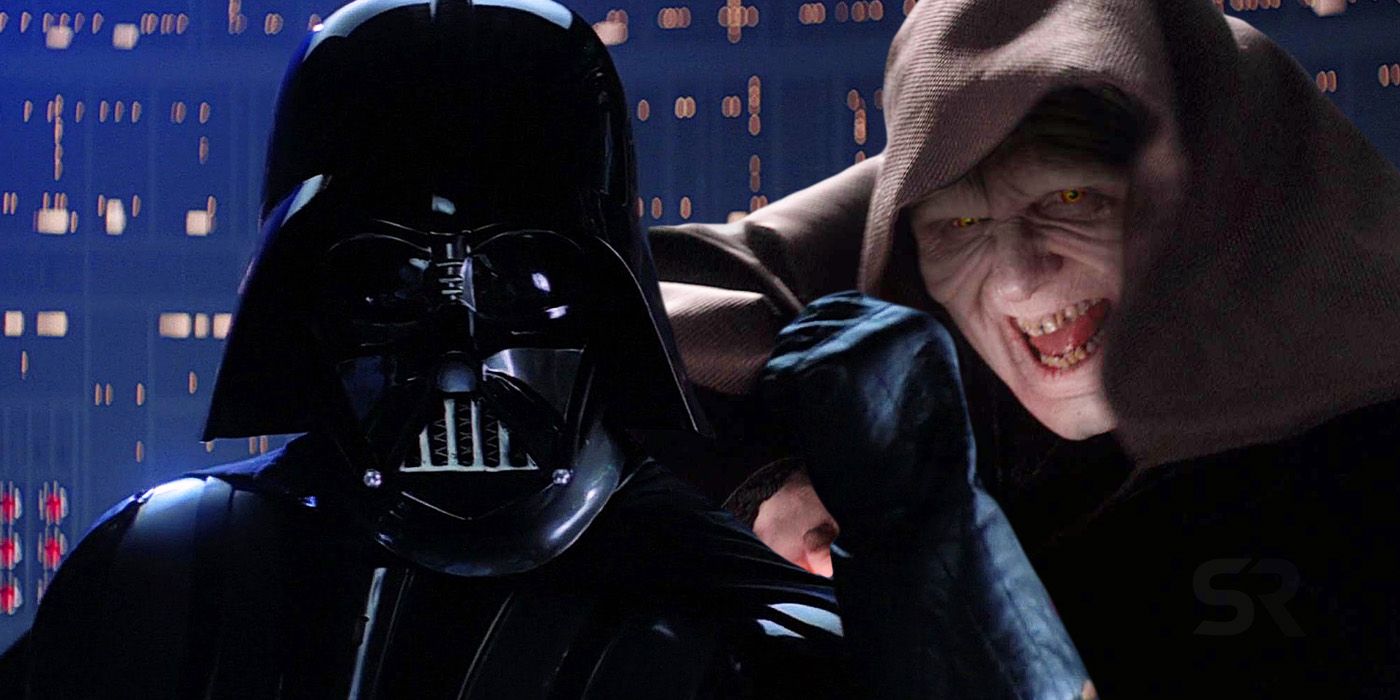
He did it. He finally did it. After decades of serving as the iron fist of a galactic nightmare, the man once known as Anakin Skywalker looked at his son screaming under a barrage of blue lightning and made a choice. When Darth Vader kills Emperor Palpatine aboard the second Death Star, it isn’t just some flashy action sequence. It is the singular most important moment in cinematic sci-fi history because it resolves a prophecy that had been bubbling for six movies and three real-world decades.
People always argue about whether Vader was actually redeemed. Can you really "make up" for blowing up planets and murdering kids just by tossing an old man down a reactor shaft? Probably not in a legal sense. But in the context of the Force, that moment in Return of the Jedi changed everything. It was the "Balance" everyone had been talking about since The Phantom Menace.
The Moment Darth Vader Kills Emperor Palpatine Explained
The scene is visceral. You’ve got Luke Skywalker, beaten and smoking from Force lightning, pleading for his father's help. Vader stands there. He looks at his Master. He looks at his son. In the original 1983 theatrical cut, Vader is silent, which honestly makes it way more powerful than the later "Noooo!" added in the Blu-ray edits.
Vader isn't thinking about politics or the Rebellion. He’s acting on raw, paternal instinct. By hoisting Sheev Palpatine over his head and hurlng him into the abyss, he effectively destroys the Sith.
It cost him his life.
The Emperor's lightning shorted out Vader’s life-support suit almost instantly. This wasn't a tactical victory where the hero walks away into the sunset. It was a suicide mission. Vader knew that the moment he touched Palpatine, he was a dead man. That’s the nuance people miss—he didn’t kill the Emperor to rule; he killed him to end the cycle of pain he helped create.
Why the Prophecy Mattered
George Lucas was pretty specific about this in the prequels. Anakin was the "Chosen One." For years, fans debated if that meant he was supposed to kill the Jedi or the Sith. When Darth Vader kills Emperor Palpatine, he fulfills that destiny. He brings balance by removing the two most powerful practitioners of the Dark Side from the board: himself and his master.
Without Palpatine, the Empire’s central nervous system vanished. The Battle of Endor might have been won by the Ewoks and the Rebel fleet, but the spiritual war was won in that throne room.
The Controversy of the Sequel Trilogy and "Somehow Palpatine Returned"
We have to talk about The Rise of Skywalker. When J.J. Abrams brought Palpatine back, a lot of fans felt it cheapened the fact that Darth Vader kills Emperor Palpatine in Episode VI. If the guy just comes back as a clone or a ghost or whatever, did Vader’s sacrifice even matter?
It’s a fair gripe.
However, looking at the lore from a 2026 perspective, historians of the franchise (and Lucasfilm's own story group) suggest that Vader’s act still provided thirty years of relative peace. Even if Palpatine's "spirit" was clinging to a crusty clone body on Exegol, the Sith as a governing power were broken. Anakin’s intervention saved Luke, and Luke went on to ensure the Jedi could eventually return.
The Physicality of the Kill
Vader’s suit was specifically designed to be vulnerable to electricity. Palpatine was a paranoid guy. He built Vader’s life support with a massive flaw—it couldn't handle high-voltage discharge. So when Vader grabbed him, he was literally being fried from the inside out.
The lightning was arcing through Vader's cybernetic limbs, melting the electronics that kept his lungs pumping. It’s why his breathing sounds so ragged and mechanical in his final moments with Luke. He was basically a walking short-circuit at that point.
Why This Death Hits Differently Than Other Movie Villains
In most movies, the villain dies because the hero is better at fighting. Luke didn't beat the Emperor. Luke was losing. Badly. He was a crumpled heap on the floor.
The Emperor died because he underestimated "the pathetic weakness" of love. He thought he had broken Vader. He thought the suit and the pain and the decades of hate had burned out every last bit of Anakin Skywalker. He was wrong.
- Emotional Weight: It’s a son saving a father by letting the father save the son.
- The Mask: Seeing Vader’s skull flicker through his helmet during the electrocution was a terrifying visual for 1983.
- Redemption: It proved that in the Star Wars universe, nobody is ever truly gone if they choose to do the right thing at the end.
Honestly, if Vader hadn't acted, the galaxy would have stayed under a shadow forever. Luke would have died, and the Rebellion's victory in space would have been a footnote in a much darker story.
Misconceptions About the Kill
Some people think Vader killed the Emperor because he wanted to take over. That's the Sith way, right? The "Rule of Two" implies the apprentice eventually kills the master. But that wasn't this. If Vader wanted to lead, he would have let Luke die and then struck Palpatine when his back was turned. Instead, he threw his life away. He became a Jedi again in those final seconds.
That’s why he appears as a Force Ghost later. You don't get to be a Force Ghost if you die a Sith. The act of killing the Emperor was his ticket back to the Light.
Actionable Insights for Star Wars Fans and Collectors
If you're looking to dive deeper into this specific moment or represent it in your collection, here’s how to approach it without getting lost in the "non-canon" weeds.
Watch the "Unspecialized" Versions
If you can find the theatrical cuts, watch the scene where Darth Vader kills Emperor Palpatine without the added dialogue. The silence of the mask tells a much deeper story. You can see the internal struggle just through the way he tilts his head.
Read "Shadow of the Sith"
For those who are annoyed by Palpatine’s return in the sequels, the novel Shadow of the Sith by Adam Christopher actually does a decent job of bridging the gap. It explains how Palpatine's "presence" felt to those in the galaxy after Vader tossed him, and it helps make sense of the timeline.
Check the Marvel Vader Comics
Specifically, the 2020 run by Greg Pak. It explores Vader's mindset leading up to Return of the Jedi. It shows him visiting Exegol and seeing the Emperor's secret projects. It makes his decision to kill Palpatine feel even more rebellious because he knew exactly what kind of cosmic horror he was up against.
Identify Authentic Memorabilia
If you're buying "The Kill" related merch, look for the Hasbro Black Series "Emperor’s Wrath" Darth Vader. It features the translucent purple helmet with the visible skull, which is the most iconic representation of that specific moment.
Moving Forward with the Lore
To truly understand the weight of this event, you have to look at it as the end of an era. The moment that reactor flared up, the "Empire" ceased to be a monolith and became a collection of warlords. Vader didn't just kill a man; he killed a system.
When you rewatch the saga, pay attention to the music. John Williams uses the "Force Theme" very subtly as Vader makes his move. It’s the Force itself reclaiming its balance through the hands of a broken cyborg. It’s messy, it’s violent, and it’s perfect.
Next Steps for Enthusiasts:
- Analyze the 4K Restoration: Observe the lighting effects on Vader’s suit during the electrocution to see the detail in the practical effects.
- Compare the Novelization: Read the Return of the Jedi novelization by James Kahn for a deeper look into Vader's internal monologue during the Emperor's death.
- Explore the "What If" Scenarios: Look into the Star Wars Infinities comics to see how the story would have changed if Vader had failed to kill the Emperor in that moment.