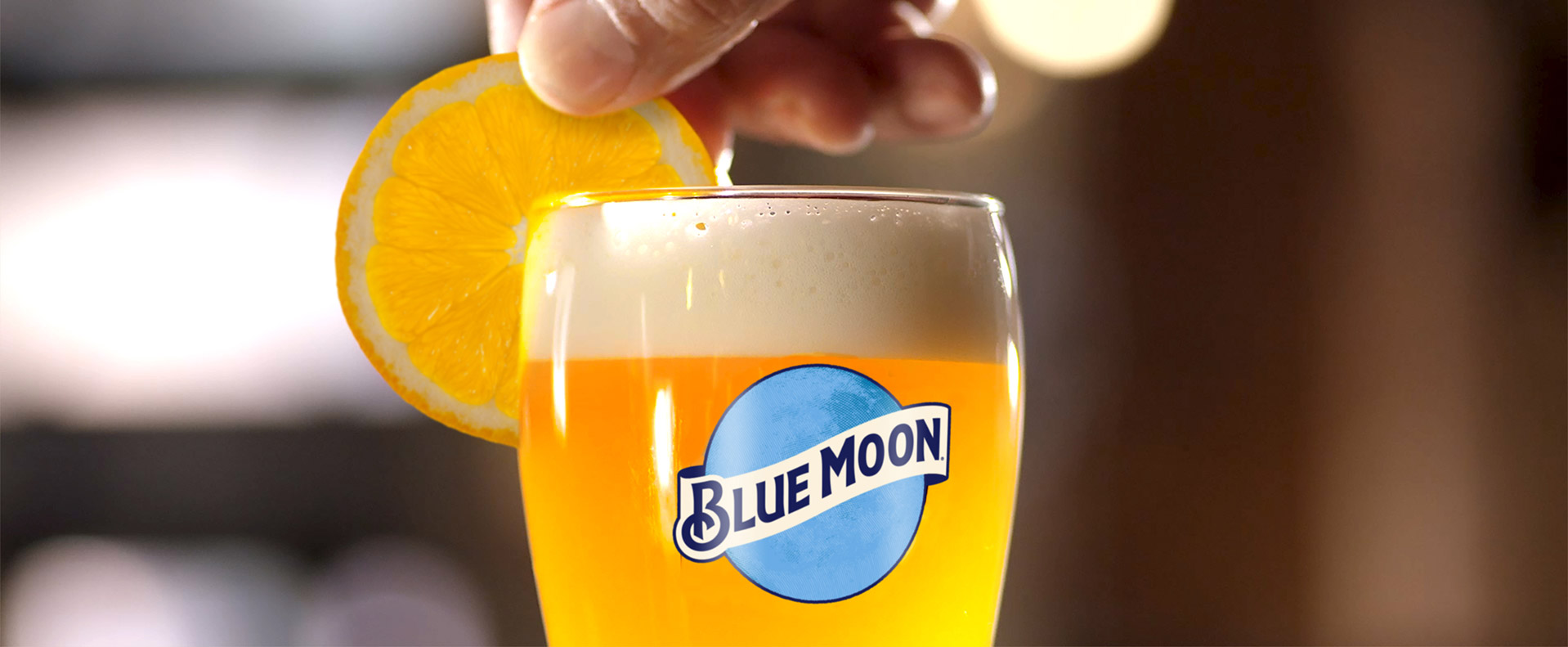
You’re sitting at a bar, the bartender slides a tall, curvy glass toward you, and there it is—a bright orange wheel perched on the rim. It's the classic Blue Moon look. Most people assume this Belgian-style wheat ale comes from some small, rustic craft brewery in the mountains of Colorado, or maybe even an old-world cellar in Brussels. But if you're asking about blue moon where is it made, the answer is actually much more "corporate" than the branding suggests.
It's a huge operation.
The short version? Blue Moon is brewed by Molson Coors. Depending on where you are in the world, your pint might have been canned in Colorado, Virginia, or even overseas. It’s a massive logistical dance that keeps those citrusy notes consistent across continents.
The Sandlot and the Stadium: Where Blue Moon Actually Started
Let’s go back to 1995. This is where the story gets interesting and a bit messy. Keith Villa, a guy with a PhD in brewing from the University of Brussels, wanted to create a beer inspired by the Belgian witbiers he loved, but with a twist that would appeal to American palates. He didn't start in a massive factory. He started at The Sandlot Brewery at Coors Field in Denver.
Yes, a baseball stadium.
At the time, the beer was called Bellyside Belgian Wit. Legend has it that someone said, "A beer this good only comes around once in a blue moon," and the name stuck. For a while, the answer to blue moon where is it made was simply: Denver, Colorado. But success changes things. When the beer exploded in popularity, the small-scale production at the stadium couldn't keep up. Molson Coors (then just Coors) shifted production to their industrial facilities to meet the demand.
The Identity Crisis: Craft or Corporate?
For years, there was a huge debate—and even a lawsuit—about whether Blue Moon was actually a "craft" beer. Since it was tucked under the umbrella of Tenth and Blake Beer Company (the craft and import division of MillerCoors), the branding was very "indie." In 2015, a guy named Evan Parent sued MillerCoors, claiming the company misled consumers into thinking Blue Moon was an independently brewed craft beer.
The court eventually dismissed it. Why? Because the labels didn't technically lie, even if they didn't shout "MADE BY MOLSON COORS" from the rooftops. This brings us back to the reality of blue moon where is it made today: it’s a global product.
The Modern Production Map: Tracking Your Beer
If you buy a pack of Blue Moon in the United States today, it’s most likely coming from one of Molson Coors' massive regional breweries. These are sophisticated, high-volume plants designed for extreme consistency.
- Golden, Colorado: The spiritual home. The Golden brewery is one of the largest in the world.
- Shenandoah, Virginia: This facility handles a massive chunk of the East Coast distribution.
- Albany, Georgia: Another heavy hitter for the southern states.
- Fort Worth, Texas: Keeping the Southwest stocked.
It's not just an American thing anymore, though. If you're in the UK or Europe, the answer to blue moon where is it made changes. Molson Coors has a significant presence in Burton-upon-Trent in the UK, a town famous for its brewing history. They produce Blue Moon there to ensure freshness for the European market. Shipping beer across the Atlantic is expensive and bad for the flavor, so they brew it closer to the consumer.
What’s Actually Inside the Vat?
You can't talk about where it's made without talking about how it's made. The recipe is famously specific. While traditional Belgian wits use bitter Curaçao orange peel, Keith Villa decided to use Valencia orange peel. It's sweeter. More approachable.
They also use:
- Malted barley for the base.
- White wheat to give it that cloudy, hazy look.
- Oats for a creamy mouthfeel.
- Coriander for a spicy, herbal kick.
The "haziness" is a signature. In a massive facility like the one in Golden, maintaining that exact level of turbidity (cloudiness) across millions of barrels is a feat of engineering. If the beer is too clear, fans think it's old. If it's too chunky, it looks unappealing.
The Orange Slice: Marketing Genius or Functional?
Wait, does the orange slice actually matter? Honestly, it started as a way to stand out. When Blue Moon was first being sold, bartenders were used to serving clear lagers with lime. Keith Villa started handing out oranges to bartenders, insisting they garnish the glass.
It worked.
The citrus aroma from the fresh peel bridges the gap between the beer's internal flavors and your nose. It’s a sensory trick. But some purists hate it. They say the oils from the orange peel kill the "head" (the foam) of the beer, making it go flat faster. If you want to drink it like a pro, try the first half without the orange, then squeeze it in for the second half to see the difference.
Why Location Matters for Water Quality
Brewers often talk about water "profiles." The water in Golden, Colorado, is vastly different from the water in Burton-on-Trent. To keep Blue Moon tasting the same regardless of blue moon where is it made, Molson Coors has to "strip" the water and rebuild it with specific minerals. This ensures that a Blue Moon in a London pub tastes exactly like a Blue Moon at a tailgate in Virginia.
Realities of the Global Supply Chain
The scale of Blue Moon is hard to wrap your head around. We aren't talking about a guy with a copper kettle. We're talking about silos of grain and automated bottling lines that move thousands of units per minute. This industrial scale is why the price stays relatively low compared to a "true" local microbrew.
Some people feel cheated when they find out their "craft" beer comes from a mega-factory. Others don't care as long as it tastes good. There’s no wrong answer there, but transparency is key. Blue Moon paved the way for the "gateway" craft category, introducing millions of people to something other than pale yellow pilsner.
Breaking Down the "Where" Once and for All
If you really want to know exactly where your specific bottle was born, look at the packaging codes. Most big brewers use a series of letters or numbers that indicate the plant location. For example, a "G" might stand for Golden, while an "S" could indicate Shenandoah.
Is it still "Belgian"? Well, it's "Belgian-style." It’s an American interpretation of a European classic. To call it a true Belgian beer, it would have to be brewed in Belgium, much like Champagne has to come from France.
How to Get the Best Blue Moon Experience
Knowing the facts is one thing; drinking the beer is another. Since you now know that blue moon where is it made is a global operation focused on freshness, you should act accordingly.
Check the date. Wheat beers do not age like fine wine. They are best when they are fresh. Look for the "born on" or "best by" date on the neck of the bottle or the bottom of the can. If it’s more than six months old, the coriander notes will start to fade and the wheat might taste "flabby."
Proper Pouring. Don't just dump it in. Tilt the glass at a 45-degree angle. Pour slowly. When you get to the last inch of the bottle, swirl it around to wake up the yeast and sediment at the bottom, then pour that in. That’s where the flavor lives.
The Glassware. Use a "weizen" glass—the tall ones that flare out at the top. This shape traps the aroma and supports that thick, white head.
Temperature. Don't drink it ice-cold. If it’s too cold, your taste buds go numb and you miss the spice. Aim for about 40-45 degrees Fahrenheit.
Blue Moon remains a powerhouse because it found a middle ground. It's the beer that's available everywhere, from dive bars to high-end hotels, precisely because Molson Coors perfected the art of making it in multiple places at once. Whether it’s coming from a stadium in Denver or a massive plant in the UK, the goal is always the same: that consistent, citrusy, hazy pour that started with a PhD student's dream in a baseball park.
If you're looking for your next six-pack, skip the dusty bottles in the back of the liquor store. Reach for the freshest box in the refrigerated section, check the plant code if you're feeling nerdy, and don't forget to buy a fresh orange on your way home. Proper garnishing makes a difference, regardless of which factory the beer came from.