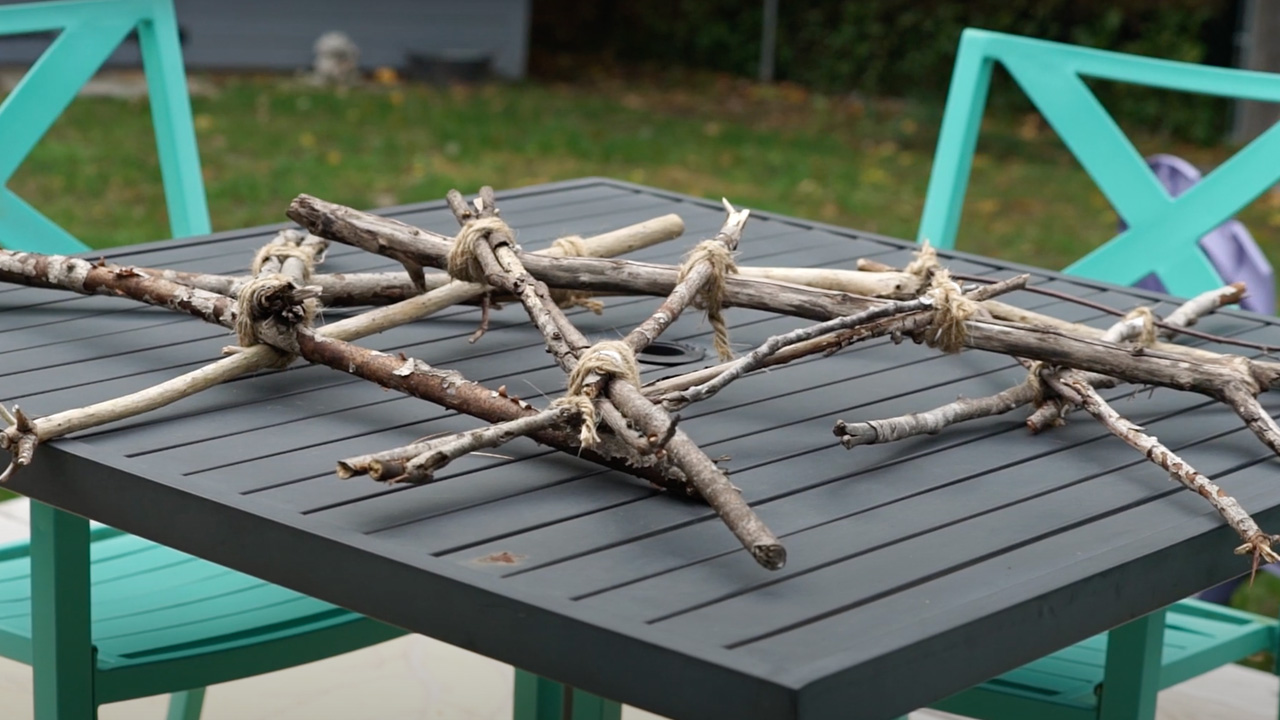
In 1999, a low-budget indie film didn't just scare people; it basically gaslit the entire world into believing three students actually vanished in the Maryland woods. But if you ask anyone what they remember most about that grainy, motion-sickness-inducing footage, it isn’t the snotty close-up of Heather Donahue’s face. It's those jagged, wooden figures hanging from the trees.
Those Blair Witch Project sticks became the universal shorthand for "you are about to die in the woods."
Honestly, it’s impressive. Most horror movies need a guy in a hockey mask or an expensive CGI alien to ruin your sleep. The Blair Witch Project did it with some backyard debris and a bit of twine.
What Are Those Stick Figures Actually Called?
If you want to sound like a total nerd at your next horror movie trivia night, don't just call them "the sticks." The official name within the lore is Twanas.
Where did the name come from? It wasn’t some ancient Sumerian text or a real-life occult manual. It was actually coined by the film’s production designer, Ben Rock. He needed a name that sounded old, tactile, and just a little bit "wrong."
The word "Twana" is often linked back to the lore created for the film's massive (and legendary) marketing campaign. In the fictional mythology of Burkittsville, these bundles of sticks weren't just decorations. They were ritualistic markers.
The Boring (But Fascinating) Reality of Their Creation
You might think the filmmakers spent months researching obscure pagan symbols to find the perfect terrifying icon. Nope.
The real story is way more practical. Ben Rock was under a massive time crunch. He had to create something that the crew could manufacture en masse while out in the woods with almost no budget. He found the inspiration in a book called Magical Alphabets by Nigel Pennick.
There’s a specific symbol in that book called a "rune man." It’s a simple design used in old timber-framed houses. Rock saw it and realized he could recreate it with just four sticks and some string.
Why They Look So "Off"
The genius of the design is in its imperfection. If they were perfectly symmetrical, they’d look like a craft project from a Pinterest board. But because they were made quickly—often using whatever branches were lying around the Maryland forest floor—they have this skeletal, desperate energy.
- The Core: Three sticks of roughly equal length.
- The Head: One smaller stick tied at the top.
- The Bind: Twine or hemp rope, usually wrapped in a way that looks hurried.
It’s the "human-but-not-quite" aspect that triggers our primal fear. It’s called pareidolia—our brains are hardwired to see faces and bodies in random patterns. When you see a human shape made of dead wood hanging from a noose-like string, your lizard brain screams predator.
The Meaning Behind the Sticks
In the context of the movie, finding the Blair Witch Project sticks is the point of no return.
Co-director Eduardo Sánchez has mentioned in interviews that the stick figures were meant to act as a portal. Once the characters see them, they’ve crossed over. They aren't in the "real" world anymore. They are in the Witch's territory.
There’s a popular fan theory that the figures represent the children murdered by Rustin Parr, the fictional hermit who lived in the woods in the 1940s. Since there were seven children, seeing groups of these figures feels like seeing ghosts.
The 2016 sequel, Blair Witch, took this a step further. It turned the sticks into a sort of voodoo doll. In one of the most brutal scenes in that film, a character snaps a large stick figure in half, and—spoiler alert—the person it represents gets snapped right along with it.
Are They Based on Real Folklore?
Sort of, but mostly no.
While the "Twana" itself is a creation of the movie, the idea of "stick hexes" or "spirit bundles" is all over real-world history.
- Cunning Folk: In 17th-century England, people would hide "witch bottles" or bundles of thorns in their chimneys to ward off evil.
- Divination: Tacitus, the Roman historian, wrote about ancient Germanic tribes using "runic sticks" carved from fruit-bearing trees to predict the future.
- Trail Marking: In a non-spooky sense, survivalists have used stick formations to mark trails for centuries.
The filmmakers took these real, grounded elements of human history and twisted them. They knew that we have an innate fear of things that look man-made but are found in places where no man should be.
Why the Stick Figure Still Works in 2026
Even now, decades after the hype has died down, seeing those sticks in the woods still makes people freeze. It’s a testament to the power of simple design.
You don't need a $200 million budget to create an icon. You just need to tap into a universal fear. The Blair Witch Project sticks work because they represent the unknown. They represent a presence that is watching you, even when you can't see it.
If you’re planning on making your own for a Halloween display or just to freak out your roommates, keep it messy. Use dead wood. Use rough twine. The less "artistic" it looks, the more it looks like something you’d find in the Black Hills of Maryland.
Actionable Takeaways for Horror Fans:
- Watch the Mockumentary: If you want the full lore on the sticks, find Curse of the Blair Witch. It’s a "documentary" that aired on Sci-Fi before the movie came out. It treats the Twanas as a real historical phenomenon.
- DIY with Caution: Making these is easy, but if you hang them in a public park, expect a visit from the local police. People still get genuinely freaked out by them.
- Check the Source: Look up Nigel Pennick’s Magical Alphabets if you want to see the original "rune man" that started it all. It’s a great deep dive into how real symbols are hijacked for pop culture.
The sticks aren't just props. They are the physical manifestation of the movie's main theme: you are lost, you are being watched, and nature is no longer your friend.