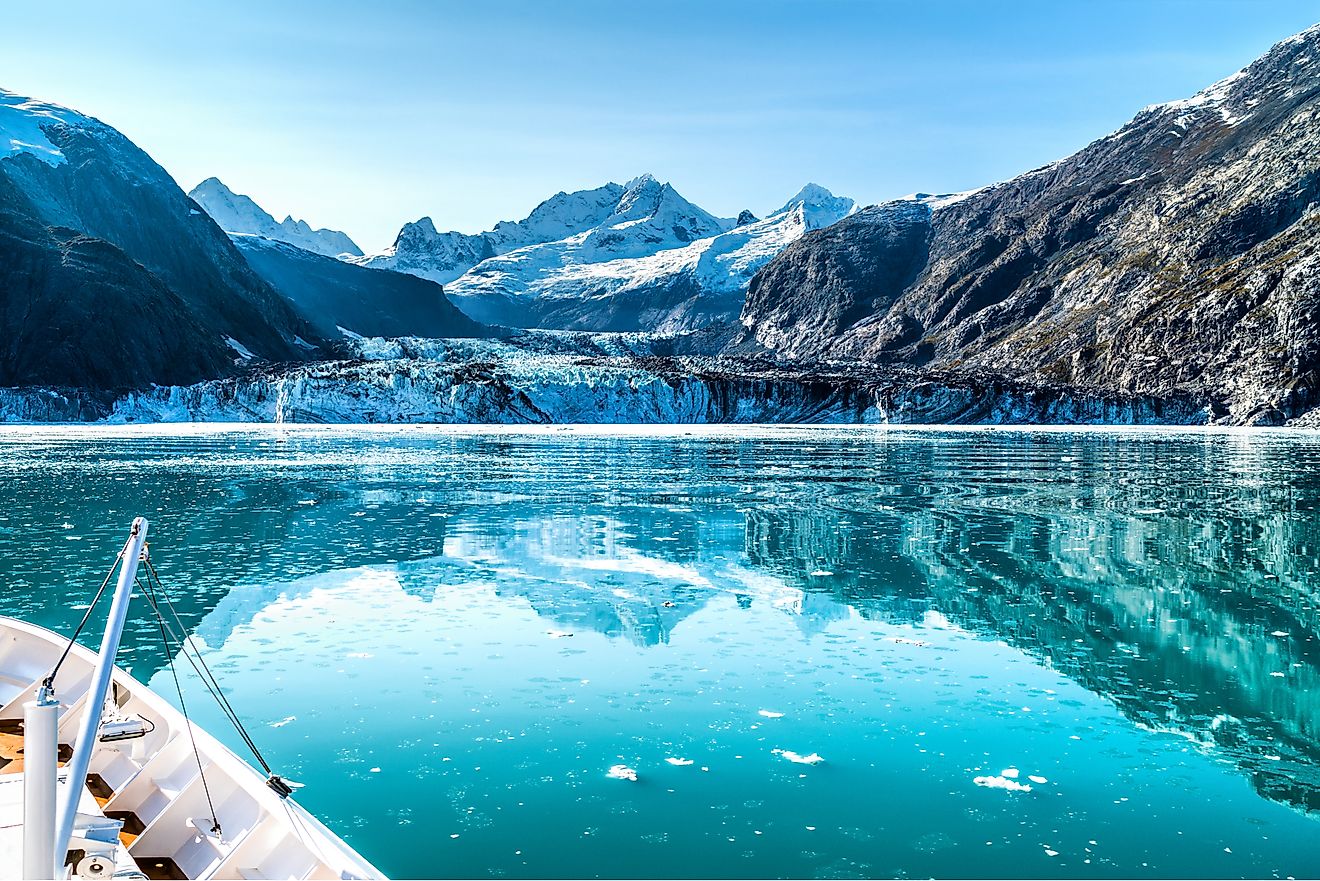
Honestly, if you ask the average person to name the heavy hitters of the American wilderness, you’re going to hear about the Grand Canyon. You’ll definitely hear about Yellowstone. Maybe even Yosemite if they’ve seen the documentaries. But if you’re looking for the biggest national park in the United States, you have to look much further north. Way past the Lower 48.
We’re talking about Wrangell-St. Elias National Park and Preserve in Alaska.
It is absolutely massive. It’s so big that it basically breaks your brain when you try to compare it to things you actually know. Most people guess Yellowstone is the biggest because it’s so iconic, but you could actually fit six Yellowstones inside Wrangell-St. Elias. You could fit the entire country of Switzerland inside it and still have room for a few more mountain ranges. It covers roughly 13.2 million acres. That is bigger than the state of Maryland.
It’s a place where the scale is just... different.
Why Wrangell-St. Elias is the Uncontested Heavyweight
When we talk about the biggest national park in the United States, we aren't just talking about a little extra legroom on the hiking trails. This park is a vertical kingdom. It’s where four major mountain ranges—the Wrangell, St. Elias, Chugach, and the Alaska Range—all decide to crash into each other.
The result? Pure chaos in the best way possible.
You've got nine of the sixteen highest peaks in the U.S. sitting right here. Mount St. Elias itself towers at 18,008 feet, making it the second-tallest mountain in the country. But it’s not just the height; it’s the ice. About 35% of the park is covered in glaciers. The Malaspina Glacier alone is larger than the entire state of Rhode Island. Imagine a sheet of ice so big it has its own zip code. Actually, it doesn't, because nobody lives on it, but you get the point.
The "National Park" vs. "Preserve" Distinction
You’ll notice the official name is Wrangell-St. Elias National Park and Preserve. This is a bit of a legal quirk that matters for how the land is used.
- The National Park (8.3 million acres): This is the core. It’s strictly protected. No hunting (except for subsistence by local rural residents).
- The National Preserve (4.8 million acres): This area allows for sport hunting and trapping under state and federal regulations.
Combined, they form a contiguous wilderness that makes up about 10% of the entire National Park System’s acreage. It’s basically the final boss of American public lands.
Exploring the Giant: Roads, Copper, and Ghost Towns
Most people never visit because, well, it’s hard to get to.
There are only two roads into the park. Neither of them is paved. The McCarthy Road is a 60-mile stretch of gravel that follows an old railroad bed. It’s bumpy. It’s slow. It’s famous for occasionally eating tires. But at the end of that road lies McCarthy and the Kennecott Mines.
Kennecott is a trip. It’s a literal ghost town—a massive, 14-story red wooden copper mill clinging to the side of a mountain. In the early 1900s, this was the site of the richest copper deposit ever found. Now, it’s a haunting, beautiful relic of the industrial age sitting in the middle of a prehistoric landscape. You can actually take guided tours inside the mill, which I highly recommend if you aren't afraid of heights or slightly creaky stairs.
The other road is the Nabesna Road. It’s 42 miles long and takes you into the northern part of the park. It’s even more remote. If you want to feel like you’re the only person left on Earth, this is where you go.
Comparing the Giants: How the Others Stack Up
It’s easy to get lost in the numbers, so let's look at the "Top 5" to see just how dominant the Alaska parks are. If you’re searching for the biggest national park in the United States, you’ll find that Alaska holds the top four spots.
- Wrangell-St. Elias (Alaska): 13.2 million acres.
- Gates of the Arctic (Alaska): 8.5 million acres. This one has no roads at all. None.
- Denali (Alaska): 6.1 million acres. Home to the tallest peak in North America.
- Katmai (Alaska): 4.1 million acres. Famous for the "Fat Bear Week" and the Valley of Ten Thousand Smokes.
- Death Valley (California/Nevada): 3.4 million acres. Finally, a park in the Lower 48!
It’s wild to think that Death Valley—the largest park in the contiguous U.S.—is only about a quarter of the size of Wrangell-St. Elias. Florida’s Everglades? Only about 1.5 million acres. That’s a "small" park by Alaskan standards.
Survival is the Name of the Game
This isn’t a "drive-through" park. There are very few maintained trails. Most hikers here practice "cross-country" travel, which basically means you pick a ridge and start walking. You need a bear canister. You need a GPS. You need to know how to cross a glacial river without getting swept away.
The weather is its own character. It can be 70°F and sunny in McCarthy while a blizzard is howling on the mountains 10 miles away. If you’re planning a trip, June through August is your window. September is gorgeous with the fall colors, but you’re gambling with early snow.
Actionable Insights for the Aspiring Explorer
If you’re actually thinking about visiting the biggest national park in the United States, don't just wing it.
- Fly, don't just drive: Take a "flightseeing" tour from McCarthy or Chitina. It’s the only way to grasp the scale. Seeing the Bagley Icefield from a bush plane is a spiritual experience.
- Check your rental agreement: Most major car rental agencies in Anchorage prohibit driving on the McCarthy Road. You’ll need to rent a specific "gravel-ready" vehicle from a local outfit or take a shuttle.
- Base yourself in McCarthy: It’s a tiny, off-grid town with a "stuck-in-time" vibe. No paved roads, no traffic lights, just a lot of character and some surprisingly good food at the local lodge.
- Hire a guide for the ice: Don't try to walk on the Root Glacier alone unless you’re an experienced mountaineer. The crevasses are real, and they don't care about your Instagram photos.
Wrangell-St. Elias is the definition of "The Last Frontier." It’s big, it’s intimidating, and it’s arguably the most authentic wilderness experience left in the country. Just remember to bring a spare tire. Or two.
Next Steps for Your Trip Planning:
- Download the NPS App and save the Wrangell-St. Elias maps for offline use, as there is zero cell service in most of the park.
- Research "Bush Plane Drop-offs" if you’re looking for a true backcountry backpacking experience.
- Check the official National Park Service road conditions page for the McCarthy Road before you leave Anchorage; conditions change by the hour.