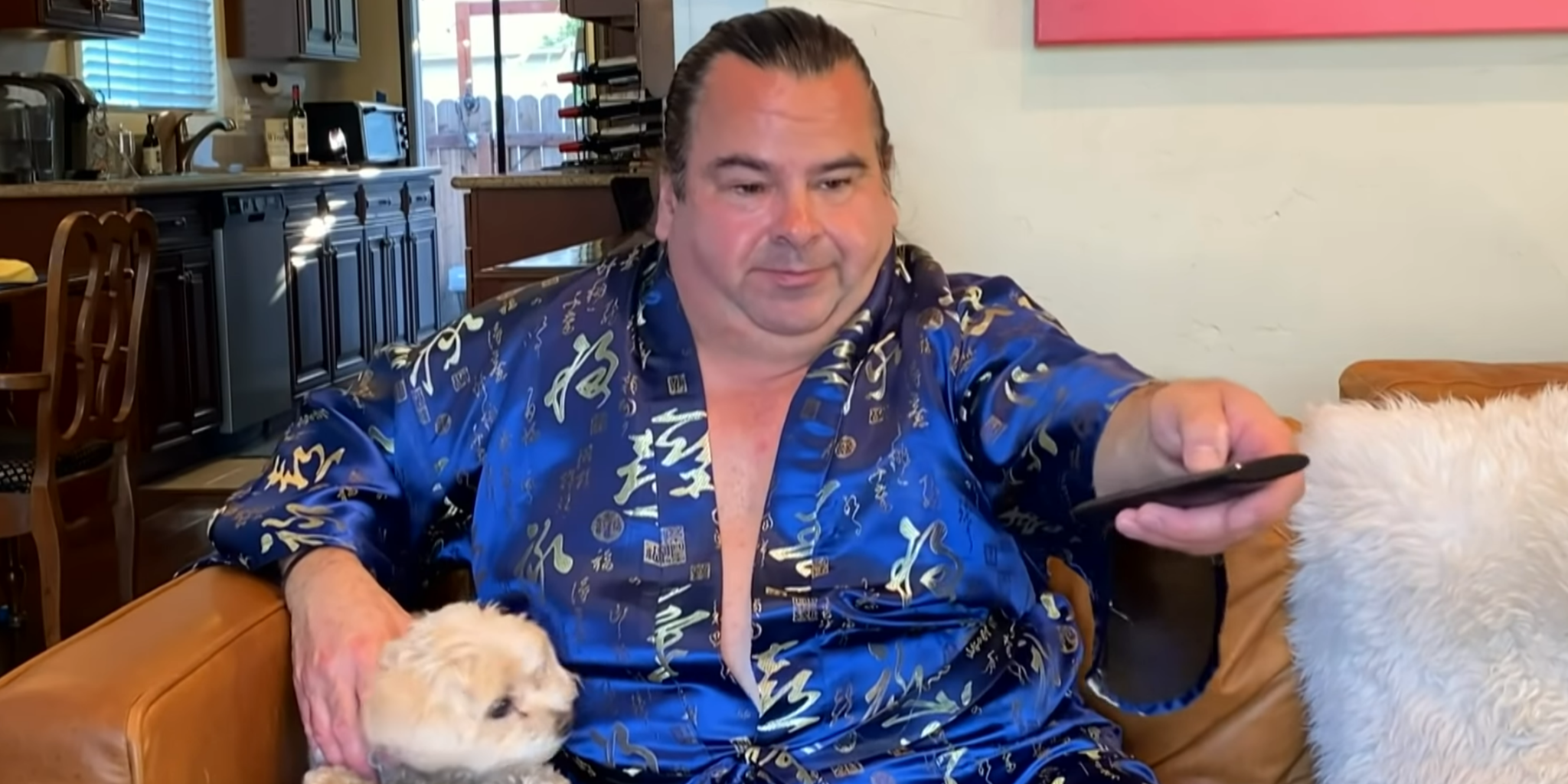
You probably know him as Ed No Neck. Or maybe just Big Ed. If you've spent even five minutes on TikTok or TLC over the last few years, you’ve seen the face. The mayonnaise hair treatment. The tiny scooter. The endless, messy breakups with Rose and Liz. He became an overnight meme, a digital punchline that somehow turned into a long-term reality TV career.
But there’s a lot more to the "no neck" thing than just a funny camera angle or a weird internet nickname.
Honestly, it’s kinda wild how the internet latches onto a physical trait without actually knowing the medical reality behind it. Ed Brown wasn't just born "different" for no reason. There is a specific genetic condition at play here, and it’s something he’s been surprisingly open about, even when the rest of his life feels like a scripted train wreck.
The Reality of Klippel-Feil Syndrome
When people search for Ed No Neck, they’re usually looking for a joke. What they find is Klippel-Feil syndrome (KFS). This isn't some rare mystery disease, but it is rare enough that most people have never heard of it. Basically, it’s a bone disorder where two or more spinal vertebrae in the neck are fused together from birth.
It changes everything about how a person carries themselves.
Imagine your neck just... isn't there. For Ed, this means a limited range of motion and a shorter stature. He’s mentioned in interviews that he was teased mercilessly as a kid. Kids are mean. We know this. But imagine growing up with a visible physical difference and then, in your 50s, becoming globally famous specifically because of that difference.
It’s a weird psychological space to inhabit.
The fusion usually happens in the cervical vertebrae. Because of this, the hairline looks lower, and the neck appears nonexistent. It’s not just an aesthetic thing; it can cause chronic pain, headaches, and even neurological issues if the spinal cord gets pinched. Ed has been pretty candid about the physical limitations, though he usually masks the struggle with a "larger than life" personality that either charms viewers or drives them absolutely insane.
Why the Internet Can't Stop Watching Big Ed
It wasn't just the neck. Let’s be real. If Ed Brown were a boring guy with KFS, he wouldn't be a household name. He became a star because he is, for lack of a better word, a character.
His debut on 90 Day Fiancé: Before the 90 Days Season 4 was a masterclass in "cringe" TV. We saw him traveling to the Philippines to meet Rosemarie Vega. We saw him ask her to shave her legs. We saw him doubt her intentions at every turn while simultaneously being the one with most of the red flags.
The internet exploded.
People weren't just laughing at his appearance; they were reacting to his behavior. The "Ed No Neck" moniker became a shorthand for his entire persona—the guy who seemed to lack self-awareness but possessed an infinite amount of confidence. It’s that specific mix of vulnerability (his condition) and audacity (his dating life) that creates a perfect storm for reality TV longevity.
You've seen the memes. The one where he's crying. The one where he's dancing. He leaned into it. He started selling Big Ed merchandise. He joined Cameo and became one of their top earners, raking in hundreds of thousands of dollars by essentially being the joke.
Is it exploitation if he’s the one cashing the checks? Maybe. But he’s clearly in on it.
The Complicated Legacy of a Reality Villain
It's easy to pigeonhole Ed as just a meme, but his relationships on screen have sparked serious conversations about power dynamics and emotional maturity. His saga with Liz Woods was exhausting. It was a cycle of breakups, reunions, and therapy sessions that felt all too real for many viewers.
Some fans argue that Ed uses his condition to garner sympathy when he’s in the wrong. Others think he’s just a guy trying to find love while navigating a world that judged him long before he ever stepped in front of a camera.
There's a specific nuance here that gets lost in the Reddit threads. Ed is a professional photographer. He has a life outside of being "the guy from the meme." But once you become a caricature, it’s hard to go back to being a person. He’s stuck in the "Ed No Neck" loop because that’s what pays the bills.
Interestingly, he has used his platform to speak to kids who have Klippel-Feil syndrome. He’s told stories about how he used to hide in his room and how he eventually decided to just embrace who he is. That’s the "human" side that often gets buried under the layers of mayo and reality TV drama.
It’s a reminder that behind every viral sensation is a person with a medical history and a childhood full of baggage.
What Most People Get Wrong About KFS
A lot of people think Ed could just "fix" it with surgery.
That’s not how it works.
While some people with Klippel-Feil syndrome undergo surgery to relieve pressure on the spinal cord or to stabilize the neck, you can’t just "un-fuse" vertebrae to create a neck that wasn't there to begin with. It’s a structural reality of his skeleton.
Also, it’s not contagious. (Yes, people actually ask that on Google). It’s congenital.
Key Facts About Klippel-Feil Syndrome:
- It occurs in about 1 in 40,000 newborns worldwide.
- It’s slightly more common in females, though Ed is obviously the most famous male face of the condition.
- It was first described in 1912 by Maurice Klippel and André Feil.
- Many people with KFS also have other issues, like scoliosis or kidney problems.
Ed’s case seems to be primarily focused on the cervical fusion. He’s managed to live a relatively high-energy life despite the condition, which honestly says something about his physical resilience. Whether you like him or hate him, you have to admit the guy has stamina. He’s survived more seasons of reality TV than most professional athletes survive years in their sport.
The Business of Being Big Ed
If you look at the numbers, Ed is a business genius in a very specific, very modern way. He realized early on that "Ed No Neck" was a brand.
He didn't fight the internet. He joined it.
He’s active on social media, constantly posting content that plays into his public image. He knows that every time someone comments on his neck, it’s an engagement metric that helps him stay relevant. In 2026, relevance is the only currency that matters in the entertainment world.
He transformed a genetic condition that caused him immense pain as a child into a multi-million dollar brand. That’s a wild arc. It’s the ultimate "revenge of the nerd" story, except the nerd grew up to be a polarizing reality TV star with a penchant for younger women and dramatic confrontations.
Making Sense of the Criticism
It’s important to acknowledge that not all the "Ed" hate is about his looks. A lot of it is about his behavior. Critics point to his treatment of Rose and Liz as evidence of a "narcissistic" personality.
But here’s the thing: reality TV edits for drama.
We see the worst 10 minutes of a 24-hour day. Does that excuse his behavior? Not necessarily. But it does provide context. Ed is playing a role as much as he is living his life. He knows what the producers want. He knows what the audience expects. He delivers the "Big Ed" experience because that’s what keeps the 90 Day franchise moving.
Actionable Insights for Fans and Critics
If you're following the Big Ed saga, there are a few things to keep in mind to stay grounded in reality rather than just meme-culture:
- Understand the Medicine: Before making a joke, remember Klippel-Feil syndrome is a real disability. It involves fused vertebrae and chronic physical challenges. Awareness of the condition helps separate the person's physical reality from their "character" on TV.
- Follow the Official Channels: If you want the real story—or at least the story Ed wants you to see—check his verified social media. He often addresses rumors directly, which is more reliable than "insider" blogs that thrive on clickbait.
- Look Beyond the Edit: When watching reality TV, remember the "villain" edit is a real thing. Ed plays into it, but it’s a curated version of a human being.
- Support KFS Awareness: If you've been entertained (or frustrated) by Ed, consider looking into organizations that support people with spinal conditions. It’s a way to turn the meme into something actually productive.
The story of Big Ed isn't just about a guy on a dating show. It’s a case study in how we treat people who look different, how those people can reclaim their own narrative, and how the internet turns human beings into icons—for better or worse. Ed No Neck is a name that will likely live on in the digital archives of the 2020s, a permanent fixture of our collective pop culture memory.
Whether he’s a hero, a villain, or just a guy with a fused spine and a camera crew following him around, one thing is certain: you can’t look away. And honestly? That’s exactly what he wants.