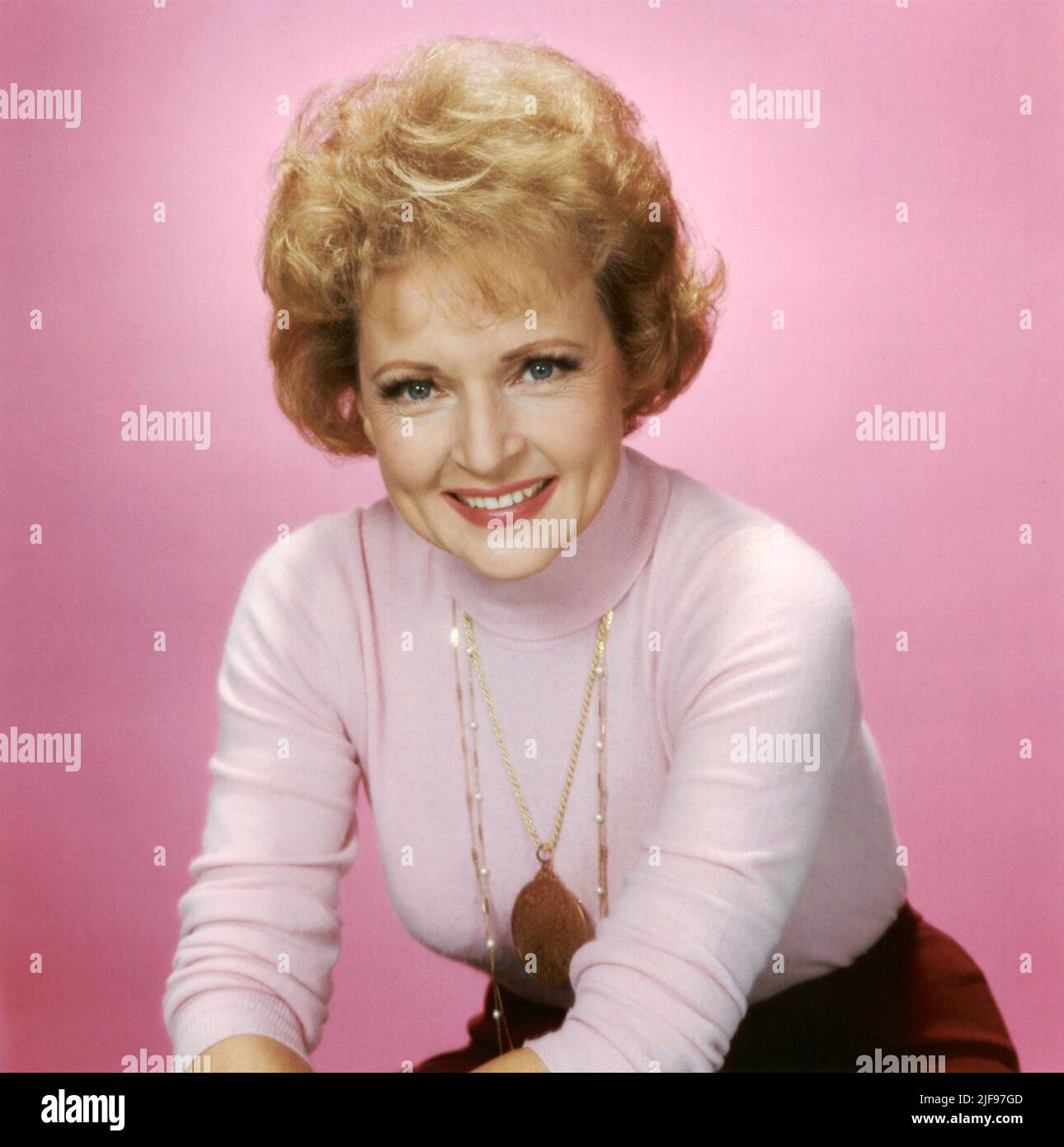
Everyone remembers Rose Nylund. The St. Olaf stories, the herring, the wide-eyed innocence that made you want to hug your TV screen. But before Betty White became the world’s favorite Scandinavian sweetheart, she was the "neighborhood nymphomaniac."
Honestly, it’s the role that saved her career.
In 1973, Betty was a television veteran, but she was drifting. She’d done the variety shows and the game shows, but she wasn't a "sitcom star" yet. Then came script #73 of The Mary Tyler Moore Show. The writers needed a specific type of character for an episode called "The Lars Affair." The script literally called for an "icky-sweet Betty White type."
They didn't actually think they could get her.
Mary Tyler Moore and her husband, Grant Tinker, were best friends with Betty and her husband, Allen Ludden. They had been married by the same judge. They went on double dates. Because of that closeness, the producers were terrified to hire her. What if she was terrible? How do you tell your best friend she’s a bad actress over dinner?
The "Icky-Sweet" Legend of Sue Ann Nivens
Betty White in the Mary Tyler Moore Show wasn't supposed to be a permanent thing. It was a one-off. A guest spot. She played Sue Ann Nivens, the host of The Happy Homemaker at WJM-TV. On camera, she was the queen of doilies and souffle tips. Off camera? She was a man-hungry, backstabbing shark with a smile that never reached her eyes.
She was delicious.
She made her debut in the fourth season premiere. The plot was scandalous for the 70s: Sue Ann was having an affair with Lars Lindstrom, the husband of Mary’s friend Phyllis. While Phyllis was neurotic and Mary was polite, Sue Ann was a predator wrapped in a lace apron.
The audience went nuts.
You've probably seen the "Happy Homemaker" set. It was all pastel colors and fake flowers. Sue Ann would stand there, giving tips on how to turn dead goldfish into houseplant fertilizer, while simultaneously insulting Mary’s love life. She called her "dear, sweet, naive Mary" like it was a terminal diagnosis.
Why Sue Ann Worked So Well
It wasn't just the writing. It was the contrast. Betty White had this natural, effortless perkiness that made the venom in her lines hit twice as hard.
She once described Sue Ann as "rotten." That was her favorite word for the character. She loved playing someone so fundamentally mean who had to pretend to be nice. It’s a trope we see everywhere now—the "mean girl" with a public relations face—but Betty invented the blueprint.
The chemistry with the rest of the WJM newsroom was instant.
- Murray Slaughter (Gavin MacLeod): They traded insults like professional boxers. He’d mock her age; she’d mock his baldness.
- Lou Grant (Ed Asner): Sue Ann was relentlessly, shamelessly attracted to Lou. She pursued him with the subtlety of a freight train.
- Mary Richards: Mary didn't hate Sue Ann. She found her absurd. This was a genius move by Mary Tyler Moore. By laughing at Sue Ann instead of being victimized by her, she gave the audience permission to love the villain.
The Emmy Streak and the "Nymphomaniac" Label
Betty didn't just join the cast; she dominated it. She won back-to-back Emmys for Outstanding Supporting Actress in 1975 and 1976.
Think about that. She took a character meant for one episode and turned her into a cultural icon.
People often forget how dark Sue Ann’s humor actually was. In the episode "The Dinner Party," she has to cook a gourmet meal for a Congresswoman. When she realizes her oven wasn't plugged in and the dessert is ruined, her breakdown is both heartbreaking and hysterical. She wasn't a cartoon. She was a woman whose entire identity was built on "perfection," and the cracks in that facade were where the comedy lived.
The Golden Girls Connection
Here is a bit of trivia that usually shocks people: Betty White was originally cast as Blanche Devereaux.
It makes sense, right? Blanche was the man-hungry one. Sue Ann was the man-hungry one. It was a perfect match. But Jay Sandrich, who had directed Betty on MTM, stepped in. He told the producers that if Betty played another "neighborhood you-know-what," the audience would just see Sue Ann Nivens in Florida.
They swapped. Rue McClanahan, who was supposed to be the "dumb" one (Rose), became the vixen. Betty became the innocent.
If Betty hadn't played Sue Ann so well, she never would have been pushed to play Rose. We would have missed out on the most iconic character swap in sitcom history.
What Really Happened in "The Last Show"
When the series ended in 1977, Sue Ann’s fate was a bit grim. Her show, The Happy Homemaker, was canceled due to tanking ratings. She ended up as a production assistant for the news, basically a glorified gofer. In the famous series finale, she was fired along with almost everyone else.
But Sue Ann Nivens always landed on her feet.
The character eventually became a traveling companion for a wealthy older man. It was the perfect exit. She got the money, the man, and the last laugh.
Actionable Takeaways for Classic TV Fans
If you want to truly appreciate the genius of Betty White in the Mary Tyler Moore Show, don't just watch the clips. Do these three things:
- Watch "The Lars Affair" (Season 4, Episode 1): This is the masterclass. Watch her facial expressions change the second the "On Air" light goes off.
- Compare the Voice: Listen to the pitch of Sue Ann’s voice compared to Rose Nylund. Sue Ann is sharper, higher, and more clipped. It’s a total physical transformation.
- Check out "Chuckles Bites the Dust": While it’s famous for Mary’s laughing fit at the funeral, Sue Ann’s reaction to the death of the clown is a subtle piece of character work you shouldn't miss.
Betty White proved that you don't have to be the lead to be the star. She took a guest spot and turned it into a four-year run that redefined what a female antagonist could look like on television. She was "rotten," and we loved every second of it.