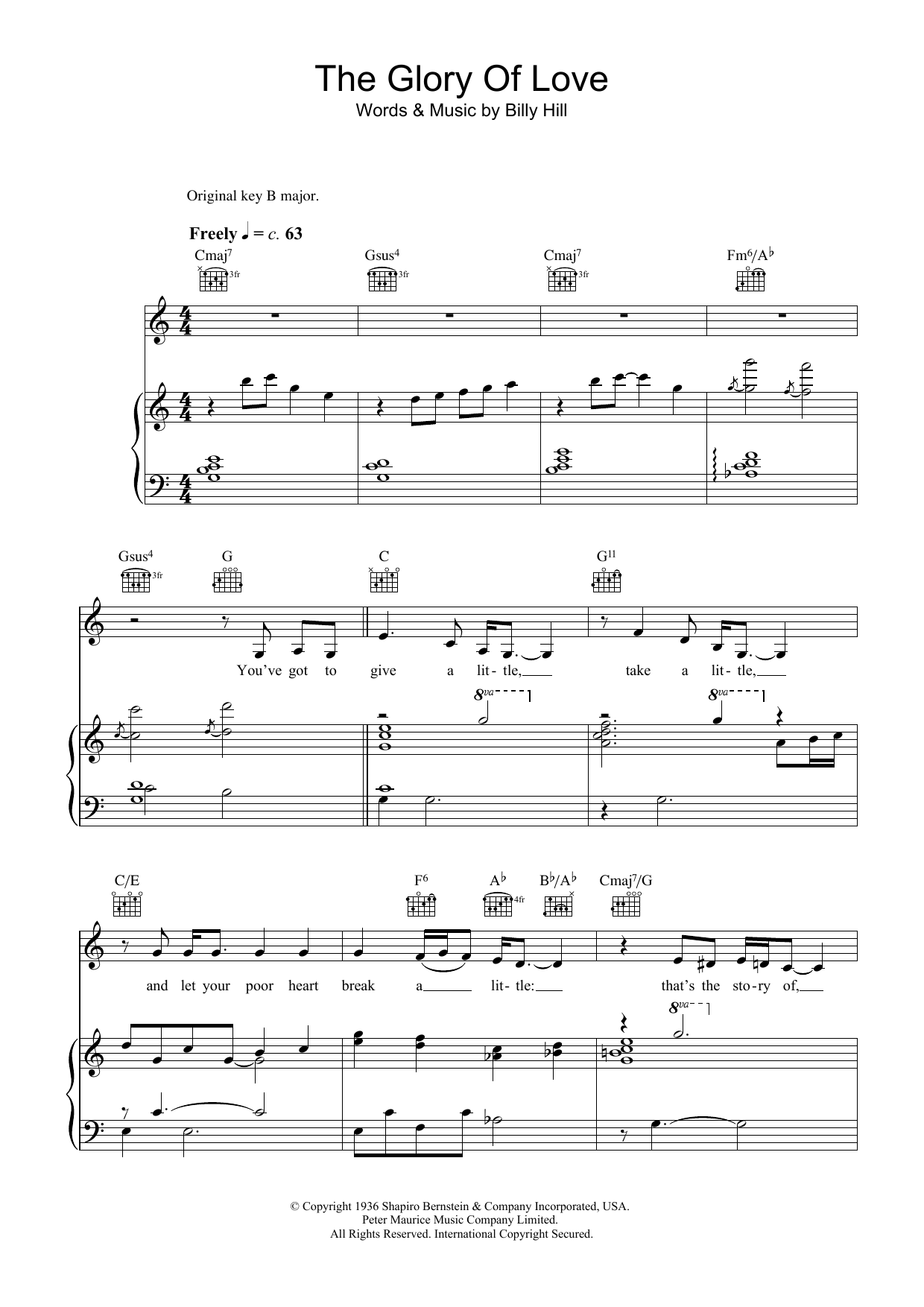
You know that feeling when a song just hits different because of a movie? Not the big, bombastic radio hits, but the ones that feel like the actual soul of the story. For a lot of us, that's Bette Midler Glory of Love.
It’s weird. If you ask a casual fan about the Beaches soundtrack, they’ll scream "Wind Beneath My Wings" before you can even finish the sentence. And sure, that song is a titan. It won Grammys. It’s the ultimate tribute to friendship. But "The Glory of Love" is the bookend. It’s the song that actually tells the story of C.C. Bloom and Hillary Whitney from the first boardwalk meeting to that final, heartbreaking concert stage.
Honestly, it’s a bit of a musical miracle that this song works so well in a 1988 tearjerker. It wasn’t a new track. Not even close.
What People Get Wrong About the Song's Origins
A lot of people think Bette wrote this, or that it was written specifically for the film. Nope.
The Glory of Love was actually written by Billy Hill all the way back in 1936. Benny Goodman made it a hit during the swing era. It’s a standard. It’s been covered by everyone from Dean Martin to Peggy Lee. It even popped up as the theme for the 1967 classic Guess Who's Coming to Dinner.
So why does it feel like it belongs to Bette?
Basically, it’s because of how it’s used as a narrative device. We first hear it when a young, firecracker version of C.C. Bloom (played by a tiny, powerhouse Mayim Bialik) performs it at a boardwalk audition. She’s got the red hair, the attitude, and that brassy "I'm going to be a star" energy. It’s upbeat. It’s hopeful. It’s the sound of a kid who hasn't been kicked around by show business yet.
When Bette Midler brings it back at the end of the movie, the context has shifted entirely. It’s no longer a plucky audition piece. It’s a eulogy.
The Emotional Gut-Punch of the Beaches Version
If you haven't seen Beaches lately, go grab some tissues. The song reappears at the very end of the film. Hillary has passed away, and C.C. is performing a concert. She’s alone on stage, stripped of the "Otto Titsling" camp and the over-the-top production.
She sings it slow.
"You've got to give a little, take a little, and let your poor heart break a little..."
That lyric hits like a freight train when you’ve just watched two hours of a thirty-year friendship dissolve into grief. Midler’s vocal performance here is world-class because she isn't oversinging. She’s letting the cracks show. It’s the sound of a woman who is finally realizing that "the glory of love" isn't just the fun parts—it’s the part where you stay until the end.
The production by Arif Mardin is subtle, which was a smart move. Mardin, who produced the whole Beaches soundtrack, knew when to let Bette's natural vibrato do the heavy lifting. While the soundtrack reached number 2 on the Billboard 200 and went triple platinum, this specific track remains the "true fan" favorite.
Is it the same as the Peter Cetera song?
Let’s clear this up because Google searches get these two mixed up constantly.
No. Bette Midler Glory of Love is a cover of the 1936 Billy Hill standard.
Peter Cetera’s "Glory of Love" (the one from The Karate Kid Part II) is a completely different song written by Cetera, David Foster, and Diane Nini. That one is a power ballad about being a "man who will fight for your honor." It’s great for a montage of Daniel LaRusso doing karate in Okinawa, but it has zero to do with the Bette Midler version.
If you're looking for the Beaches vibe, you want the one that starts with "You've got to give a little."
Why Bette Midler Glory of Love Still Matters
Music in 2026 is often about the "drop" or the "hook." We’ve kinda lost the art of the storytelling song in mainstream pop. But Midler is a storyteller first and a singer second (though she’s obviously incredible at both).
She still performs this. In her 2010 Las Vegas residency, The Showgirl Must Go On, she’d pull out a ukulele and do a stripped-back version. It’s a moment of connection. It reminds the audience that behind the Divine Miss M persona, there’s a real person who understands loss.
Surprising Facts about the Recording:
- The Arrangement: Marc Shaiman, Bette’s long-time musical director, was the one who helped shaped the transition of the song from the upbeat child's version to the somber adult version.
- The Soundtrack Success: The album didn't just have one hit. While "Wind Beneath My Wings" was the monster single, the album also featured her cover of "Under the Boardwalk," which gave the whole project a cohesive, nostalgic feel.
- The Legacy: Critics at the time actually gave the movie mixed reviews, but they couldn't touch the soundtrack. It’s one of the best-selling movie albums of the 80s for a reason.
Actionable Next Steps
If you're feeling nostalgic, don't just stream the song. Do it right.
- Watch the Opening and Ending Back-to-Back: Find the clip of Mayim Bialik’s audition on YouTube, then immediately watch Bette’s closing performance. It’s a masterclass in how a song’s meaning changes over a lifetime.
- Check out the 1936 Original: Listen to Benny Goodman’s version. It’s fascinating to hear how a swing-era dance track transformed into one of the saddest movie moments in history.
- Explore the Soundtrack Beyond the Hits: Songs like "I Think It's Going to Rain Today" (a Randy Newman cover) on the same album are equally haunting and often overlooked.
The real "glory" of this song isn't in the charts or the sales figures. It’s in the way it captures that messy, difficult, beautiful thing we call friendship. It’s about the fact that love isn't just a feeling; it's a long, complicated story that usually ends in a goodbye. And Bette sings that goodbye better than anyone.