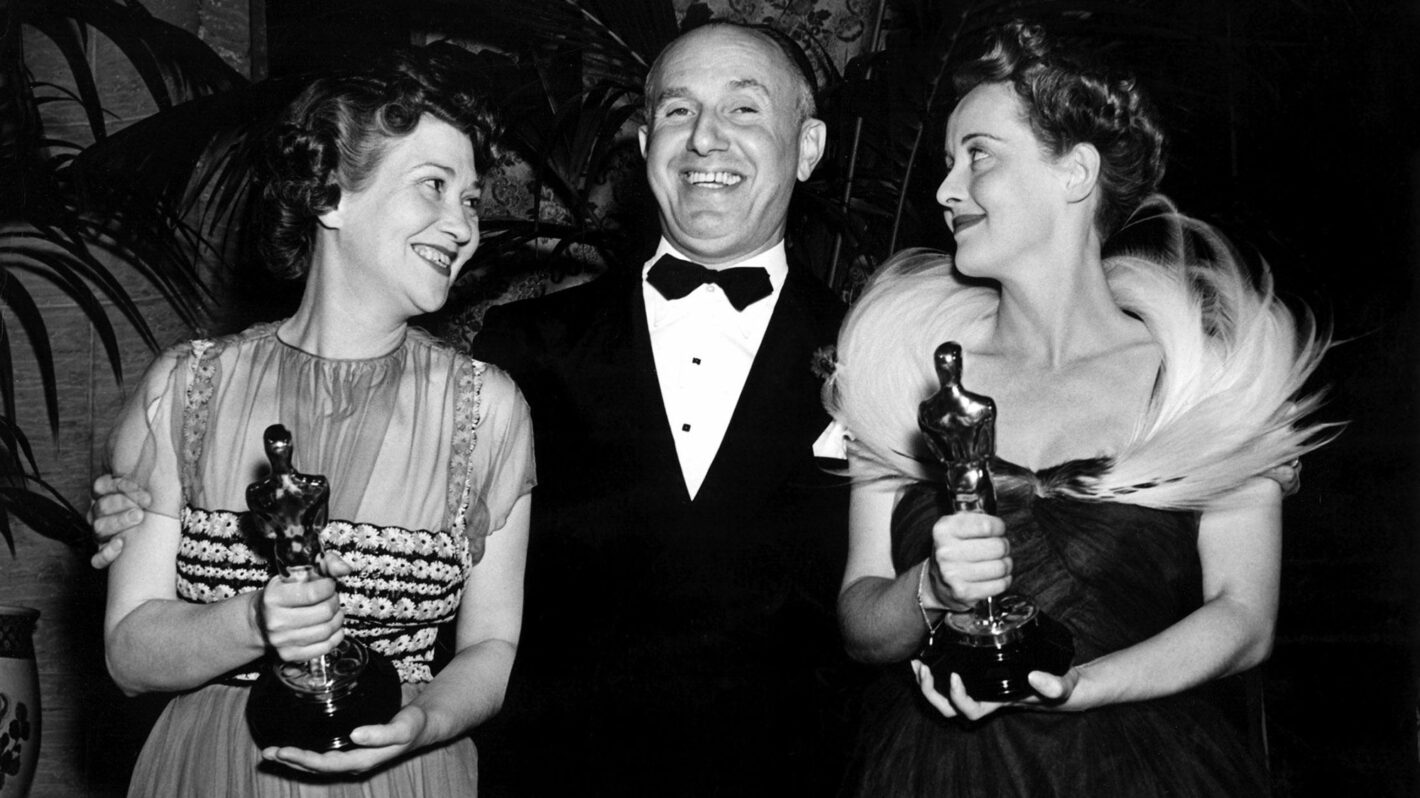
Honestly, if you think the modern "Oscar snub" is dramatic, you haven't seen anything. Long before social media fan wars, Bette Davis was basically the original agent of chaos for the Academy of Motion Picture Arts and Sciences. We’re talking about a woman who literally forced the Academy to change its voting laws because she was so good—and so overlooked—that Hollywood nearly rioted.
When people talk about Bette Davis at the Oscars, they usually mention her two wins or those big, buggy eyes. But the real story is much weirder. It involves write-in ballots, a legendary feud that might be more myth than fact, and a record-breaking streak that even Meryl Streep took decades to touch.
The 1935 Write-In Riot
Let’s look at 1935. This is the year everyone remembers as the ultimate snub. Davis had just played Mildred in Of Human Bondage. She was terrifying. She was ugly. She was brilliant. But when the nominations came out? Zip. Nothing.
The backlash was so intense that the Academy actually buckled. They announced that for the first—and pretty much only—time, voters could "write in" their choice on the ballot. It was a "Bette or Bust" movement.
She didn't win. Claudette Colbert took it home for It Happened One Night. But here’s the kicker: Davis reportedly came in third. Third! As a write-in! That kind of pull is unheard of today. It was such a mess that the Academy shut down the write-in option almost immediately after. They realized that if they let the public or the "fans" dictate the ballot, the whole prestige thing would crumble.
The First Lady’s Five-Year Streak
Bette finally got her first statuette a year later for Dangerous (1935). Most people—including Bette herself—kinda felt it was a "consolation prize" for the previous year’s snub. She even showed up to the ceremony in an old housecoat because she was sure she’d lose.
Then came the real golden era. Starting with Jezebel in 1938, Davis went on a tear.
- 1938: Jezebel (Win)
- 1939: Dark Victory (Nomination)
- 1940: The Letter (Nomination)
- 1941: The Little Foxes (Nomination)
- 1942: Now, Voyager (Nomination)
Five years. Five nominations in a row. For a long time, she and Greer Garson were the only ones who had ever pulled that off. It’s a level of consistency that’s basically impossible in the modern era of "one-for-them, one-for-me" career planning.
That 1963 Showdown (What Really Happened)
You’ve probably seen the TV shows or read the gossip about the 1963 Oscars. The "Feud." Joan Crawford and Bette Davis.
Davis was nominated for What Ever Happened to Baby Jane? and Crawford was... well, she wasn't. The story goes that Crawford was so bitter she called up all the other nominees and offered to accept the award on their behalf if they couldn't make it.
When Anne Bancroft won for The Miracle Worker, Crawford famously pushed past a stunned Bette Davis to grab the trophy. "Step aside," she basically signaled.
But was it a conspiracy? Davis certainly thought so. She spent years telling anyone who would listen that Crawford campaigned against her. Honestly, though, Bette was known for being a bit of a "sore loser," as some historians like Emanuel Levy have noted. She had a habit of blaming her losses on studio politics rather than just, you know, the fact that someone else gave a great performance too.
The President Who Quit
Did you know Bette Davis was the first female president of the Academy?
She took the job in 1941. She lasted about two months.
Why? Because she wanted to actually do things. She wanted to charge admission to the ceremonies to raise money for the British War Relief. She wanted to move the event to a bigger venue. The "men in suits" told her no. So, in classic Bette fashion, she basically said "forget it" and resigned. She wasn't there to be a figurehead; she was there to run the show. When she couldn't, she walked.
Making Sense of the 11 Nominations
Technically, Davis has 10 "official" nominations and one write-in, bringing the total to 11.
- Dangerous (1935) - Win
- Jezebel (1938) - Win
- Dark Victory (1939)
- The Letter (1940)
- The Little Foxes (1941)
- Now, Voyager (1942)
- Mr. Skeffington (1944)
- All About Eve (1950)
- The Star (1952)
- What Ever Happened to Baby Jane? (1962)
(Plus the 1934 write-in for Of Human Bondage)
The biggest "what if" is All About Eve. Most critics agree Margo Channing is her definitive role. But she lost to Judy Holliday. Some say she and co-star Anne Baxter split the vote. It’s the ultimate Oscar irony: her best work didn't get her the third trophy she craved.
Actionable Insights for Film Buffs
If you want to truly understand why Bette Davis at the Oscars remains such a huge topic for film historians, don't just look at the wins. Look at the risks.
- Watch the "Consolation" Win: See Dangerous and decide for yourself if she deserved it more than the previous year's snub.
- Study the 1940s Run: Watch The Letter and The Little Foxes back-to-back. The range is wild.
- Check the AFI Tribute: In 1977, she was the first woman to get the AFI Life Achievement Award. Her speech is a masterclass in "old Hollywood" grit.
Davis didn't just attend the Oscars; she challenged the very idea of what a "Best Actress" should look like. She played the unlikable, the haggard, and the cruel, and she made the Academy respect it.
To explore her work further, start by comparing her performance in Jezebel to Vivien Leigh’s in Gone with the Wind. Both are Southern belles, but Davis’s version has a sharp, modern edge that explains why she remained a force for over fifty years.