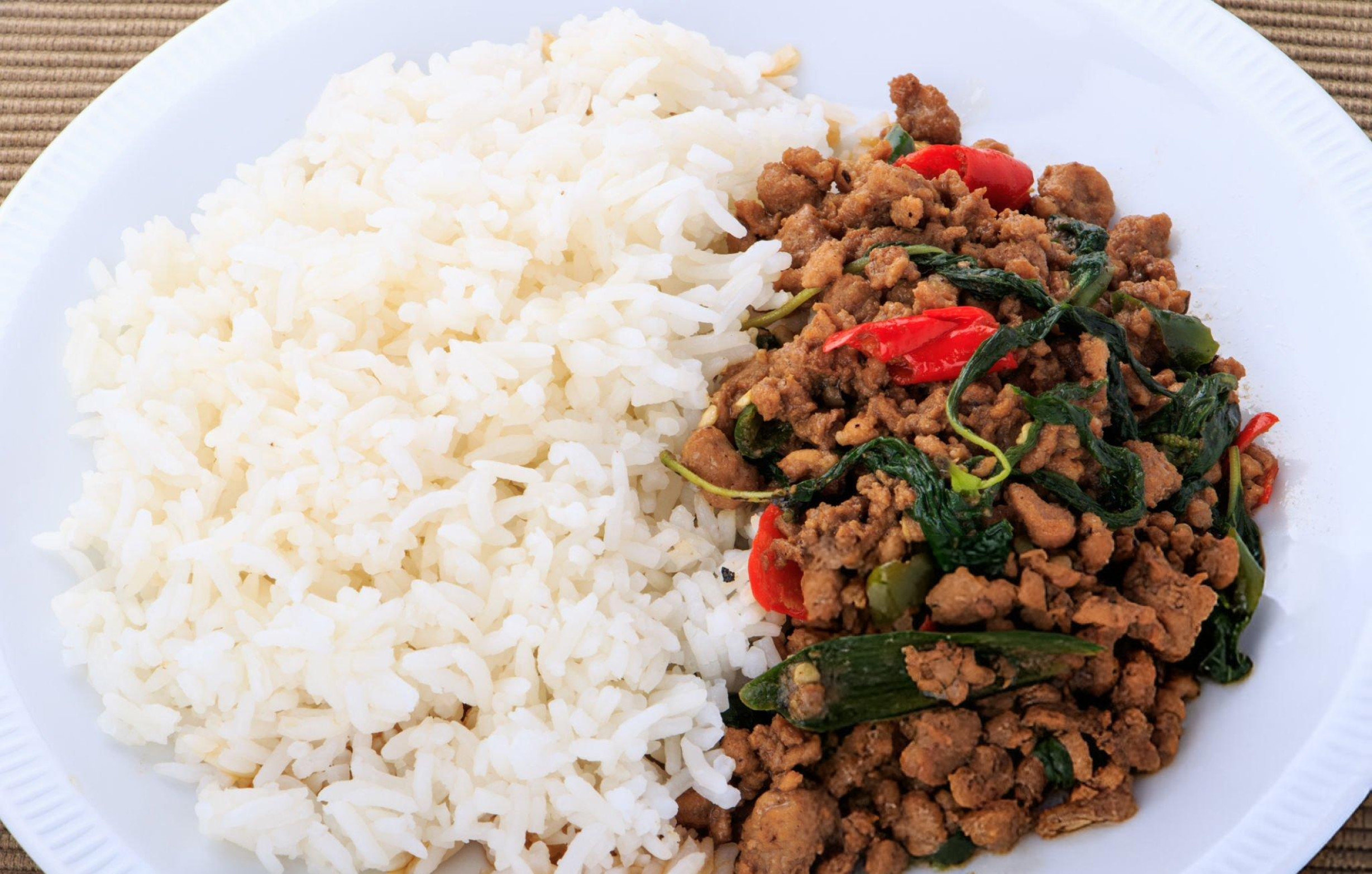
If you walk into a roadside stall in Bangkok and ask for a basil beef Thai recipe, you aren't just ordering dinner. You’re ordering a national obsession. It’s called Pad Kra Pao. It is the dish Thai people turn to when they don't know what else to eat. It’s the "cheeseburger" of Thailand, but way more fragrant and infinitely more aggressive on the palate.
Most Western versions of this dish are, honestly, kind of a mess.
They use the wrong basil. They use way too many vegetables. They miss the crispy egg. If you’ve ever had a soggy, bell-pepper-heavy "Thai basil beef" from a takeout joint, you haven't actually had Pad Kra Pao. You’ve had a generic stir-fry with a floral hint. Real Thai basil beef is about the punch of garlic, the heat of bird's eye chilies, and the peppery, medicinal hit of holy basil.
The Holy Basil Problem
Let’s get the biggest hurdle out of the way immediately. The "basil" in a traditional basil beef Thai recipe is not the sweet Italian basil you put on Margherita pizza. It isn’t even the purple-stemmed "Thai Basil" (Horapha) you find at most grocery stores.
Authentic Pad Kra Pao requires Holy Basil (Tulsi).
Holy basil is spicy. It’s peppery. When it hits the hot oil, it releases an aroma that is slightly clove-like and almost numbing. If you use regular Thai basil, the dish becomes sweet and anise-flavored. Is it still good? Sure. But it isn't the real deal. If you can’t find holy basil at your local Asian market, don't panic. You can substitute regular Thai basil, but you should add a generous crack of black pepper to mimic that holy basil bite.
Why Texture Is Everything
Most home cooks make the mistake of using flank steak or pre-sliced stir-fry beef. Stop doing that.
For a truly elite basil beef Thai recipe, you want hand-minced beef. Take a ribeye or a nice piece of chuck and chop it yourself with a heavy knife until it’s in small, irregular pebbles. Why? Because surface area matters. Tiny bits of beef caramelize faster. They create little nooks and crannies that hold onto the sauce.
Commercial ground beef works in a pinch, but it often has too much moisture, leading to "gray meat" syndrome where the beef boils in its own juices instead of searing. If you use store-bought ground beef, get the 80/20 fat ratio and let it sit in the pan undisturbed for two minutes to get a dark, crusty sear before you start breaking it up.
The Science of the "Wok Hei" and the Sauce
You need high heat. Like, "setting off the smoke alarm" heat.
The sauce for a basil beef Thai recipe is surprisingly simple, but the balance is delicate. You’re looking for a mix of light soy sauce for salt, dark soy sauce for that deep mahogany color, oyster sauce for umami, and a pinch of sugar to round it all out. Some people add fish sauce. Honestly, if your oyster sauce is high quality (look for the Megachef brand or Maekran), you might not even need the fish sauce.
- The Aromatics: You need a mortar and pestle. Smash about 5-10 bird’s eye chilies with 6 cloves of garlic. Don't mince them with a knife. Smashing releases the oils and creates a paste that coats the meat.
- The Fry: Sear the meat first. Get it crispy.
- The Marriage: Toss in the garlic-chili paste. Fry it until your eyes start to water and you’re coughing. That’s how you know it’s working.
- The Finish: Pour in the sauce, toss it like crazy, and then—this is vital—turn off the heat before throwing in a massive handful of holy basil. The residual heat will wilt the leaves without turning them into black slime.
The Non-Negotiable Crispy Egg
You cannot serve a basil beef Thai recipe without Kai Dao. This is a Thai-style fried egg. It is not poached. It is not "sunny side up" in the Western sense.
You need to "deep fry" the egg in about half an inch of neutral oil. The edges should be brown, lacy, and incredibly crunchy, while the yolk remains completely liquid. When that yolk breaks and mingles with the spicy, salty beef and jasmine rice, it creates its own secondary sauce. It tempers the heat. It adds a fatty richness that makes the whole dish cohesive.
Common Pitfalls and Misconceptions
People love to add onions, green beans, or baby corn to this. Purists in Thailand, like the famous chef and "Pad Kra Pao protector" Ittipol "Berm" Watcharaphon, would argue that vegetables have no place in a true Kra Pao. In fact, there have been actual debates in Thai social media circles about whether "diluting" the dish with vegetables is a culinary sin.
If you must add a vegetable for health reasons, keep it to long beans cut into tiny discs. But honestly? Just eat a salad on the side. Keep the beef and basil pure.
Another mistake is over-saucing. This is a "dry" stir-fry. There shouldn't be a pool of liquid at the bottom of your plate. The sauce should be a glaze that clings to the beef, leaving the rice underneath pristine and white until you break the egg yolk.
Technical Breakdown for the Perfect Batch
- Beef: 300g of hand-chopped ribeye or chuck.
- Garlic: At least 5 cloves. Don't be shy.
- Chilies: 3 for "mild," 8 for "Thai spicy."
- The Sauce: 1 tbsp oyster sauce, 1 tsp light soy, 1 tsp dark soy, 1/2 tsp sugar.
- Basil: Two huge handfuls. It shrinks to nothing.
Step-by-Step Action Plan
First, get your rice going. Jasmine rice is the only answer here. While that steams, prep your "Prik Nam Pla." This is the condiment you'll see on every Thai table—fish sauce, lime juice, and sliced chilies. It’s the finishing touch that brings the acidity.
Next, fry your egg. Do it first and set it aside. This prevents you from rushing the egg at the end when the beef is getting cold. Use more oil than you think you need. Spoon the hot oil over the whites to get them bubbly, but keep that yolk raw.
Heat your wok until it’s screaming. Add a splash of oil and the beef. Spread it out. Leave it alone for a minute. Once you have a crust, toss it, add the chili-garlic paste, and stir-fry for 30 seconds. Pour in the sauce mix. Stir-fry for another 30 seconds until the liquid evaporates into a sticky glaze.
Kill the heat. Toss in the basil. Fold it in until it wilts.
Serve it immediately over the rice with the egg on top. Drizzle a little Prik Nam Pla over the yolk.
The Real Reason This Dish Matters
This basil beef Thai recipe represents the "street" soul of Thai cooking. It isn't refined royal cuisine. It’s fast, loud, and unpretentious. The heat from the chilies triggers an endorphin rush, the holy basil provides a complex herbal backbone, and the crispy egg adds the necessary decadence.
If you’re worried about the spice level, don't just remove the chilies. The heat is part of the structural integrity of the flavor profile. Instead, remove the seeds but keep the flesh of the chili, or use a milder red pepper alongside one or two bird's eyes. You need that capsaicin kick to balance the salt and fat.
To truly master this, focus on the "dryness" of the fry and the quality of the basil. Everything else is secondary. Once you've nailed the hand-chopped texture and the crispy egg, you'll find it nearly impossible to go back to the diluted versions found in standard cookbooks.
Go to your nearest international market and hunt for the holy basil. It’s worth the trip. If the label says "Tulsi" or "Hot Basil," you’ve hit the jackpot. Grab a bag, get your wok hot, and stop putting bell peppers in your Pad Kra Pao. Your taste buds will thank you for the authenticity.