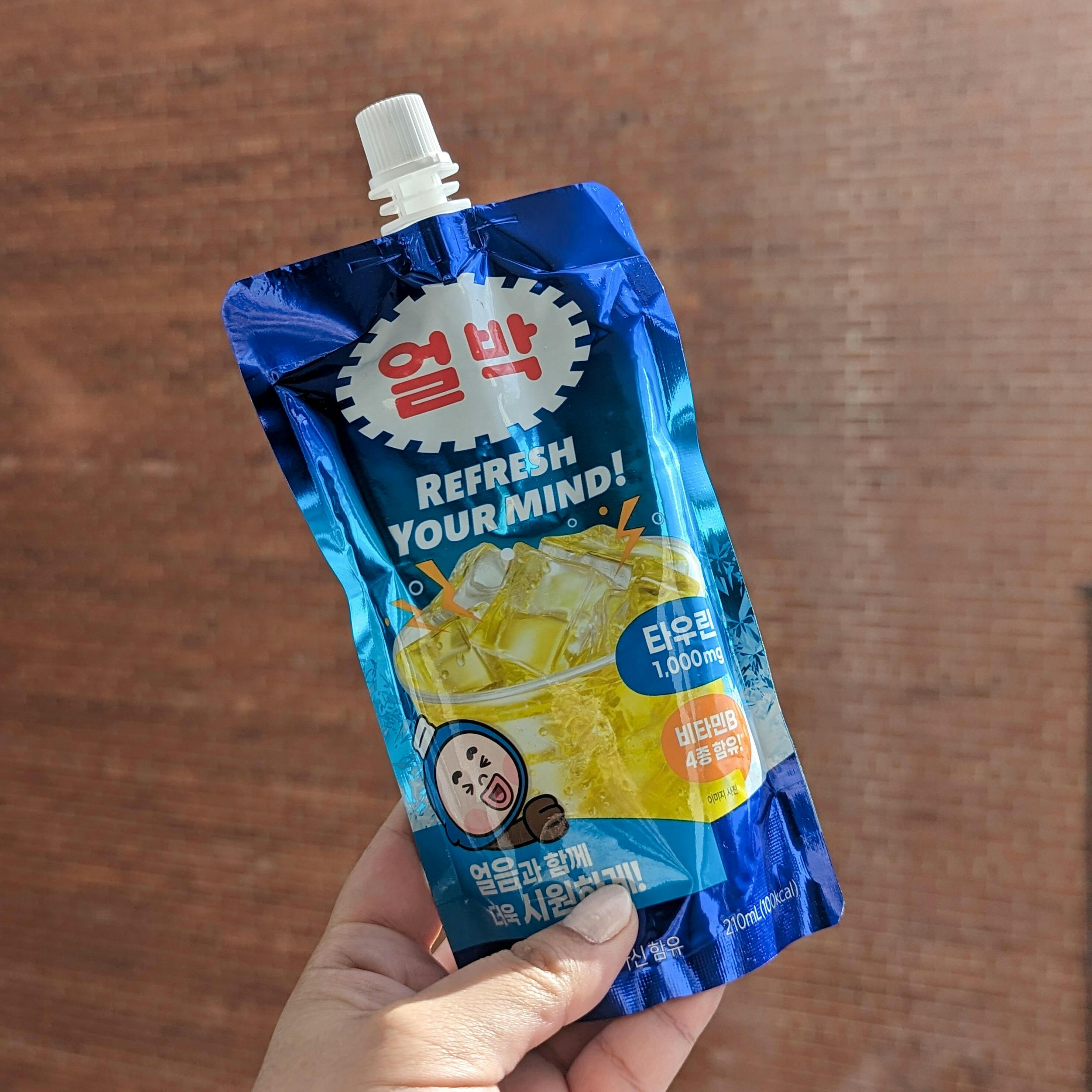
You’ve probably seen it. That tiny, dark glass bottle with the blue and white label sitting in the refrigerated section of your local H-Mart or a random bodega in Koreatown. It looks more like a medicinal syrup from the 1960s than a high-performance beverage. While everyone else is busy chugging neon-colored liquids from massive 16-ounce cans, a huge chunk of the South Korean population—and a growing number of people globally—is still reaching for Bacchus D.
It’s iconic.
Honestly, calling Bacchus D energy drink just another "energy drink" feels a little reductive. In South Korea, it's practically a cultural institution. It was launched by Dong-A Pharmaceutical back in 1961, originally as a pill, then a sachet, and finally the liquid form we know today. It survived the Korean War recovery era and fueled the "Miracle on the Han River." If you’ve ever wondered how an entire nation managed to work such grueling hours for decades, this little bottle is a big part of the answer.
But what's actually inside it? And why does it feel different from a Red Bull or a Monster?
The Taurine Factor: It’s Not Just About Caffeine
Most people assume energy drinks are just liquid caffeine. They aren’t entirely wrong, but Bacchus D plays a different game. While your standard American energy drink might blast you with 160mg to 300mg of caffeine, a 100ml bottle of Bacchus D contains a relatively modest 30mg of anhydrous caffeine.
That’s less than a cup of green tea.
The heavy lifting is actually done by taurine. Specifically, 2,000mg of it.
Taurine is an amino sulfonic acid that occurs naturally in the human body, particularly in the brain, retina, heart, and platelets. It’s often misunderstood because of the urban legends involving bull parts, but in Bacchus D, it serves a very specific physiological purpose. It helps with bile salt formation and osmoregulation. More importantly for the tired worker, it’s been linked to reduced muscle fatigue and better cytoprotection.
Basically, it doesn't just "wake you up." It helps your body manage the physical stress of being awake.
I’ve talked to people who swear it cures hangovers. While "cure" is a strong word that doctors generally hate, the inclusion of inositol and various B-vitamins (B1, B2, B6) does support liver function and metabolic processing. When you've had a long night out in Seoul—or just a long night at your desk—replenishing those B-vitamins matters.
Why the "D" Matters
You might see "Bacchus F" or "Bacchus Decaf" occasionally. The "D" in Bacchus D stands for "Double." When Dong-A revamped the formula in the 90s, they doubled the taurine content from 1,000mg to 2,000mg.
It was a power move.
The "F" version, which is often found in convenience stores rather than pharmacies in Korea, actually has less taurine (1,000mg) but includes carnitine to help with digestion and fat metabolism. If you are looking for the original, high-potency kick, the Bacchus D energy drink is the one you want. It’s the version that feels like a concentrated shot of productivity.
Tasting the "Medicine"
Let’s be real: the taste is polarizing.
If you grew up with it, it tastes like nostalgia. If you didn't, it tastes like... yellow. It’s a thick, syrupy, medicinal citrus flavor. It’s sweet, but with a sharp, tart medicinal finish that lets you know you’re drinking something functional. It’s not refreshing in the way a cold soda is. You don't sip a Bacchus D over ice while watching a movie. You knock it back in two gulps before a presentation or a gym session.
It’s a ritual.
The color is a vibrant, almost radioactive yellow, which comes from the riboflavin (Vitamin B2). Don't be alarmed if your... let's say "fluids"... look a little neon later in the day. That’s just your body processing the excess B-vitamins. It’s totally normal and actually a sign that the drink is doing exactly what it's supposed to do.
The Global Expansion and Why It’s Not in Every Gas Station Yet
You'd think a drink this successful would be everywhere. It's the best-selling pharmaceutical product in Korean history. But Bacchus D occupies a weird regulatory space. Because it started as a pharmaceutical product, it’s often held to different standards than "food" beverages.
In some countries, the high taurine content or specific concentrations of B-vitamins require it to be sold in pharmacies rather than grocery stores.
Marketing also plays a role. Dong-A hasn't traditionally spent hundreds of millions on extreme sports sponsorships like Red Bull. Instead, their marketing has always focused on the "everyman." The tired student. The hardworking father. The nurse on a double shift. It’s a blue-collar energy drink at its heart.
However, we are seeing a shift. As K-culture—K-pop, K-dramas, K-food—dominates the globe, Bacchus D energy drink is riding that wave. It’s becoming a "if you know, you know" cult favorite among biohackers and people looking for energy without the massive sugar crash or the jitters associated with high-caffeine cans.
How It Compares to the Big Names
| Feature | Bacchus D | Standard "Big Can" Energy Drink |
|---|---|---|
| Caffeine | ~30mg | 160mg - 300mg |
| Taurine | 2,000mg | 1,000mg (usually) |
| Volume | 100ml | 473ml (16oz) |
| Main Goal | Fatigue recovery | Alertness / Jitters |
| Flavor Profile | Medicinal/Tart | Soda-like/Sweet |
The most interesting thing here is the volume-to-potency ratio. You're getting double the taurine of a massive can in about one-fifth of the liquid. For people who don't want to drink half a liter of carbonated liquid just to stay awake, this is a massive win.
Also, the sugar. Yes, Bacchus D has sugar. It’s a syrup. But because the bottle is so small, the total caloric intake is significantly lower than finishing a large can of a competitor. You get the glucose spike your brain needs to function without feeling like you just ate a bag of gummy bears.
Real World Use: When Should You Actually Drink It?
Don't use Bacchus D as a pre-workout if you're looking for a massive "pump" or that tingly skin feeling from beta-alanine. It won't do that.
Instead, use it for cognitive fatigue.
The combination of inositol and B-vitamins is specifically geared toward the nervous system. It’s great for that 3:00 PM slump where your brain feels like it’s made of cotton wool. It’s also surprisingly effective for travelers dealing with jet lag. Because the caffeine content is low, it won’t completely wreck your ability to sleep later, but the taurine helps mitigate that "walking through mud" feeling of a time-zone shift.
One thing to watch out for: don't overdo it. Because it’s small, people think they can drink four or five. Don't. Your body can only process so much riboflavin and taurine at once. Stick to one, maybe two if it's a truly disastrous day.
A Note on Modern Misconceptions
There’s a common myth that Bacchus contains some kind of secret "speed" or illegal stimulant. It doesn’t.
Its reputation for being "strong" comes from the fact that it was originally sold in pharmacies (yak-guk) in Korea. In the 1960s and 70s, anything sold in a pharmacy was viewed as powerful medicine. That psychological association stuck. While it's certainly effective, it's not a drug. It's a functional supplement.
Another misconception is that it's "healthier" than other energy drinks. While the lower caffeine and smaller serving size are arguably better for your heart rate and bladder, it’s still a processed supplement with sugar and preservatives. It’s a tool, not a health food. Use it as a tool.
Actionable Advice for the Bacchus-Curious
If you’re ready to ditch the 24oz cans and try the Korean classic, here is how to get the most out of it:
- Check the label for the "D": If you’re at a Korean grocer, you might see several versions. Look for the "D" for the 2,000mg taurine hit.
- Drink it cold, but not iced: Don't pour it over ice; it dilutes the syrup and makes the medicinal taste weirder. Keep the glass bottles in the back of the fridge where it’s coldest.
- The "Morning After" Strategy: If you’ve had a few too many drinks the night before, try having a Bacchus D alongside a large glass of water and a light meal. The B-vitamins and inositol are your friends here.
- Stack it (Carefully): If you really need a kick, some people mix it with a light tea. The L-theanine in the tea combined with the taurine in the Bacchus creates a very smooth, focused energy without the "edge" of pure coffee.
- Check the Expiration: Because it contains high concentrations of vitamins, the flavor can change if it sits on a shelf in the sun for two years. Always check the date on the cap.
Bacchus D is more than just a drink; it's a piece of history in a 100ml bottle. It represents a different philosophy of energy—one focused on recovery and stamina rather than just a temporary nervous system explosion. Whether you're pulling an all-nighter or just trying to survive a Monday, it's worth seeing why this blue bottle has remained a bestseller for over sixty years.
Next Steps for Your Energy Routine
- Audit your caffeine intake: If you find yourself crashing after 200mg+ caffeine drinks, try switching to a Bacchus D energy drink for three days to see how your body responds to a taurine-heavy, low-caffeine alternative.
- Locate a supplier: Check local Asian supermarkets (H-Mart, 99 Ranch) or reputable online importers to ensure you are getting the authentic Dong-A Pharmaceutical product rather than a generic knock-off.
- Observe the "B-Vitamin Effect": Pay attention to your focus levels roughly 20-30 minutes after consumption. Unlike the "rush" of coffee, the Bacchus effect is usually a subtle lifting of the "brain fog."