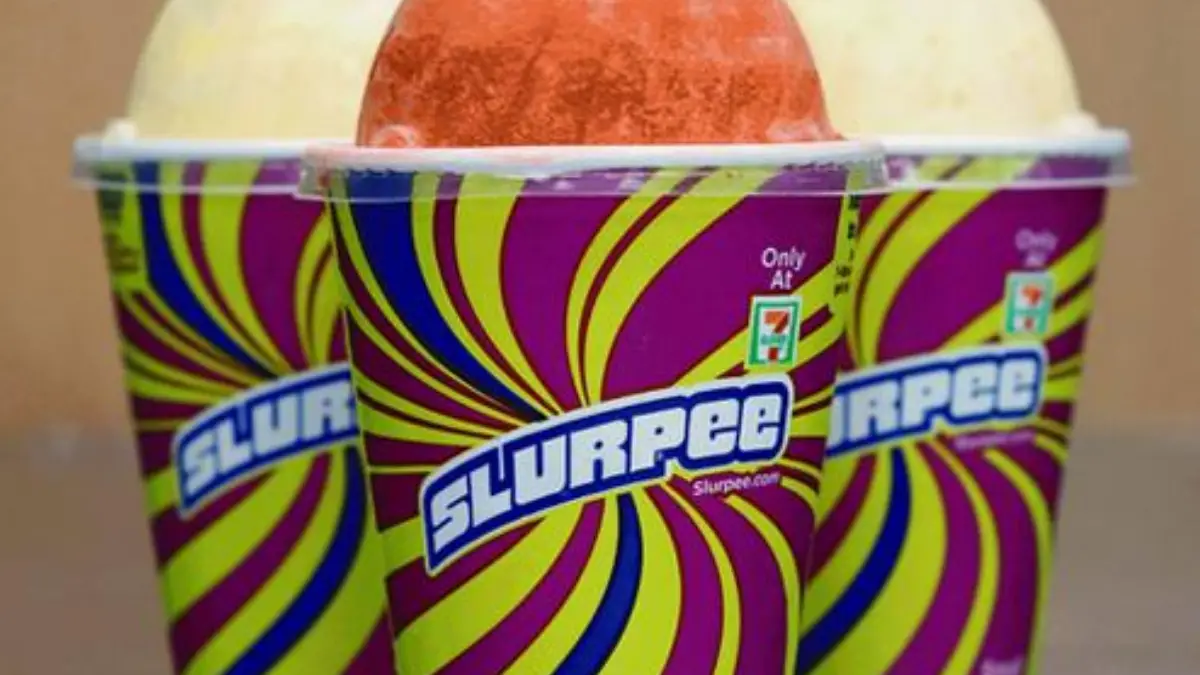
You’re standing there. The machine is humming, that low-grade mechanical thrum that defines every 7-Eleven at 2 a.m. You pull the lever. The neon blue syrup swirls into the plastic cup, piling up in those perfect, icy ridges. It looks like magic. It tastes like childhood and summer. But if you’ve ever paused mid-sip to wonder about 7 11 slurpee nutrition facts, you know the "magic" is basically a chemistry set in a cup.
It’s cold. It’s sweet. It’s also complicated.
Most people think a Slurpee is just frozen soda. It isn’t. Not really. The texture—that specific, airy, scoopable slush—requires a very particular balance of sugar, water, and carbon dioxide. If the sugar levels drop too low, the machine freezes into a solid block of ice. If they're too high, it stays a syrupy mess. What you’re drinking is a precise scientific achievement designed to stay semi-liquid at sub-zero temperatures.
Honestly, the nutritional profile is exactly what you expect, yet somehow still surprising when you see the raw numbers laid out. We’re talking about a drink that is essentially 100% carbohydrates, specifically in the form of high-fructose corn syrup and cane sugar. There is no fat. There is no protein. There is definitely no fiber. It’s a pure, unadulterated glucose spike delivered at 30 degrees Fahrenheit.
The Sugar Breakdown: Why Your Brain Loves (and Hates) It
Let’s get into the weeds. A standard 12-ounce Slurpee—the small size—usually carries about 26 to 30 grams of sugar. That sounds manageable until you realize most people don't buy the small. They go for the "Medium" (22 oz) or the "Big Gulp" sized behemoths.
When you scale up to a 30-ounce serving, you’re looking at roughly 65 to 75 grams of sugar. For context, the American Heart Association suggests a daily limit of about 36 grams for men and 25 grams for women. You’ve doubled your daily limit before you’ve even finished the first half of the cup.
Why does this matter? Because of how the body processes liquid sugar. When you eat an apple, the fiber slows down the sugar absorption. When you drink a Slurpee, the sugar hits your bloodstream like a freight train. Your pancreas panics. It pumps out insulin to handle the surge. Then, an hour later, your blood sugar crashes, leaving you tired, cranky, and—ironically—craving another Slurpee.
It’s a cycle. A delicious, icy cycle.
The Calorie Count Varies by Flavor
Not all Slurpees are created equal. The 7 11 slurpee nutrition facts change based on whether you’re pulling the handle for Coca-Cola, Blue Raspberry, or a seasonal Wild Cherry.
- Coca-Cola Classic: This is the baseline. A 12-oz serving sits at about 97 calories.
- Blue Raspberry: Usually slightly higher in the "fake fruit" sugar department, often hitting 100-110 calories for a small.
- Pina Colada: This one is the heavy hitter. The creamier flavors often use different stabilizers that can push the calorie count higher than the standard fruit or cola versions.
Then there’s the sugar-free stuff. 7-Eleven occasionally rotates "Slurpee Lite" flavors, usually sweetened with aspartame or erythritol. These are a godsend for diabetics or people watching calories, often dropping the count to 20 calories or less for a medium. But be careful—some people find that the sugar alcohols in these versions cause "digestive distress" if consumed in large quantities. Basically, don't drink a 40-ounce sugar-free Slurpee unless you're close to a bathroom.
The Science of the "Slush": Ingredients You Didn't Know You Were Eating
Ever wonder why a Slurpee doesn't melt like a regular ice cube? It stays "slushy" for a long time. That’s because of the additives.
Beyond the water and high-fructose corn syrup, you’ll find citric acid, natural and artificial flavors, and preservatives like sodium benzoate. The colors? Those are usually Red 40, Blue 1, or Yellow 5. These dyes are FDA-approved, but they are a point of contention for many health-conscious parents. Some studies, like those from the Center for Science in the Public Interest, have raised questions about synthetic dyes and hyperactivity in children, though the evidence remains debated in the broader scientific community.
The carbonation is the secret ingredient. Most people don't realize Slurpees are carbonated. The air bubbles help insulate the ice crystals, keeping them small and soft rather than crunchy. This air also means you’re actually drinking less liquid than the cup size suggests, which is a small mercy for your caloric intake.
Quenching a Thirst or Causing Dehydration?
Here is a weird paradox: drinking a Slurpee might actually make you thirstier.
It’s cold, so it feels refreshing. However, the high sugar content creates an osmotic effect. To process all that sugar, your body needs water. If you aren't drinking water alongside your frozen treat, the Slurpee can actually contribute to mild dehydration. It’s why you often feel that "sticky" thirst in the back of your throat about twenty minutes after finishing one.
Managing the Brain Freeze and the Sugar Crash
If you’re going to indulge, there’s a right way to do it. Expert nutritionists—and anyone who’s ever had a bad afternoon at a convenience store—suggest a few "damage control" tactics.
First, size matters. The jump from a Small to a Large is exponential in terms of metabolic load. Stick to the 12-ounce. It satisfies the craving without the three-hour lethargy that follows a sugar bomb.
Second, timing. Drinking a Slurpee on an empty stomach is a recipe for a massive insulin spike. If you have it after a meal containing protein or healthy fats, the absorption of the sugar is slightly blunted. It’s the difference between a vertical spike and a manageable hill on your blood glucose monitor.
Real Talk on the "Natural" Flavors
Occasionally, 7-Eleven releases "real fruit juice" versions or "vitamin-fortified" Slurpees. While these sound better, check the label. Often, the "real juice" is a tiny percentage of the total volume, and the sugar content remains almost identical to the standard flavors. Don't let marketing fool you into thinking a Slurpee is a health drink. It’s a treat. Treat it like one.
Practical Steps for the Conscious Slurpee Fan
Understanding 7 11 slurpee nutrition facts isn't about shaming yourself for enjoying a classic American staple. It’s about knowing the trade-offs. If you want to enjoy the machine without the guilt, follow these steps:
- Check the "Lite" Rotation: Always look for the Slurpee Lite logo. If they have a sugar-free flavor like Vitaminwater Zero or a light lemonade, it’s a significantly better choice for your blood sugar.
- Hydrate Simultaneously: For every ounce of Slurpee, drink an equal amount of plain water. This helps your kidneys process the sugar and prevents the post-drink headache.
- The "Half and Half" Hack: Fill your cup halfway with a sugar-free flavor and halfway with your favorite full-sugar version. You get the authentic taste with a 50% reduction in total sugar.
- Listen to the Brain Freeze: That pain is called sphenopalatine ganglioneuralgia. It’s your body’s way of saying you’re consuming it too fast. Slowing down not only prevents the headache but gives your brain more time to register the sweetness, which can help you stop drinking before you hit the bottom of the cup.
Next time you find yourself at the 7-Eleven counter, skip the "Team Gulp" size. Grab the small, mix your flavors, and drink it slowly. You get the nostalgia without the metabolic meltdown.